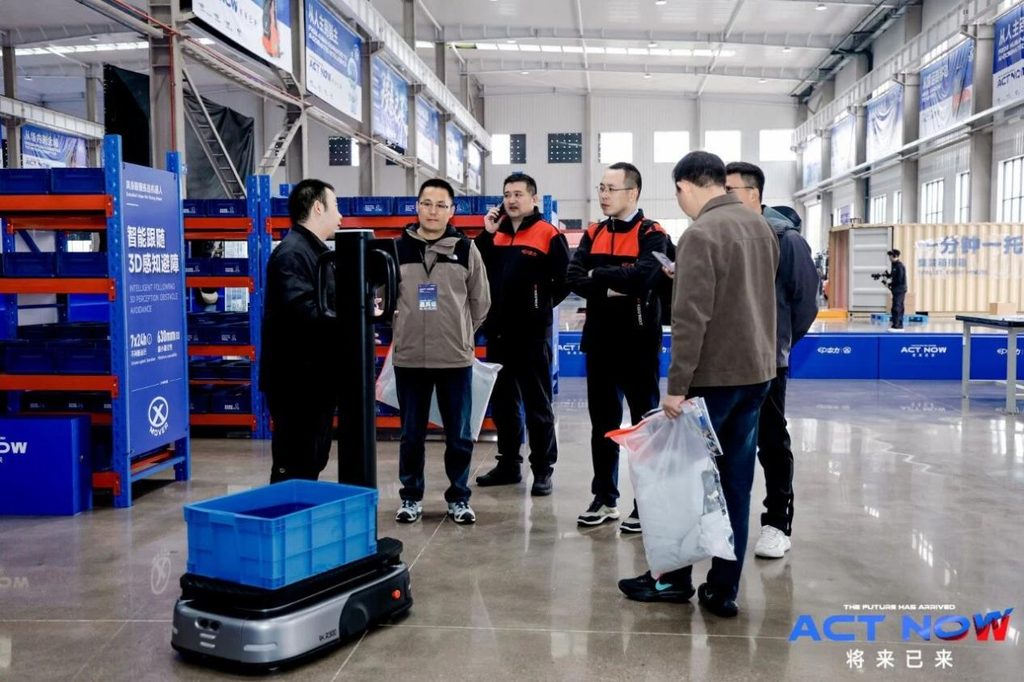
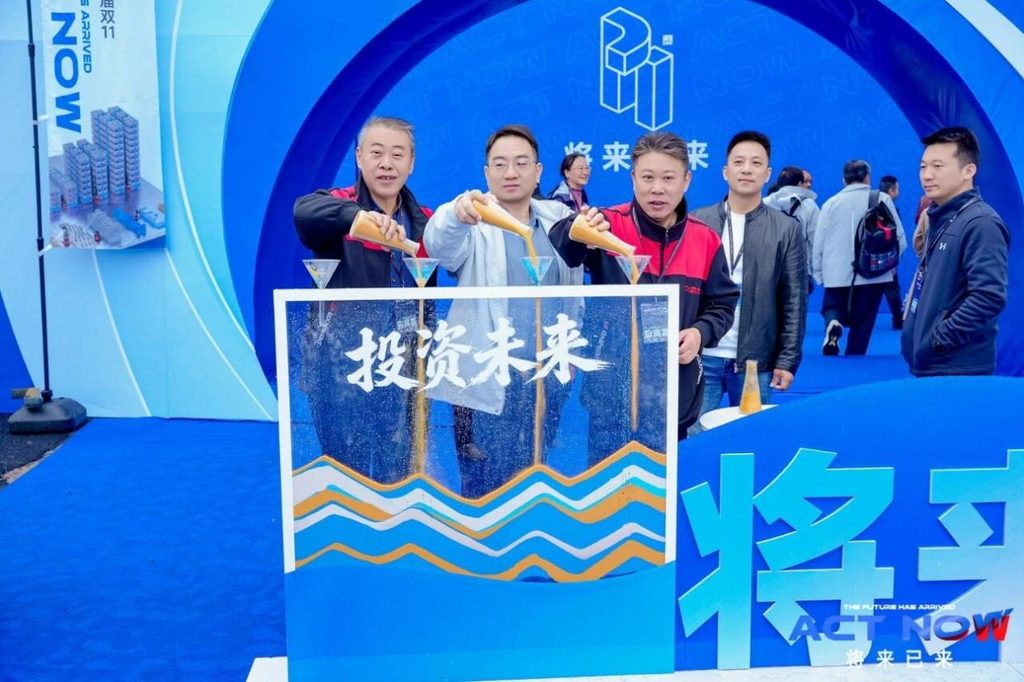
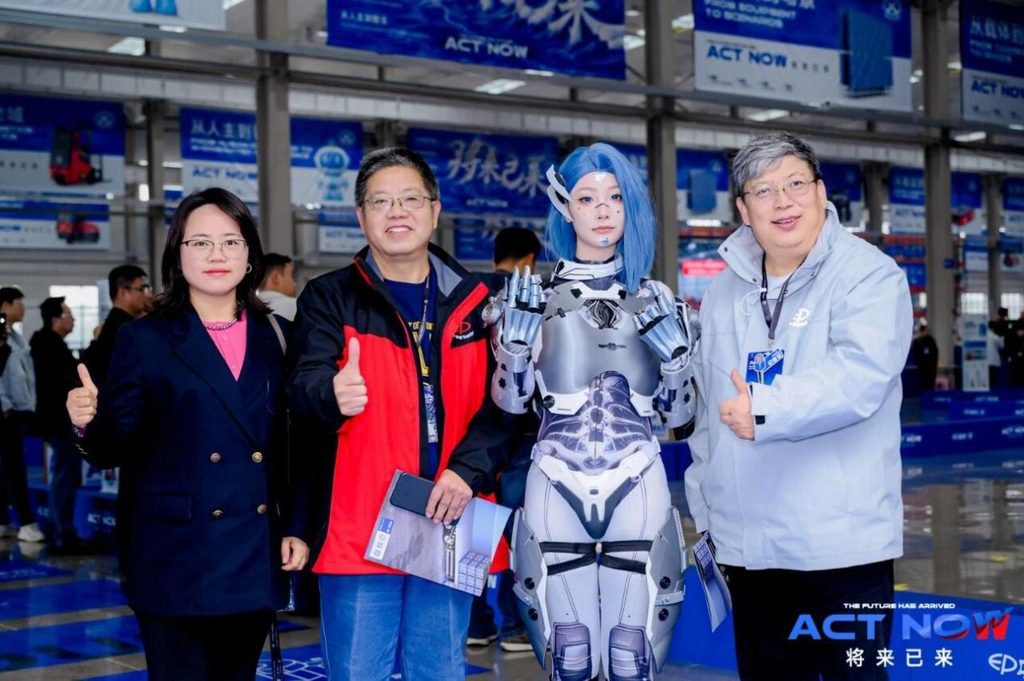
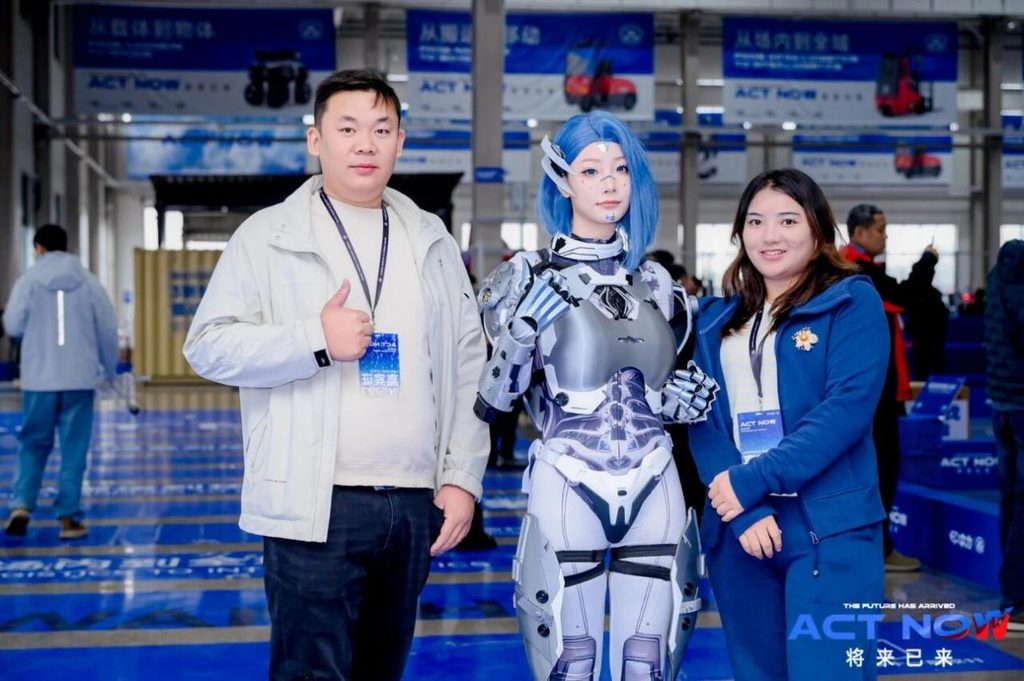
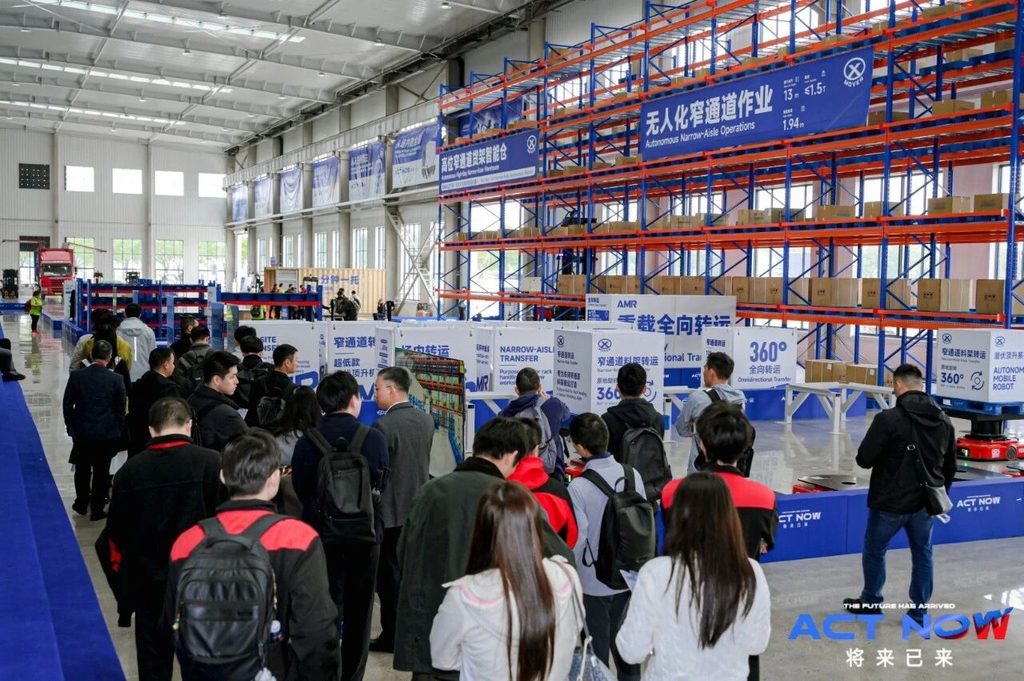
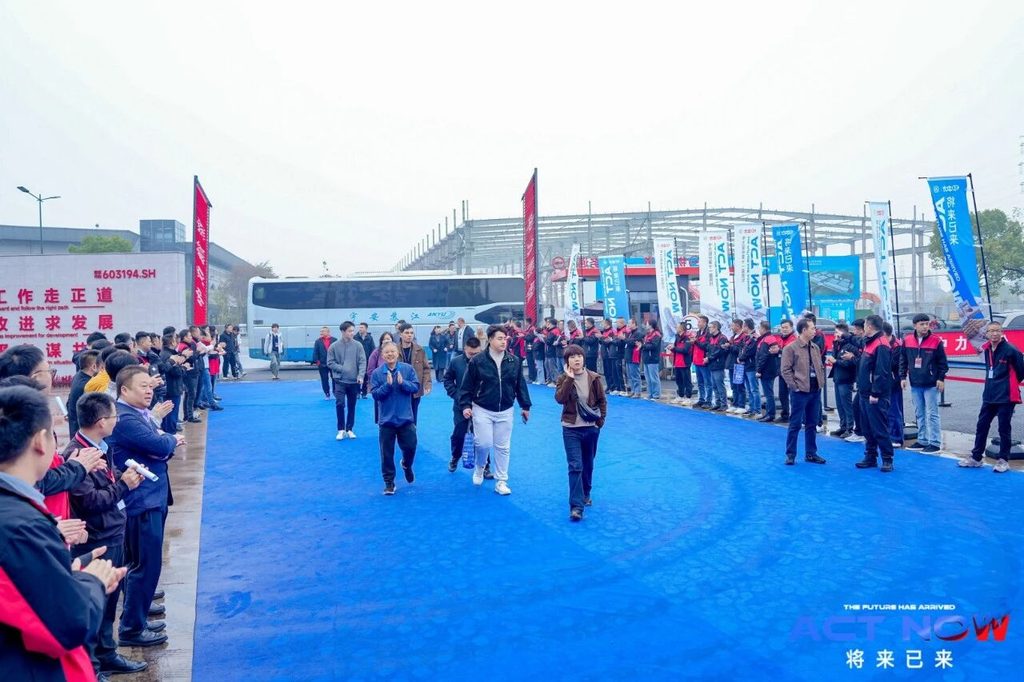
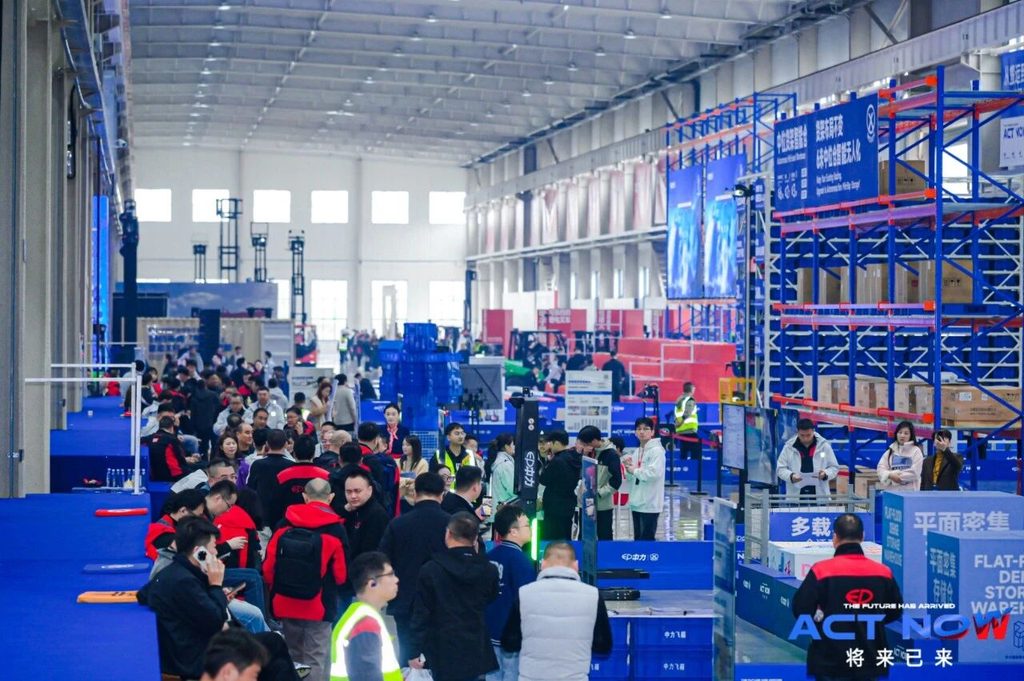
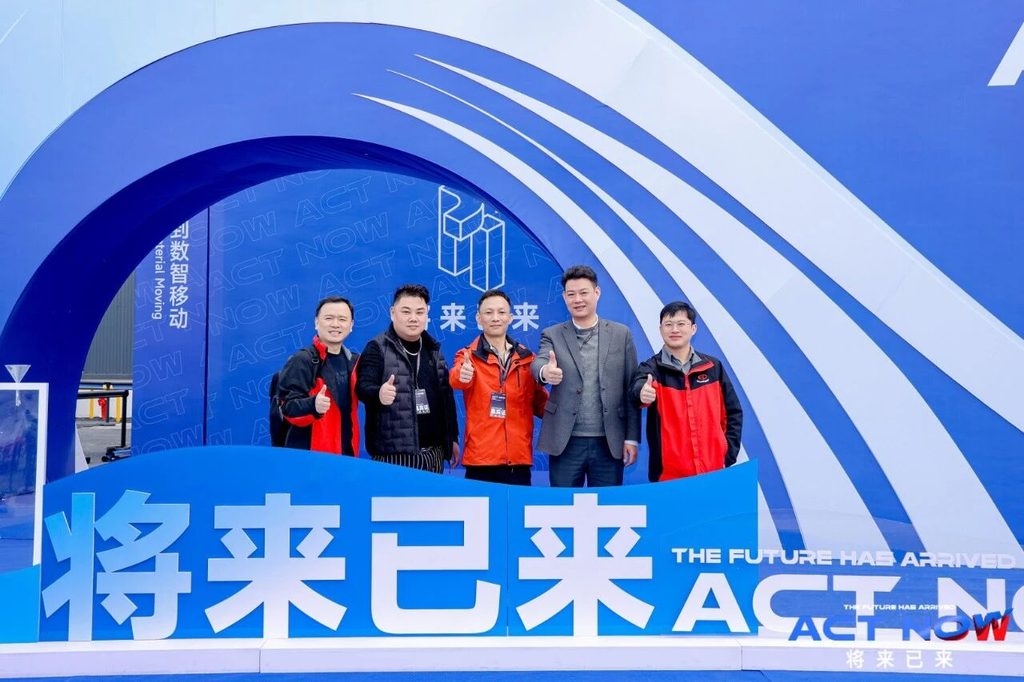
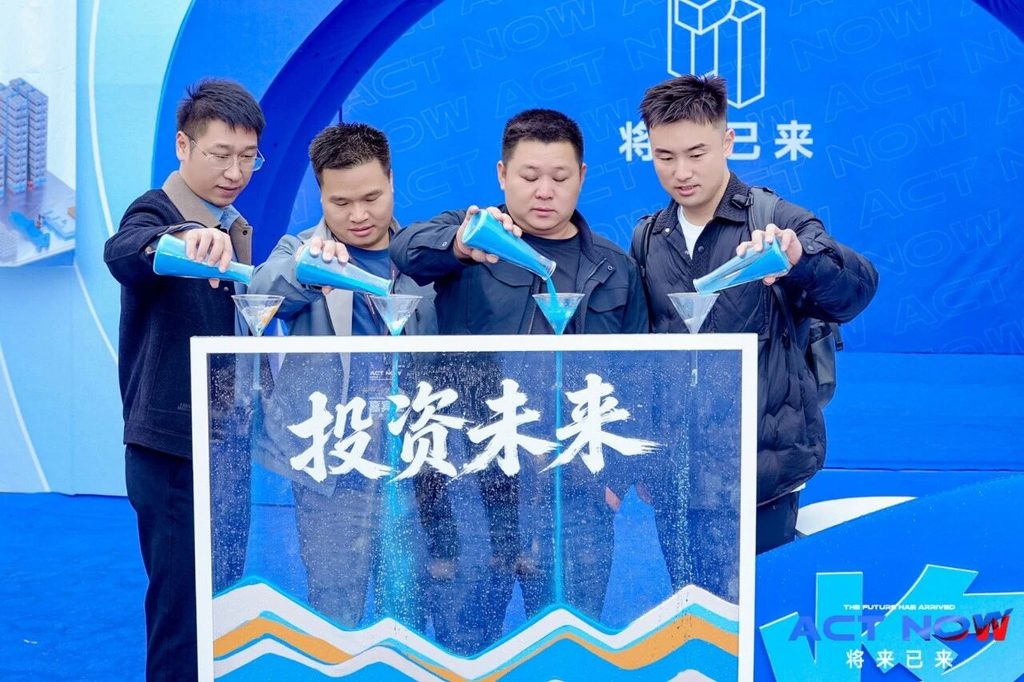
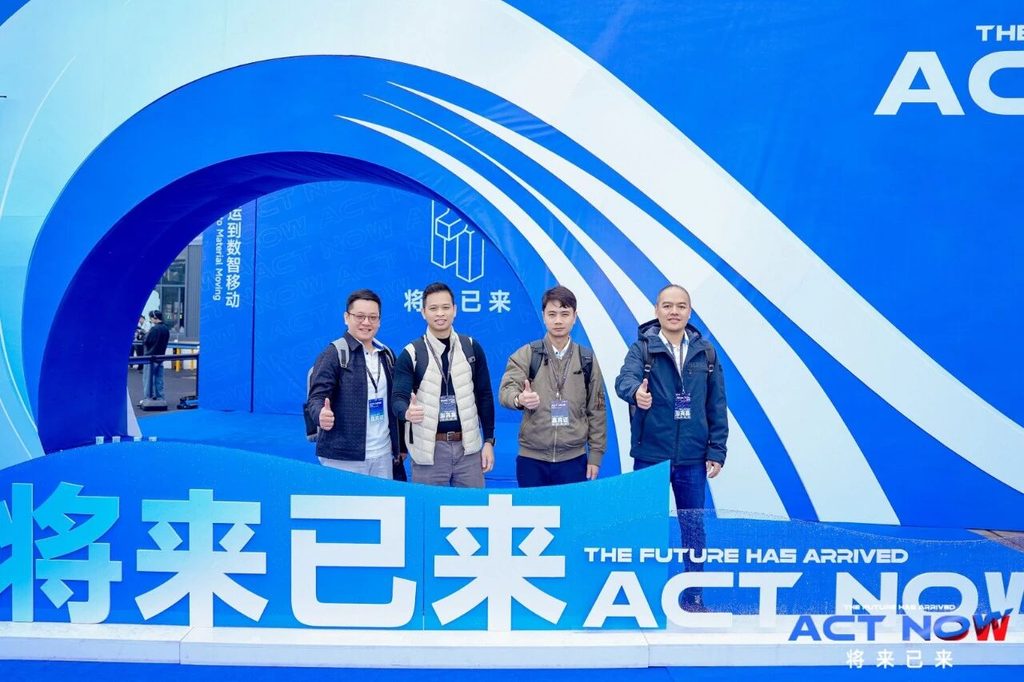
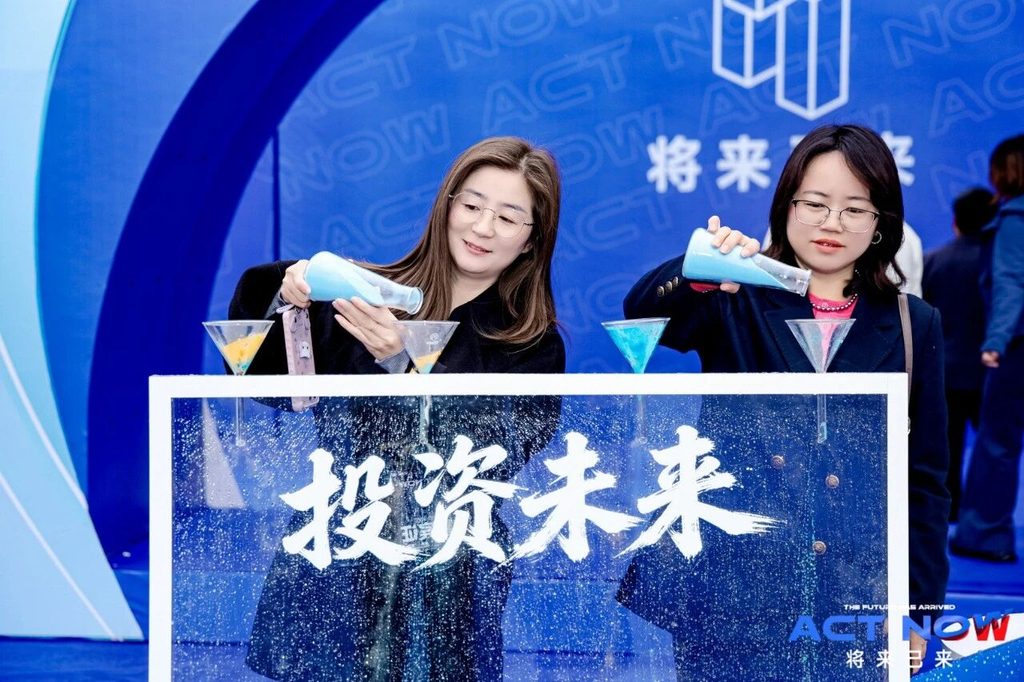
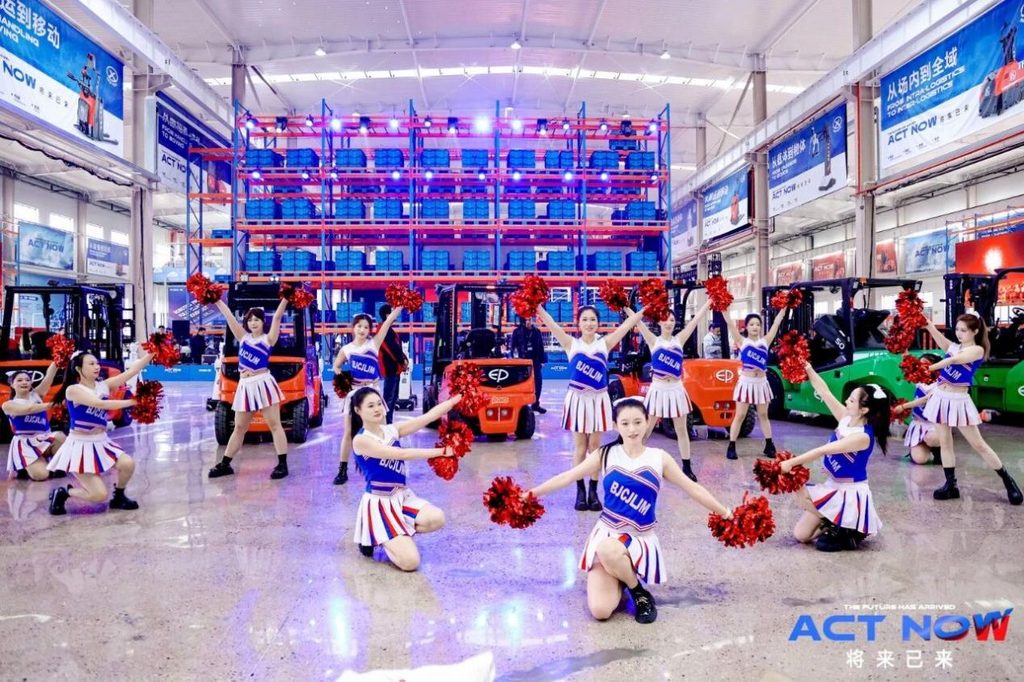
From November 7 to 13, EP 11th 11·11 Event themed “The Future Has Arrived,Act Now” was successfully held, drawing over a thousand global merchants, industrial‑chain partners and industry experts. After eleven years of development, EP 11·11 events have successively spearheaded the industry’s shift toward electrification and green development. Now, EP sets its sights on the new autonomous track, showcasing the latest real‑world achievements in autonomous material handling, and advancing autonomous material movement from pilot deployments at leading enterprises toward industry‑wide inclusive adoption.
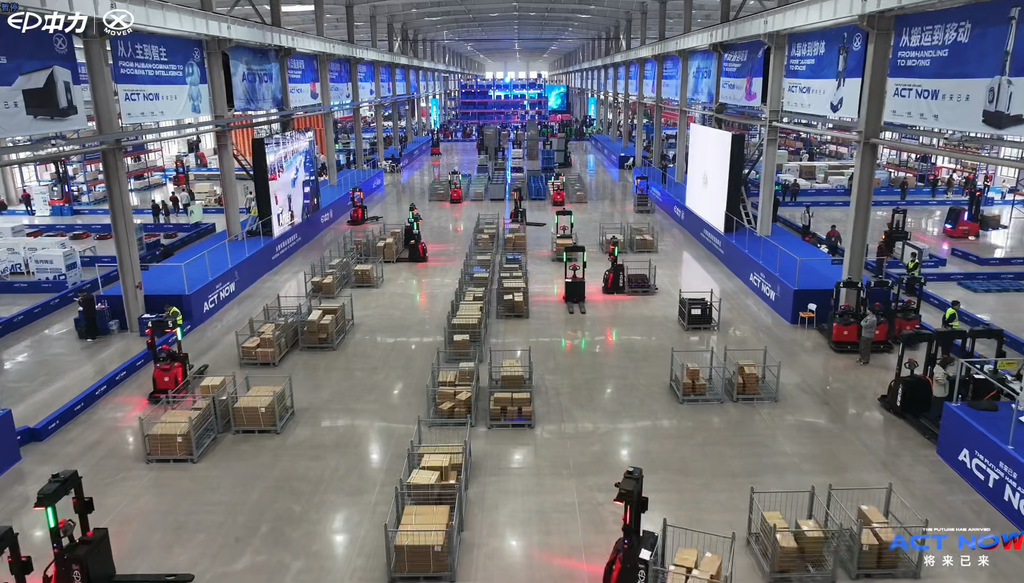
Impressive performance: scenario industrial cross-floor autonomous transport solution has sold over 1,000 orders (exceeding 3,300 units), solidly demonstrating market recognition of our engineered solutions.

Five Major Transformations Pave the Way for a Robust Engineering‑Driven Delivery System
Earlier this year, EP put forward the industry‑defining judgment of the “Five Major Transformations”. This insight pinpoints real‑world industry pain points, marking the prelude to the industry’s transformation from an equipment‑centric era to an autonomous era.
At this year’s 11·11 events, the Five Major Transformations evolved from high‑level strategic judgment into tangible, verifiable and replicable scenario‑based solutions. Centering on four core scenarios — transport, warehousing, loading/unloading and picking — and taking engineering‑driven delivery as the core approach, EP translated its strategic vision: “from equipment to scenarios, from carriers to goods, from handling to moving, from intra-logistics to inter-logistics, from human-dominated to Al-dominated intelligence”, into standardized implementation solutions and delivery frameworks. This represents a critical leap from forward‑looking concepts to industrial practice.
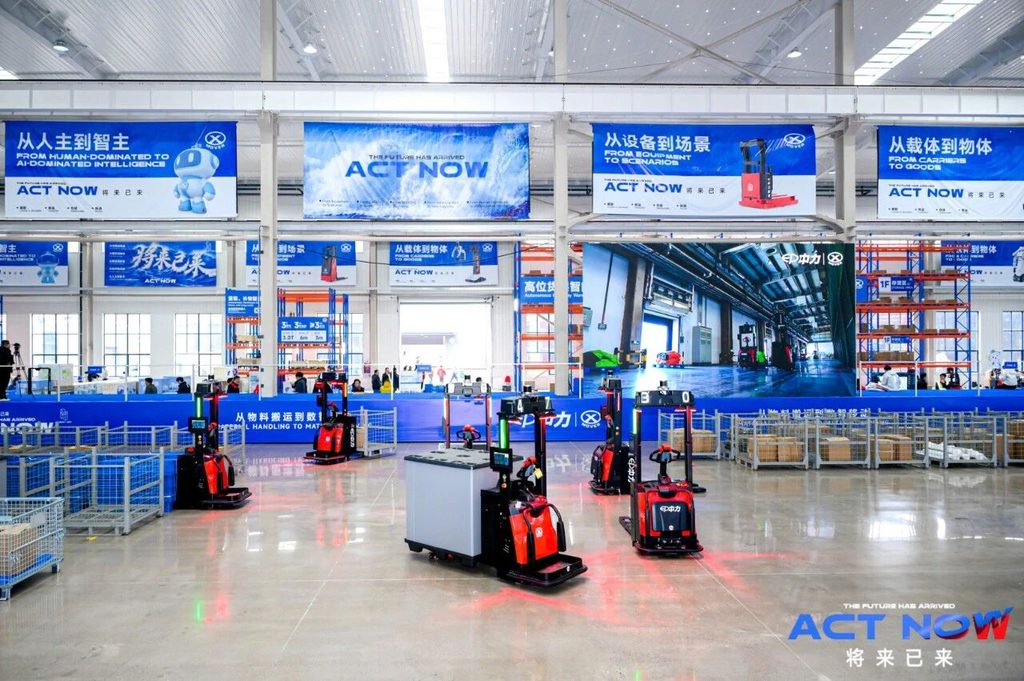
Breaking away from the conventional mindset of selling standalone equipment, EP reconstructs the material‑handling system from a full‑scenario, end‑to‑end perspective, dispelling the industry stereotype that “robot deployment is difficult”. Through tiered and adaptive engineering capabilities, EP turns autonomous solutions from custom‑built pilots for market leaders into reusable, rapidly‑deployable standardized capabilities accessible to thousands of factories and enterprises.
Real‑World Demonstrations: End‑to‑End Implementation Across Four Scenarios for Replicable Solutions
The core of engineering‑driven delivery lies in turning advanced technologies into mature, replicable and quantifiable solutions.
With tiered‑adaptive delivery frameworks, real‑world full‑scenario solutions and proven track records across multiple industries, EP has built a comprehensive matrix of engineering‑driven delivery capabilities. Over 40 segmented‑industry real‑world operating conditions were re‑created on‑site, ensuring “visible solutions and replicable implementation”.
1. Tiered Adaptability Makes Autonomous Material Movement Accessible
EP has forged a proven implementation path featuring tiered adaptability, modular combination and standardized roll‑out, catering to transformation demands of enterprises of varying sizes and digital‑maturity levels and substantially lowering barriers to digital‑intelligent adoption.
- Out‑of‑the‑box entry‑level access: Multiple entry‑level robots require no complex site modification or supporting system deployment. Easy‑to‑operate right‑out‑of‑the‑box hardware empowers micro, small‑ and medium‑sized enterprises to embark on digital‑intelligent transformation, making “robots for everyone” a reality.
- Modular selection & phased upgrading: Solutions for the four core scenarios can be split or combined. Enterprises may start with their most urgent single‑scenario needs for iterative upgrades, or deploy end‑to‑end solutions in one go, flexibly matching diverse business development requirements.
- Standardized replication for rapid commissioning: Core solutions are validated under real‑world operating conditions and formed into standardized delivery templates. Custom development and on‑site commissioning cycles are drastically shortened. Massive civil‑engineering retrofits are unnecessary for most scenarios, enabling fast deployment and quick production ramp‑up.
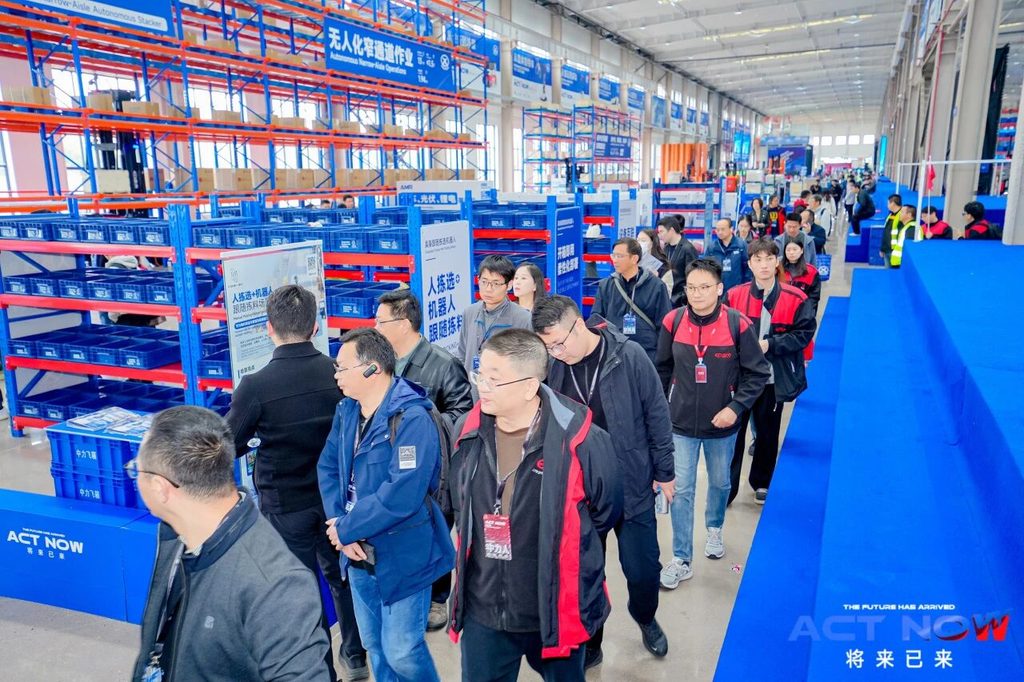
2. Real‑World Validation Across Four Scenarios for Closed‑Loop End‑to‑End Deployment
2.1 Embodied-AI Loading & Unloading: Mature Multi‑Scenario Connection Eliminates Intra-Logistics and Inter-Logistics Bottlenecks
Loading and unloading acts as a vital link bridging on‑ and off‑site logistics, yet it is also a well‑recognized bottleneck for smart‑logistics implementation. Conventional solutions rely heavily on standardized docking bays and fixed operating environments. Faced with non‑standard real‑world conditions such as misaligned vehicle parking, low light inside containers and deformed pallets, constant human intervention remains unavoidable, forming a key roadblock to end‑to‑end unmanned operations.
At this Double 11 event, EP demonstrated 5 loading‑unloading scenarios covering 6 mainstream types of vehicles and cargoes. Full‑scene live demonstrations covered factory wing‑body trucks, containers and railway boxcars, fully verifying solution maturity and large‑scale replicability.
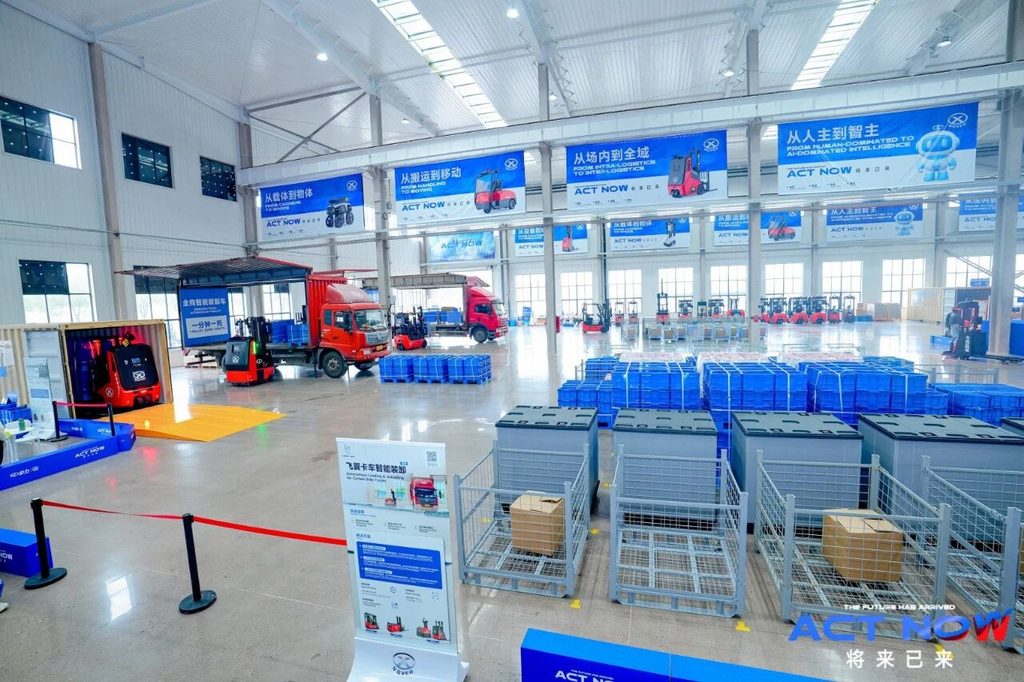
Side loading‑unloading for wing‑body trucks: high‑precision operations under non‑standard parking conditions
As one of the most‑frequent factory‑site loading‑unloading scenarios, EP deployed two wing‑body trucks and four robots operating simultaneously to handle four types of loads: gitterboxes, storage cages, wooden crates and pallet boxes.
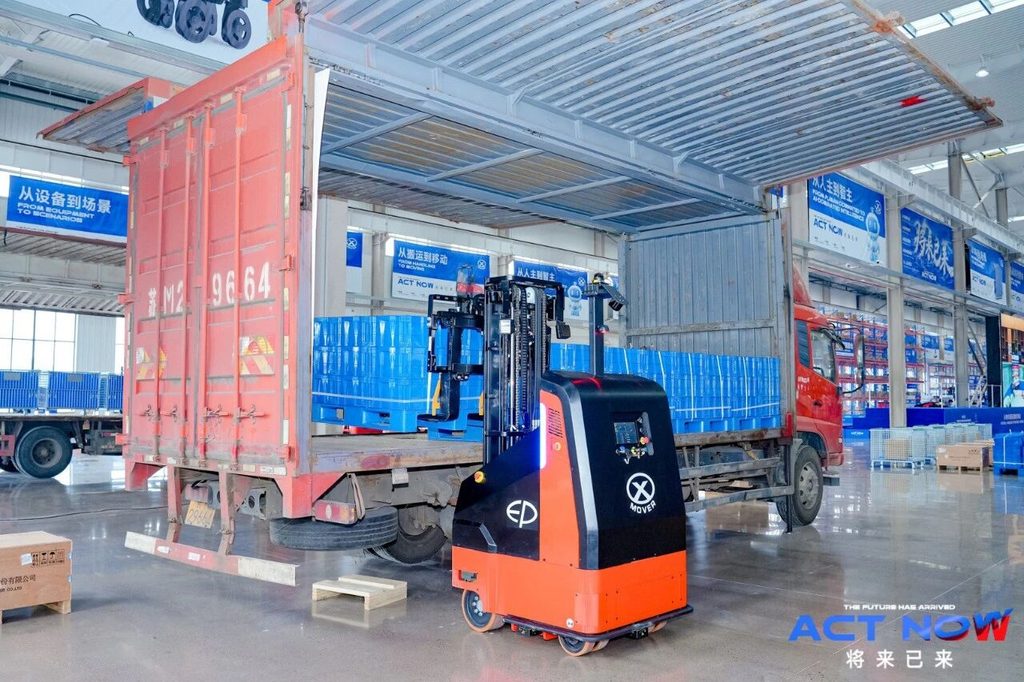
Leveraging the collaborative architecture of the “Embodied Main Brain + On‑Board Secondary Brain”, equipment autonomously identifies carriage dimensions, parking postures and height differences. It adapts to random‑parking anomalies including lateral vehicle offset, angular deviation and inconsistent rear‑end height, with no need for customers to retrofit loading platforms or mark standard parking spots.
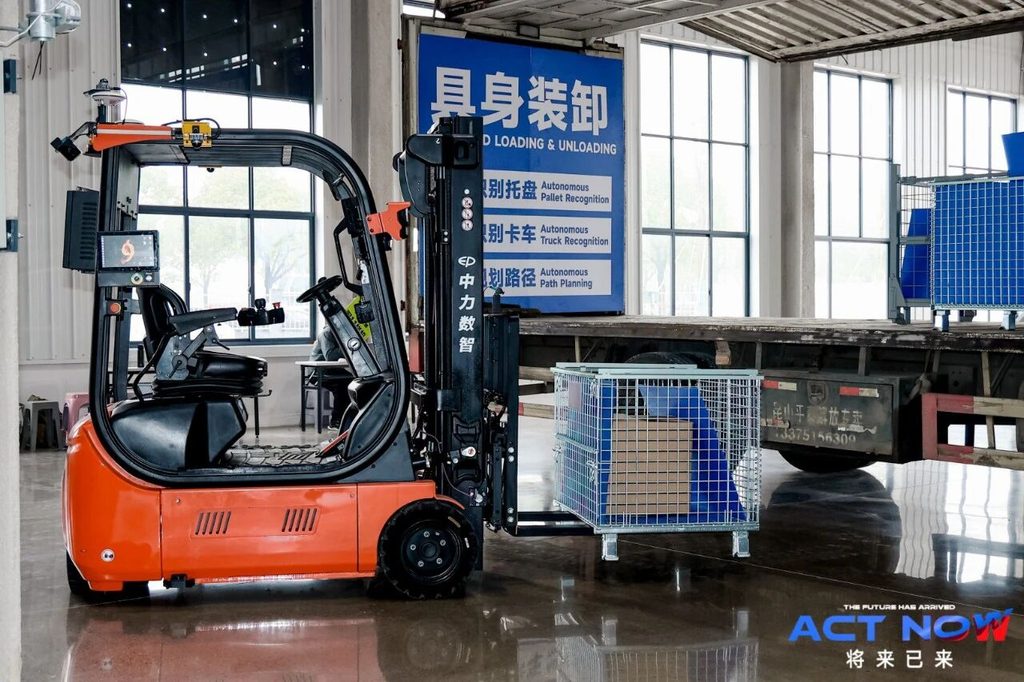
EP’s 2.0‑ton embodied-AI loading‑unloading forklift completes one loading‑unloading cycle in 60 seconds; dual‑robot collaborative operations take only 30 seconds, matching human‑operator efficiency. Cargo stacking clearance is controlled within 1 centimeter for neat and compact stowage inside carriages.
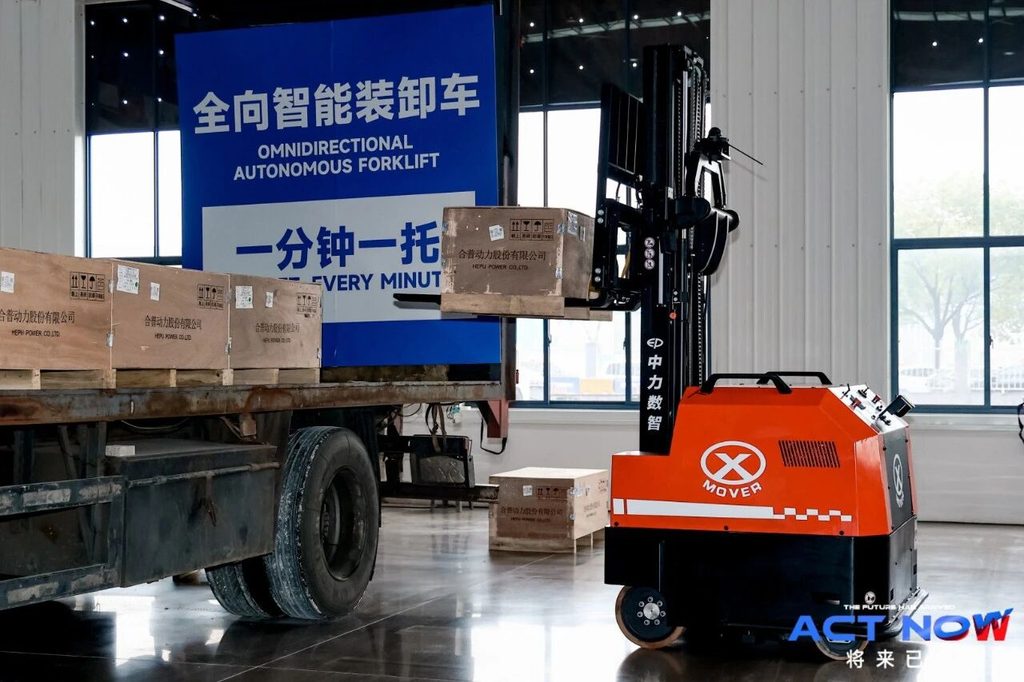
EP’s 1.5‑ton omnidirectional embodied-AI loading‑unloading forklift XFO151 supports 360‑degree omnidirectional movement: forward travel, lateral shifting, diagonal movement and in‑situ rotation. It eliminates repeated turning in confined spaces and efficiently connects special‑shaped loads such as pallet boxes. Multi‑model collaborative operations enable efficient loading‑unloading of diversified goods while seamlessly linking to subsequent warehousing and inbound workflows.
Container loading and unloading: stable performance in total low‑light environments
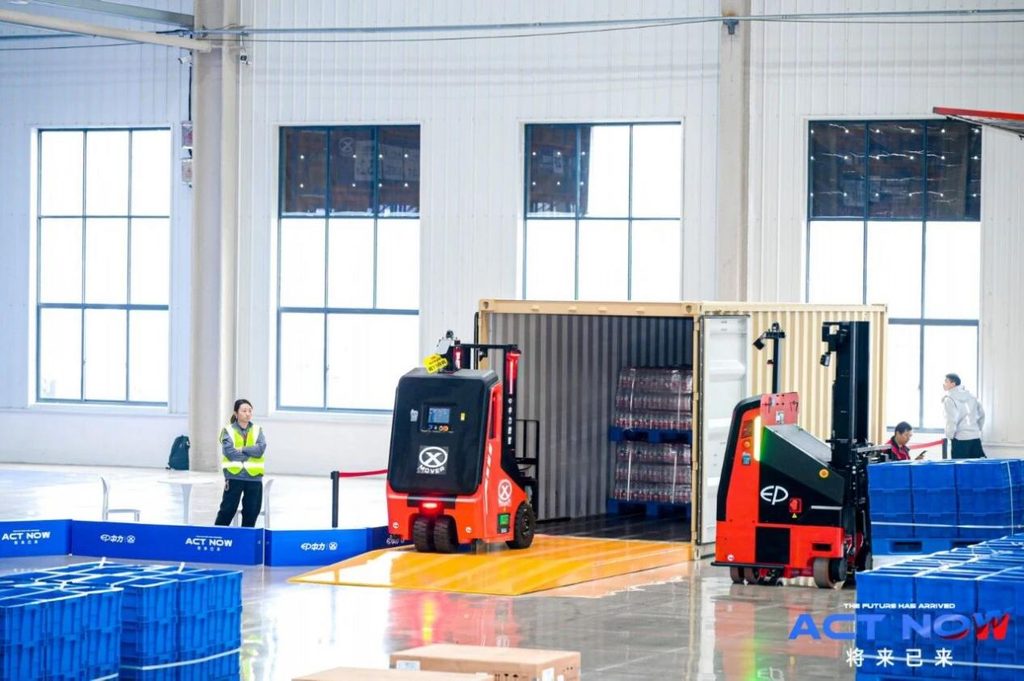
To address widespread pain points in long‑haul‑logistics container destuffing, EP provides two mature solutions. For general long‑haul scenarios, the 1.5‑ton embodied-AI loading‑unloading forklift equipped with a 3D LiDAR depth‑perception system accurately identifies pallet postures and cargo contours even under poor interior lighting and squeezed‑deformed pallets, unaffected by light conditions. Its compact folding forks enable agile travel inside narrow containers for stable destuffing of standard full‑pallet cargoes.
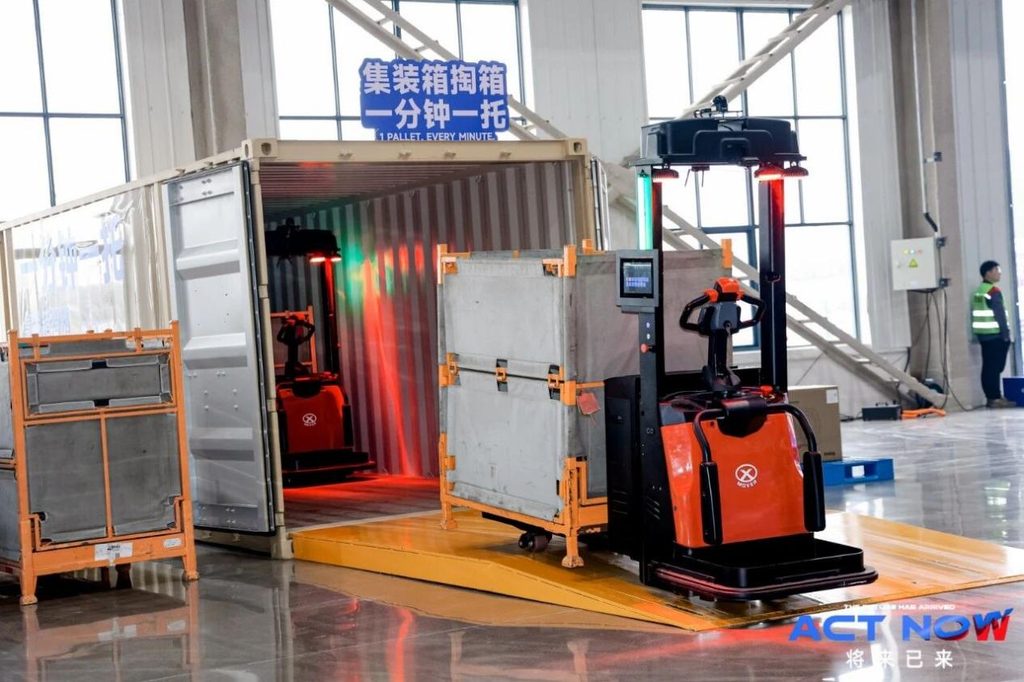
The express‑delivery‑specific side‑shift autonomous pallet truck achieves fork alignment without moving its main body, operating flexibly inside cramped containers. Adapted to deformable loads such as express‑delivery material cages, it delivers a 2‑ton load capacity and a 2 m/s travel speed to satisfy high‑frequency loading and unloading requirements at express‑delivery sorting hubs. This solution has achieved large‑scale roll‑out at leading express‑delivery enterprises.
Railway boxcar loading and unloading: overcoming narrow‑space operational challenges in railway logistics
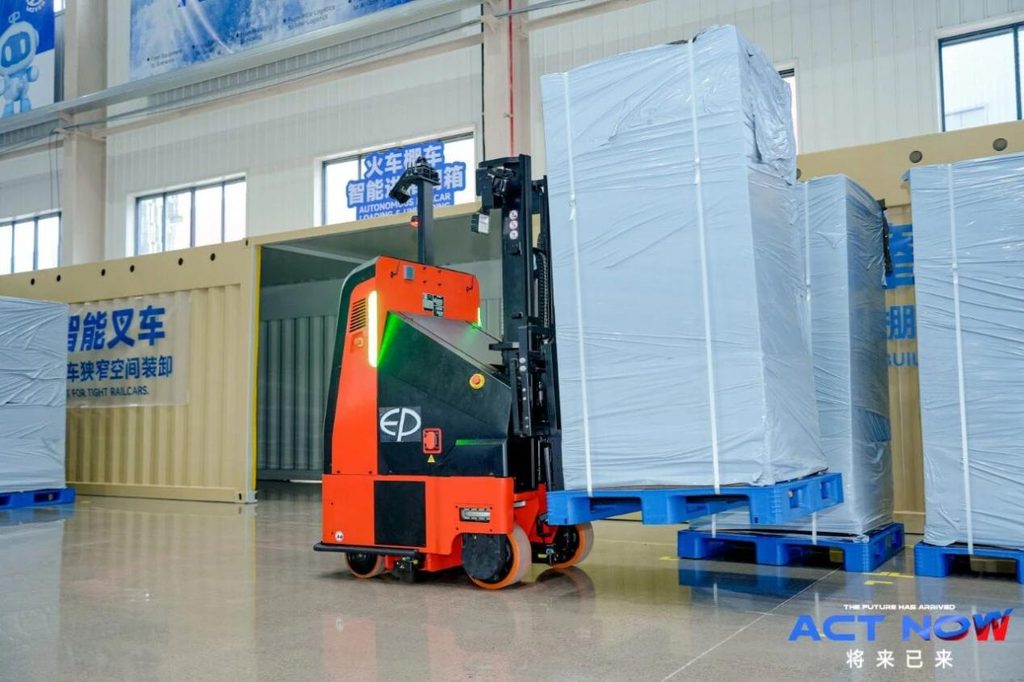
To tackle the industry‑wide pain point of limited maneuvering space inside railway boxcars, EP’s boxcar loading‑unloading solution adopts the 1.5‑ton omnidirectional loading‑unloading robot. It completes palletized‑cargo destuffing and stowing without large‑scale body rotation, resolving the bottleneck of “difficult in‑container turning”. It bridges the operational gap between railway logistics and on‑site warehousing.
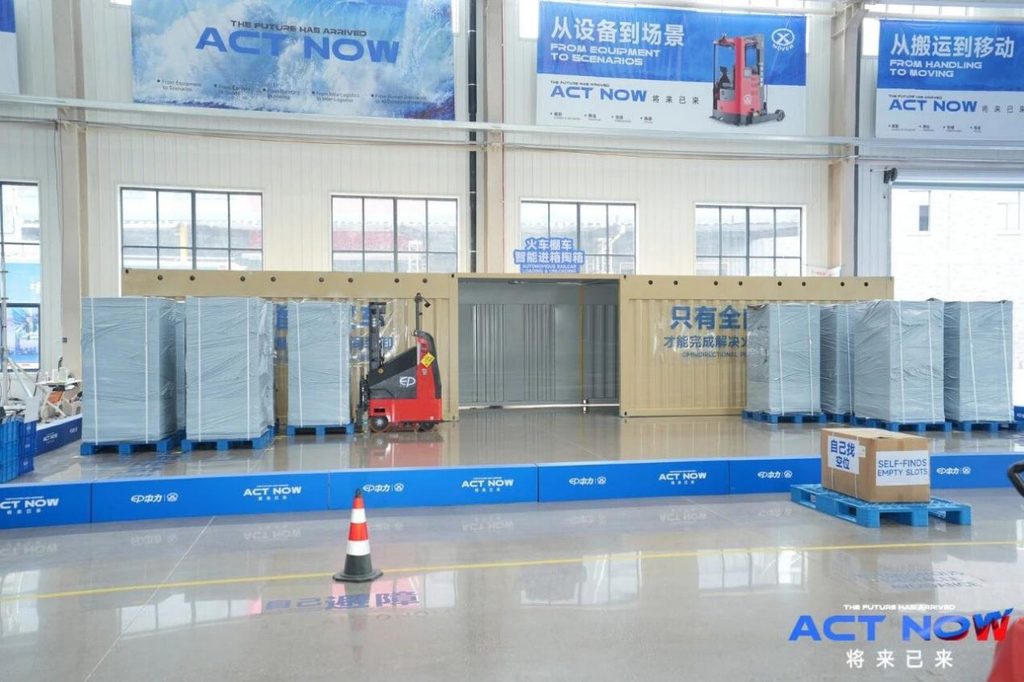
As an achievement under China Railway, this technology, paired with the full‑end‑to‑end solution with the 45‑ton unmanned reach stacker, was reviewed by industry experts at the Changsha‑North Logistics Park of China Railway. It realizes fully autonomous unmanned loading‑unloading for railway containers.
Indoor‑outdoor integrated docking: building a bottleneck‑free end‑to‑end transport system
Loading‑unloading is not an isolated node. EP’s solutions seamlessly connect with outdoor unmanned logistics vehicles, 25‑ton heavy‑duty flatbed robots and other transport equipment, enabling unmanned hand‑offs between indoor loading‑unloading and outdoor transport. It breaks down indoor‑outdoor scenario boundaries and forms integrated logistics workflows covering factory‑site loading‑unloading, on‑site transport and off‑park transportation.
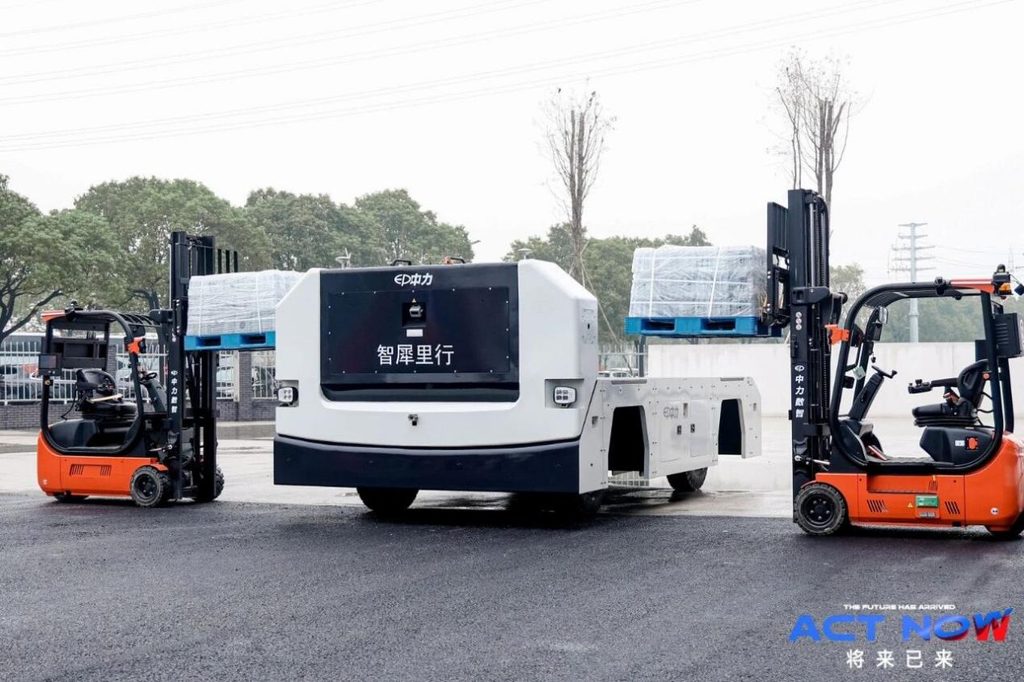
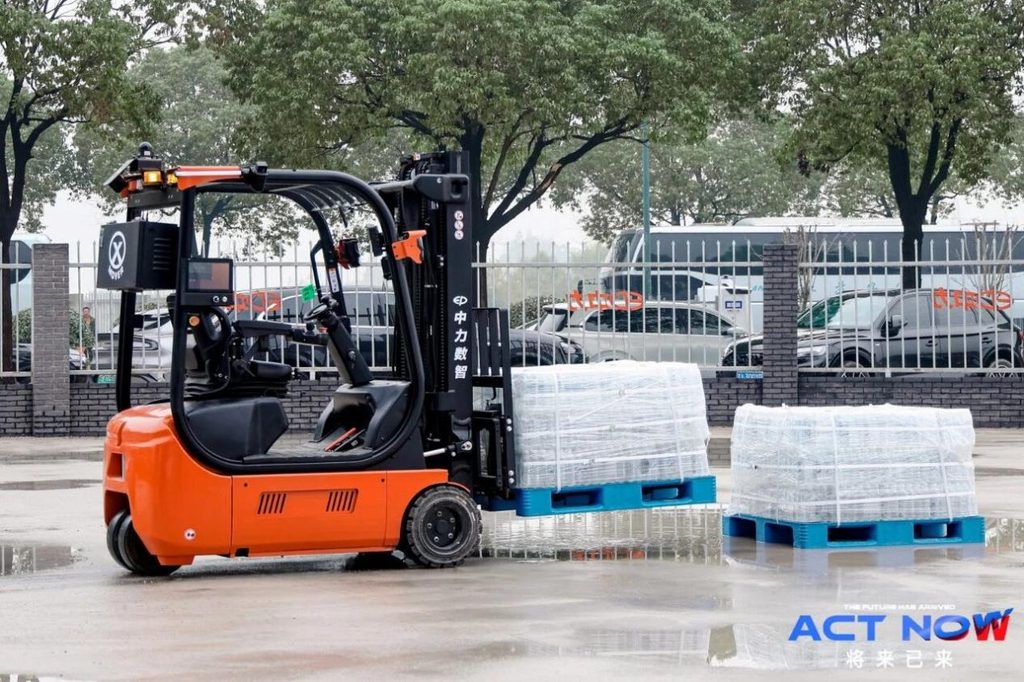
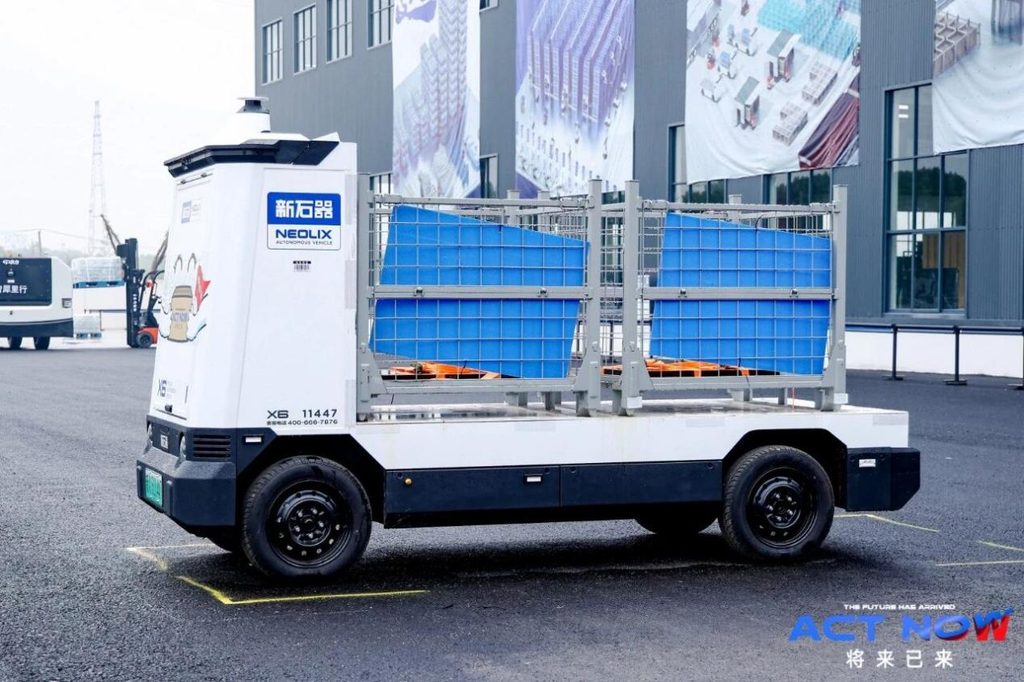
No modifications to existing loading‑unloading platforms are required. All scenarios are refined under real‑world operating conditions into standardized delivery templates readily replicable across ports, manufacturing plants, logistics hubs and railway trunk‑line sites. This exemplifies EP’s engineering‑driven delivery capabilities for the start‑ and end‑points of logistics workflows.
2.2 Autonomous Transport: Tiered Adaptability for Full Operating Conditions to Enable Full‑Domain Autonomous Circulation
Intra-logistics transport acts as the vital nexus connecting loading‑unloading, warehousing and production lines, characterized by complex operating conditions and highly divergent enterprise requirements. EP has built a matrix of autonomous transport solutions ranging from entry‑level inclusive models up to hundred‑unit‑scale clusters. Standardized engineering capabilities cover diverse scenarios to deliver seamless end‑to‑end circulation across workshops and industrial parks, indoors and outdoors.
Multi‑floor automatic transport: lightweight solutions for small‑and‑medium‑sized manufacturing
Addressing high manual reliance for multi‑floor‑factory transport and high retrofitting thresholds for traditional automation, EP offers a lightweight automatic transport solution. The complete system does not depend on factory‑site Wi‑Fi. Built‑in communication modules enable automatic docking with elevators and automatic doors. Multiple robot models work in relay to complete cyclic inter‑floor transportation. Delivered out‑of‑the‑box with no civil‑engineering retrofits required.
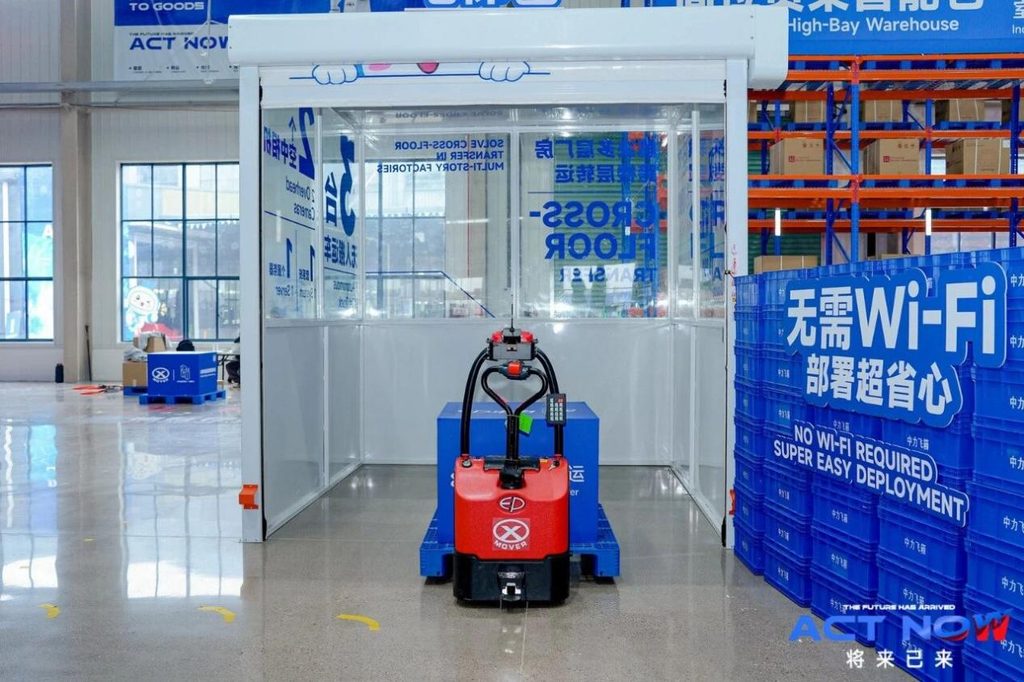
Already deployed in home‑appliance manufacturing and other industries, the solution improves inter‑floor turnover efficiency and serves as a mature low‑cost automation choice for small‑and‑medium‑sized manufacturers.
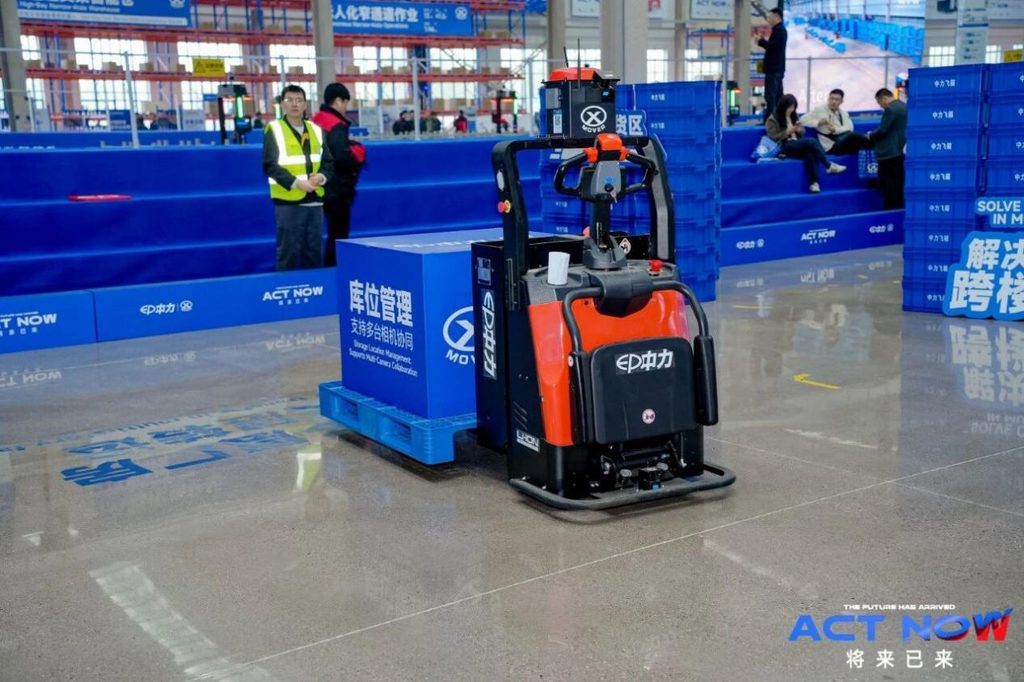
Indoor‑outdoor linked transport: breaking boundaries for seamless full‑domain connectivity
For common pain points of numerous intra‑inter‑logistics hand‑off bottlenecks and complex outdoor operating conditions, EP provides a full‑range product portfolio:
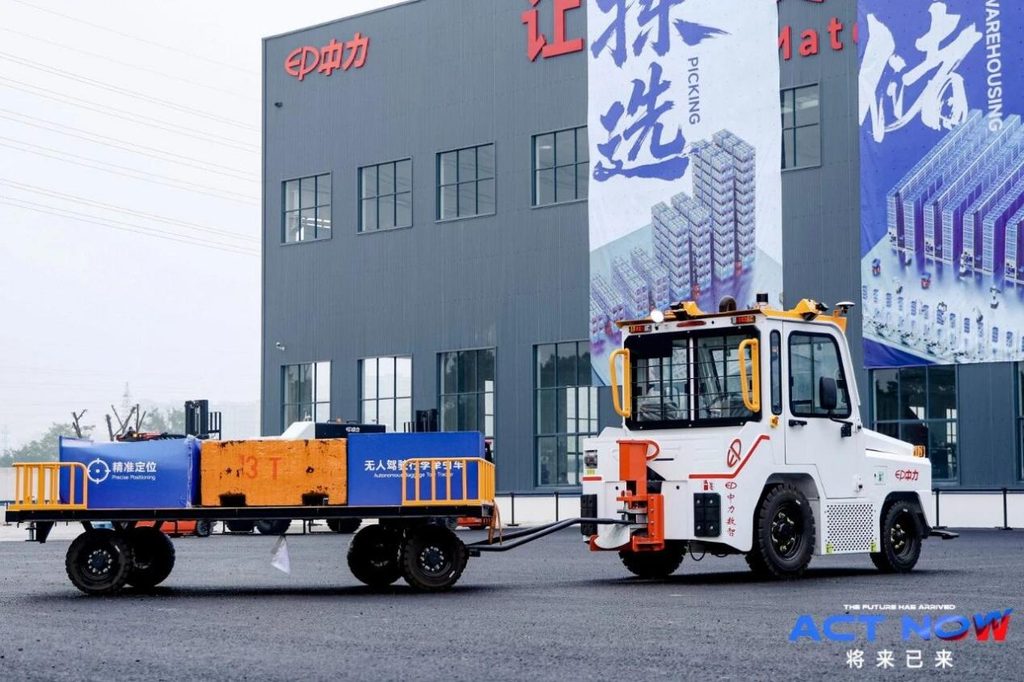
The 2.0-ton indoor-outdoor autonomous pallet truck transports goods from the work zone to outdoor staging points. Loading robots accurately load cargo onto 25-ton unmanned heavy-duty flatbeds and 2-ton unmanned logistics vehicles for autonomous transit to the next destination.
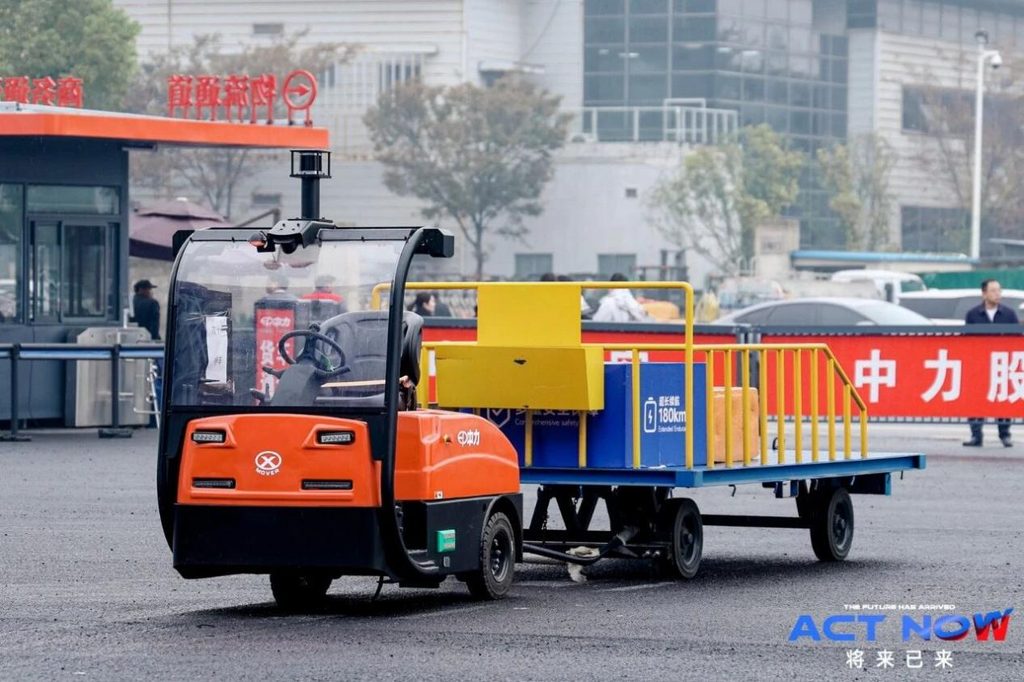
The 6-ton autonomous outdoor towing tractor can hitch multiple material carts and adapt to all-weather working conditions. The 25-ton heavy-duty flatbed handles cross-site transfer of bulk, irregular and oversize cargo. Unmanned campus logistics vehicles support large-scale autonomous delivery 7×24. Custom models are available for special scenarios such as airport towing, fully breaking down indoor-outdoor logistics barriers.
Autonomous Cross Docking: verified on the thousand‑robot scale for large‑scale replication
For large‑scale sorting hubs and factory trunk‑line scenarios, the autonomous cross docking solution represents a benchmark capability proven in thousand‑unit‑scale real‑world deployments.
Equipped with high‑speed handling robots achieving a full‑load travel speed of 10 km/h, it relies on the DAS Digital‑Intelligence Brain for global scheduling and dynamic obstacle avoidance for hundreds of robots, attaining a task‑execution accuracy rate of 99.99%.
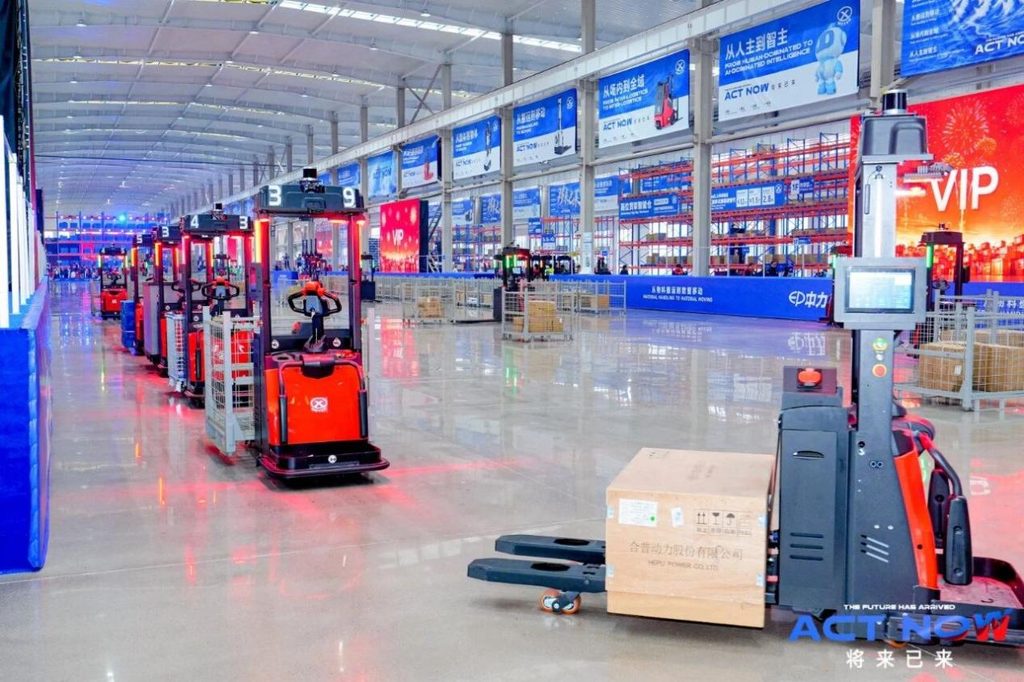
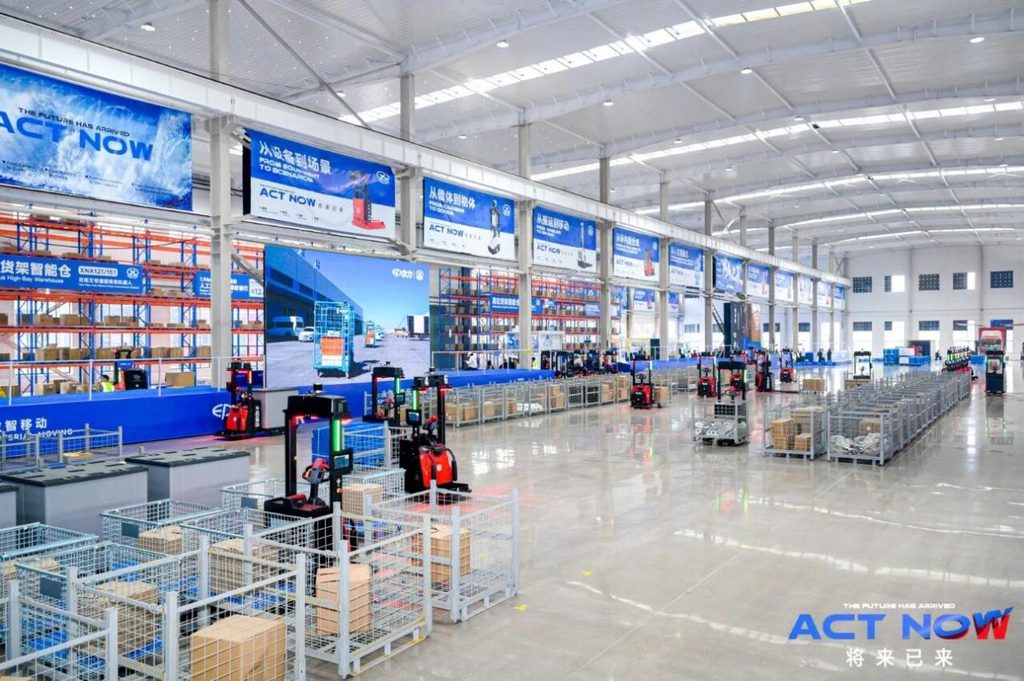
Within the express‑delivery sector alone, more than 5,000 units of this solution have been put into operation. One benchmark project deploys over 200 units, and the solution can be rapidly replicated for other high‑throughput transfer scenarios.
Flexible transport for manufacturing: AI autonomous decision‑making for dynamic operating conditions
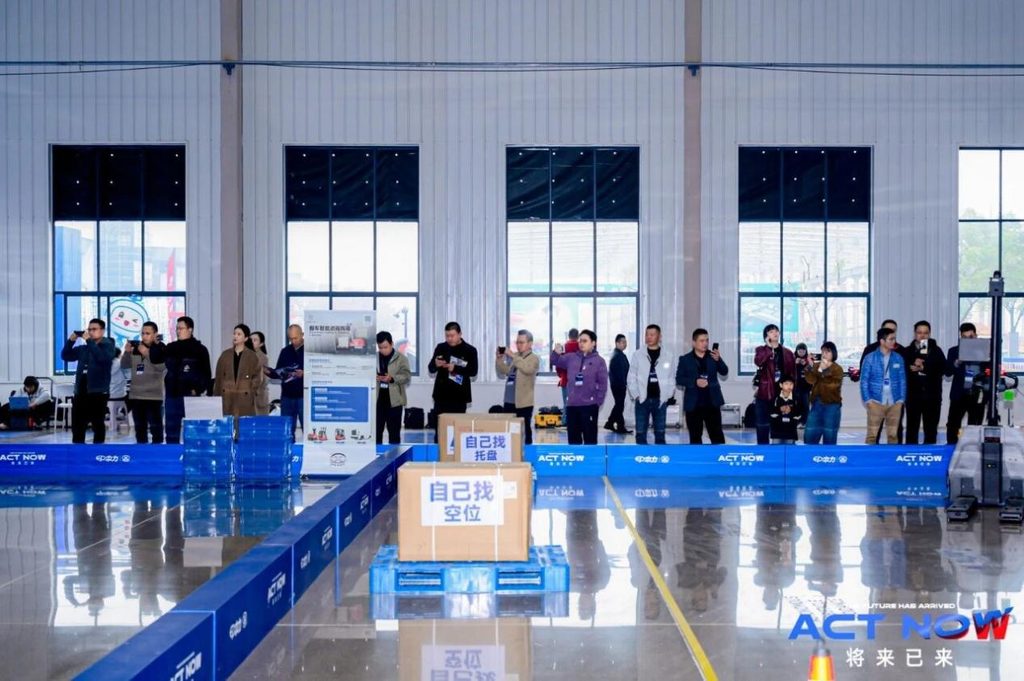
For manufacturing‑workshop environments featuring randomly‑placed materials and dynamically‑changing obstacles, EP offers AI‑powered autonomous pallet trucks.
Unlike conventional equipment that “stops upon detecting obstacles”, these robots recalculate paths in real time for detours. They independently complete goods retrieval, positioning and storage‑location placement without pre‑programmed routes or bin locations. They automatically locate source‑area goods and target‑area storage positions. Lightweight deployment adapts to dynamic‑workshop environments, advancing workshop logistics from “automatic” toward “autonomous”.
Specialized adaptations for niche scenarios: low‑cost upgrades for existing warehouses
Specialized solutions are available for special‑purpose loads and narrow‑aisle operating conditions.
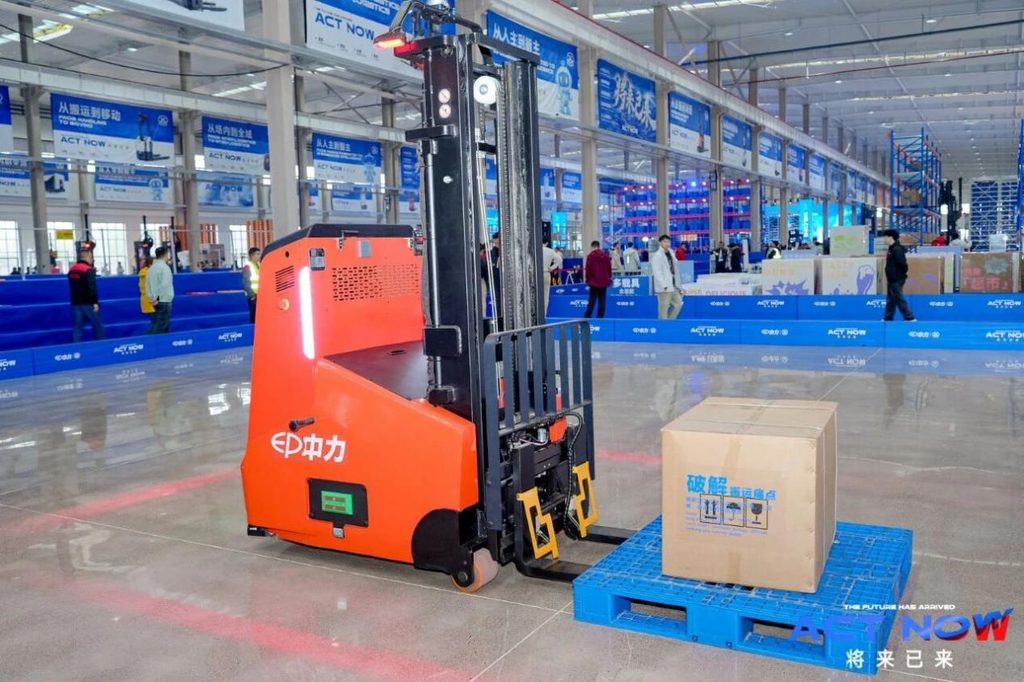
Bottom‑lifting logic for closed pallets fundamentally avoids fork‑insertion interference and supports multiple pallet types.
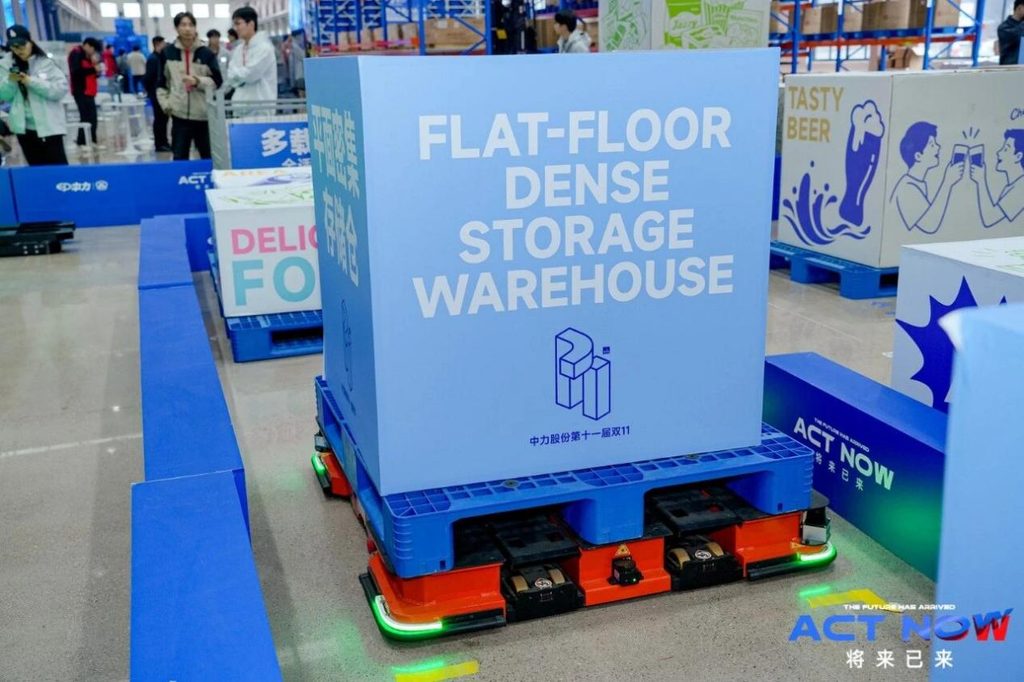
Narrow‑aisle models fit aisles as narrow as 1.94m and greatly boost storage density.
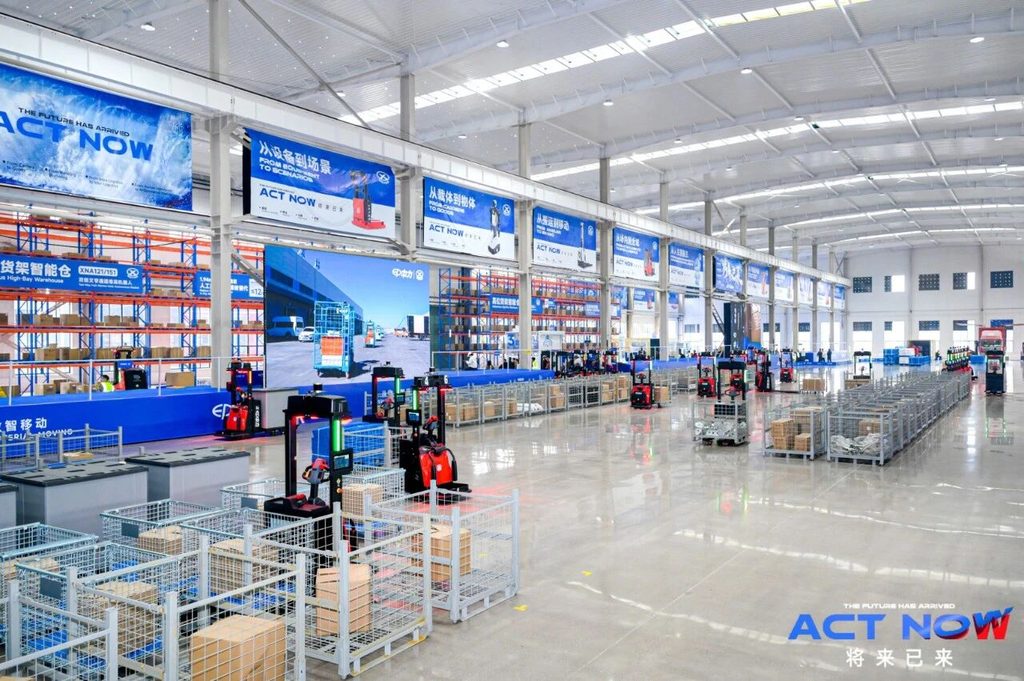
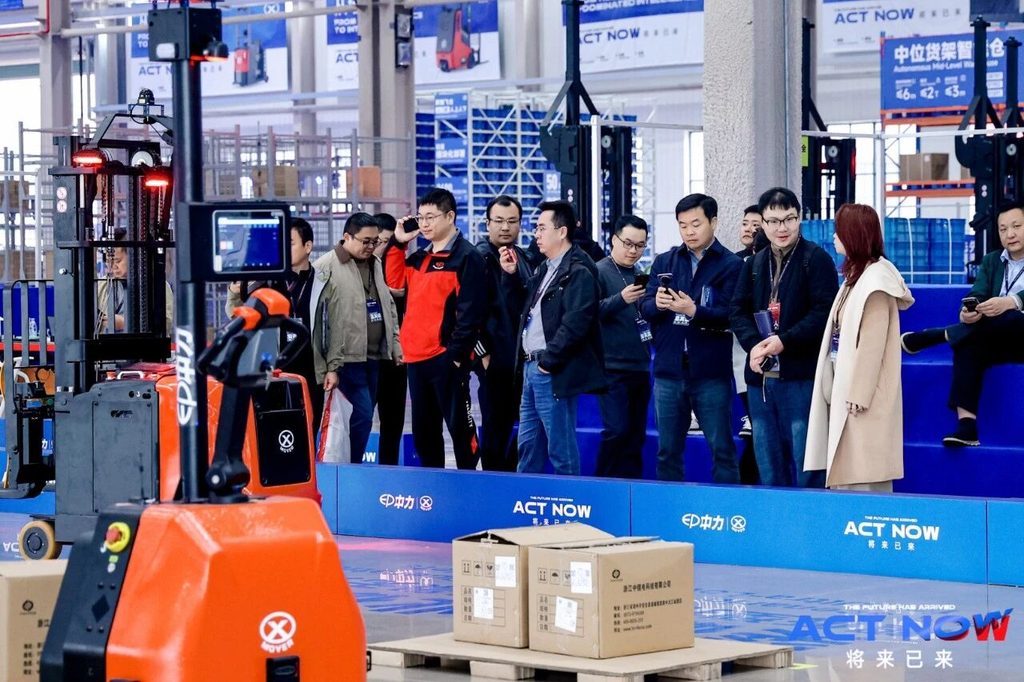
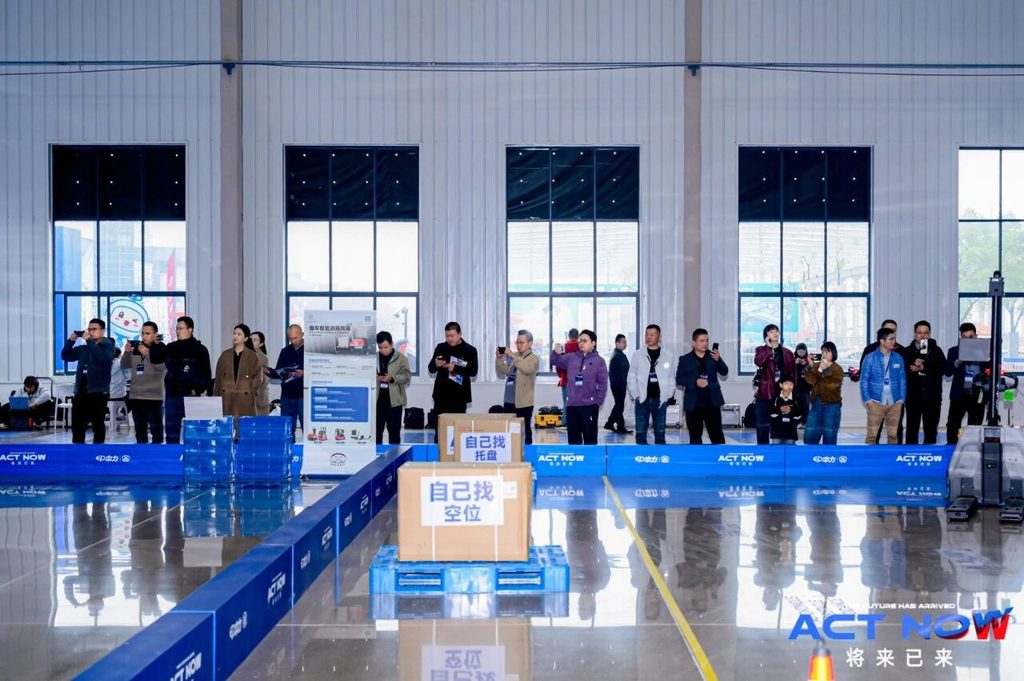
Additional omnidirectional transport robot and batch‑towing robots cater respectively to high‑frequency docking in narrow aisles and mass feeding for production‑line workflows. Existing warehouses can achieve automation upgrades without major reconstruction.
All solutions in the portfolio are validated under real‑world operating conditions. Combinable on demand and rapidly deployable, they embody EP’s core engineering‑delivery strengths of tiered adaptability and fast replication.
2.3 Warehouse @ Anywhere: Tiered Adaptability for All Storage Formats to Unlock Warehouse‑Space Value
EP’s Warehouse @ Anywhere solution operates under the philosophy: “Stack anything, store anywhere”. Centered on the DAS digital autonomous system, standardized load‑carrying units and X-Mover robots as execution terminals, it breaks constraints imposed by material shapes and warehouse‑space limits. Five mature solution families are available: DASP Order Picking System, Autonomous No-aisle Warehouse, Autonomous Rack Warehouse, Shuttle Warehouse and AS/RS. They support enterprises in upgrading from manual and boundary‑limited warehouses toward digital, intelligent and “all‑purpose” warehouses.
DASP Order Picking System: integrated storage‑and‑picking, core upgrade solution for small‑parts inventory
EP’s DASP Order Picking System uses “standard racks + material totes + robots” for high‑density vertical storage of small‑parts goods, offering three progressive tiers: Standard Version, Tote‑to‑Workstation and Goods‑to‑Operator. The upgraded Tote‑to‑Workstation and Goods‑to‑Operator end‑to‑end solutions were major new releases at this grand event. Users can implement them in phases to match enterprise‑specific automation‑upgrade rhythms.
Standard Version
An entry‑level lightweight solution with minimum rack height of 250 mm, boosting storage‑location density 3‑5‑fold versus traditional modes. Single‑tote access cycles are ≤ 25 seconds. It supports 7‑day fast deployment and unlimited modular expansion, and seamlessly interfaces with customers’ existing WMS systems. It fits basic‑storage scenarios such as e‑commerce forward warehouses, production‑line side warehouses and pharmaceutical‑compliant warehouses.
Tote‑to‑Workstation: delivering full totes directly to workstations and eliminating wasted walking
Building on high‑density storage capacity, this solution delivers an automated closed‑loop covering inbound processing, storage, transport and picking: “depalletizing inbound → DASP storage → AMR full‑tote delivery to workstations”.
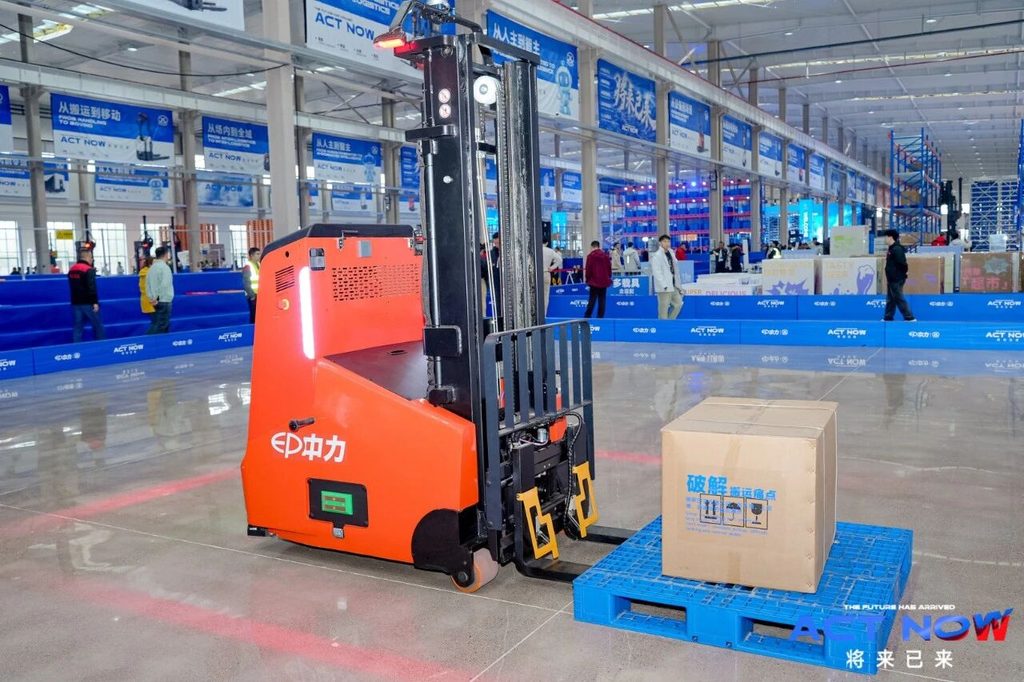
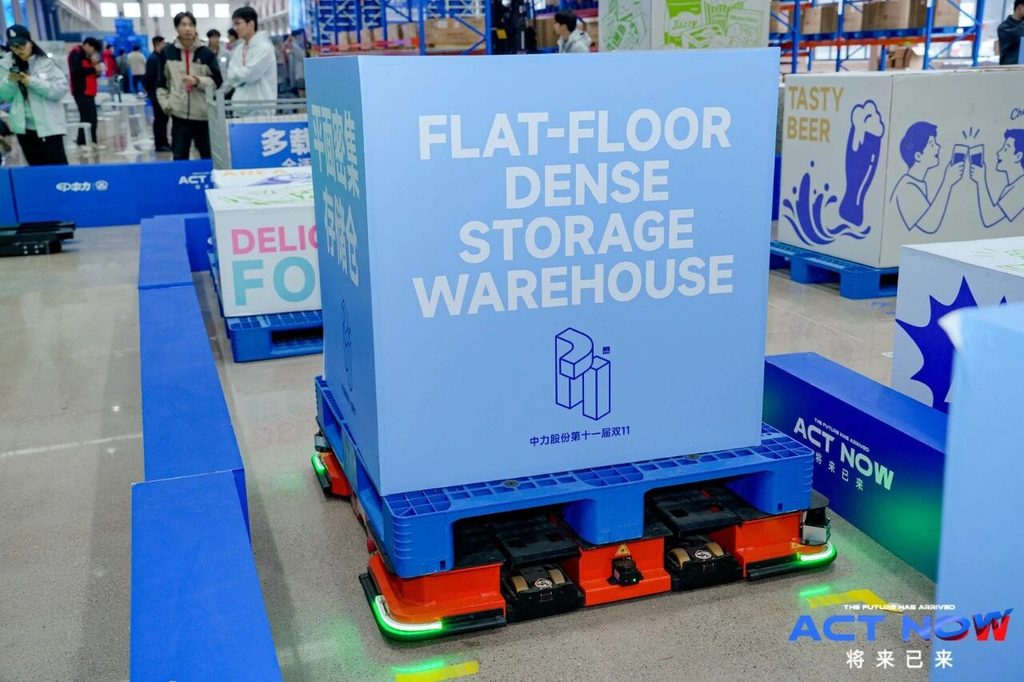
Tote‑to‑Workstation (DASP variant)
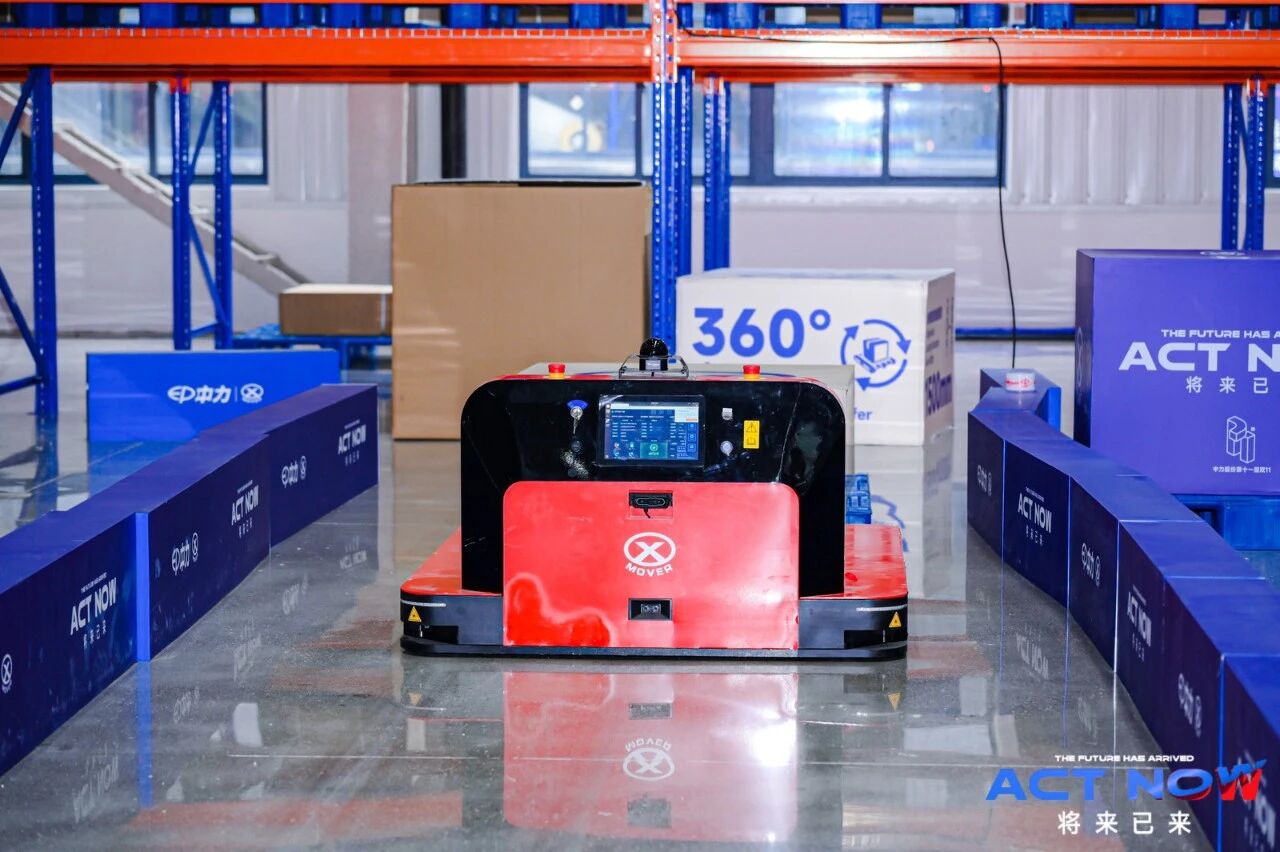
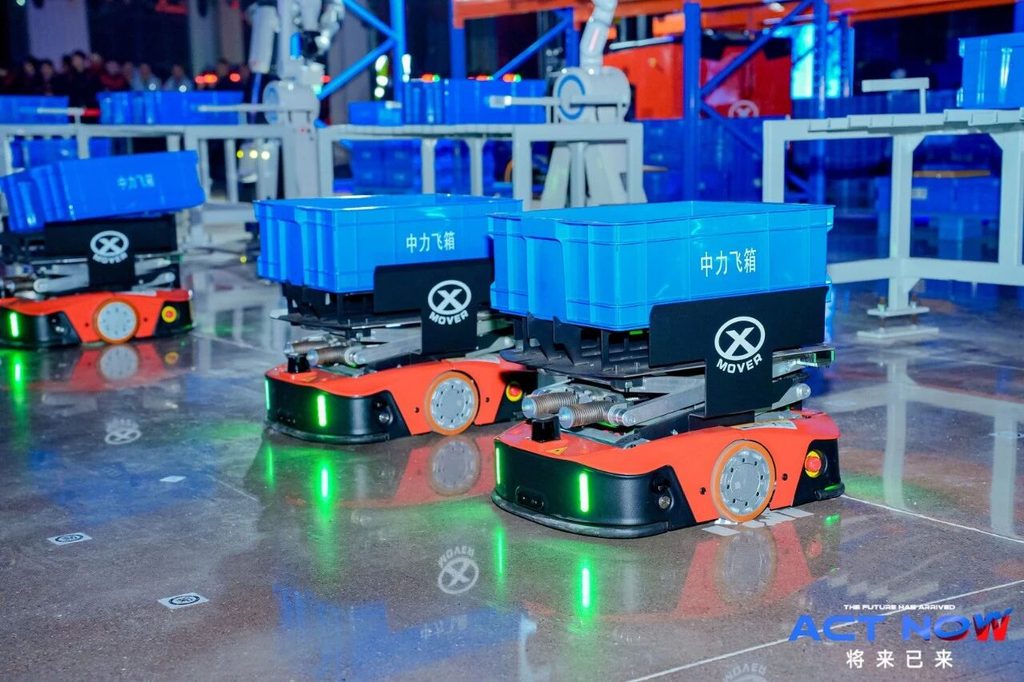
The full-case depalletizing robot automates bulk tote putaway. Paired with underride lifting AMRs for outbound operations, the system reaches a full-load speed of 2 m/s. Upon receiving outbound orders, the AMRs automatically retrieve totes and deliver them precisely to picking stations. Workers no longer need to travel across the storage area and can focus on picking tasks. Overall efficiency rises by over 40%, ideal for integrated warehousing and sorting scenarios.
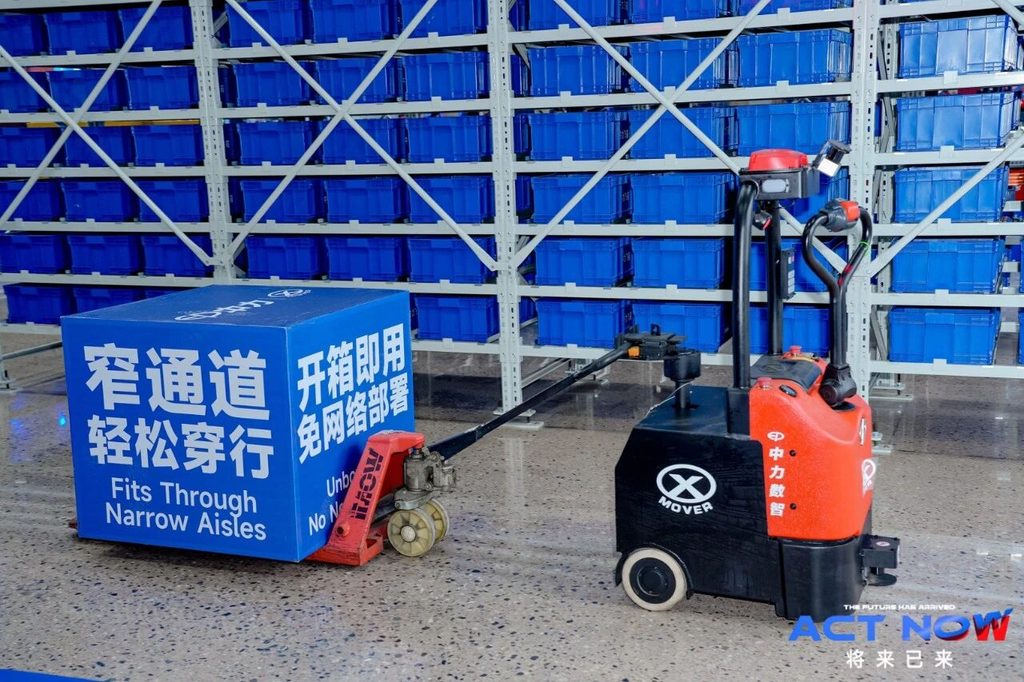
Tote‑to‑Workstation (Rack variant)
For legacy narrow‑aisle rack warehouses without rack dismantling‑and‑rebuilding. Adopts “autonomous dual‑sided fork stacker + embodied-AI picking robots”. Stacker handle high‑level access for pallet‑mounted material totes, UOR1 undertake full‑tote transport and connection operations, reaching a working height of 2.5 m with 25 kg single‑arm payload, replacing manual heavy‑load tote‑handling and high‑position retrieval. Suited for production‑line‑side warehouses and finished‑goods warehouses in manufacturing‑industry legacy‑site upgrades.
Goods‑to‑Operator: full‑unmanned picking for high‑rhythm production lines
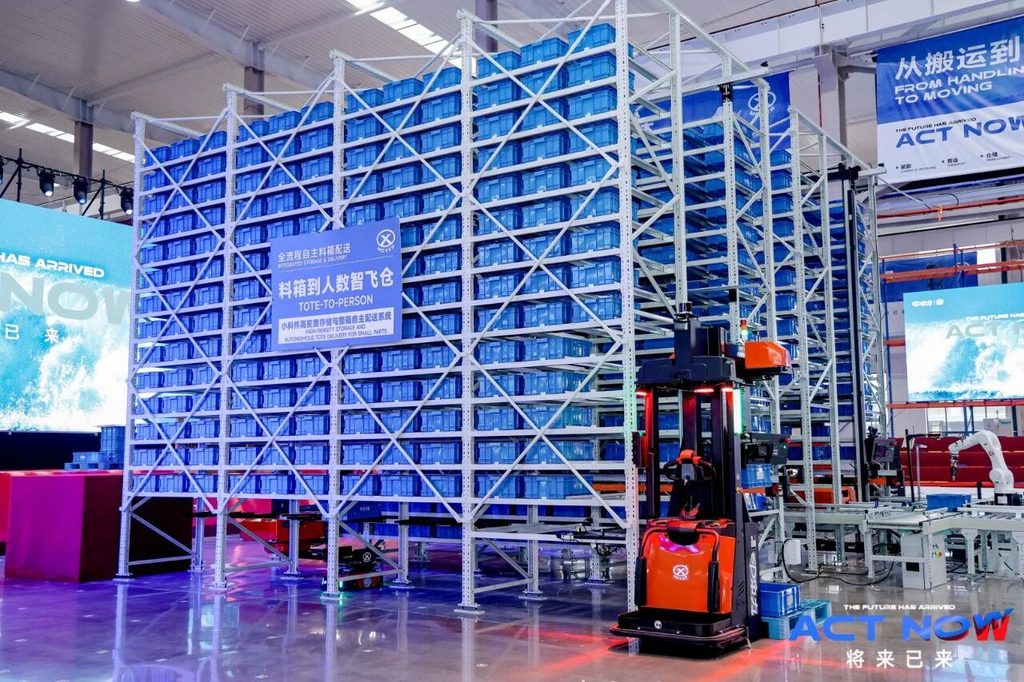
As the high‑tier offering within the DASP system, the Goods‑to‑Operator mode extends automation to picking operations, realizing “picked‑goods delivered directly to operators”. This represents a core highlight of this round of upgrades.
Goods‑to‑Operator (DASP variant)
Integrates depalletizing equipment, conveyor lines and industrial robotic arms for fully unmanned inbound‑storage‑outbound‑picking workflows. Robotic arms accurately perform automatic picking of multi‑category small‑parts with a picking accuracy rate of 99.99%. Picking cadence matches production‑line rhythms, fitting multi‑SKU, small‑batch high‑flexibility feeding scenarios in electronics, auto‑parts and other sectors.
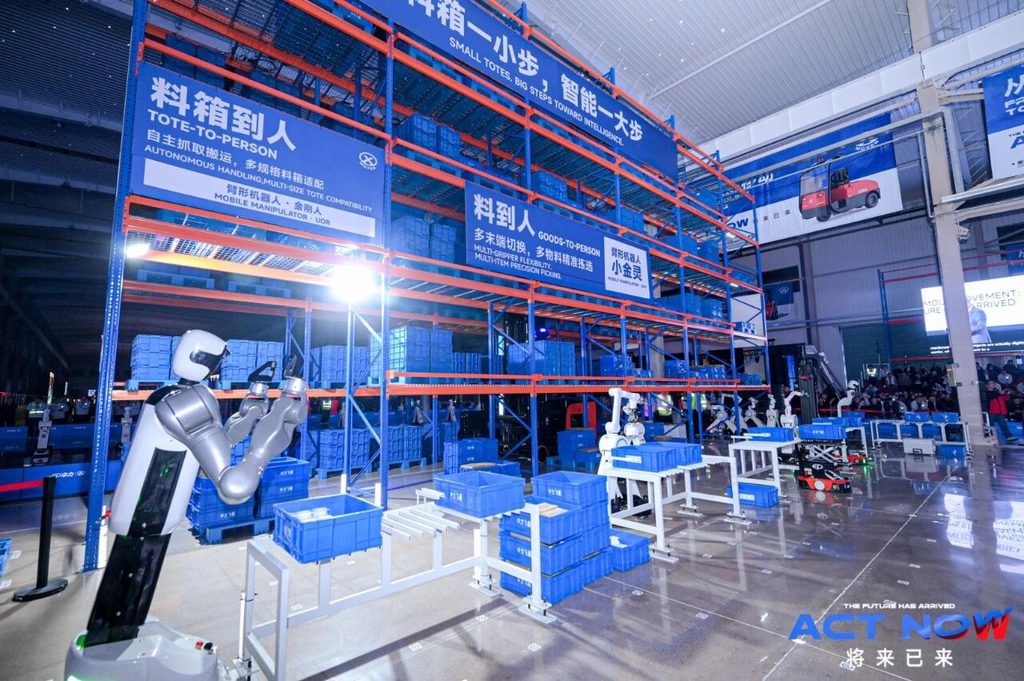
Goods‑to‑Operator (Rack variant)
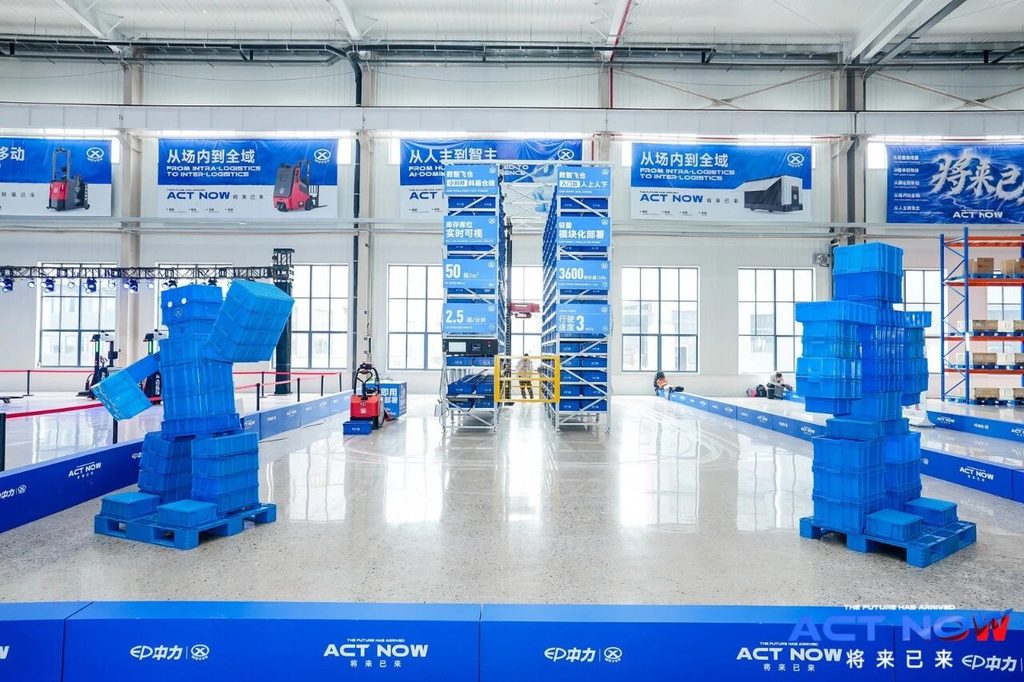
For legacy narrow‑aisle warehouses, the combination of autonomous stacker + UHX arm‑integrated picking robots is deployed. Stacker execute high‑level access for full‑pallet material bins. The UHX features integrated body‑and‑arm mechanics: it automatically picks goods out of totes, stores them in its on‑board storage compartment and autonomously travels to workstations. Combining picking and transport capabilities, it requires no extra conveyor‑line infrastructure and offers high deployment flexibility for multi‑station flexible‑material‑supply scenarios.
Autonomous No-aisle Warehouse: multi‑load‑unit compatibility for high‑density floor‑level capacity expansion
16 warehousing autonomous reach‑stacker demonstrated cluster‑scale operations on‑site for the first time at large scale, simultaneously stacking and transporting six load‑unit types including gitterboxes, standard cartons, storage cages and pallet boxes, showcasing powerful multi‑load‑unit compatibility.
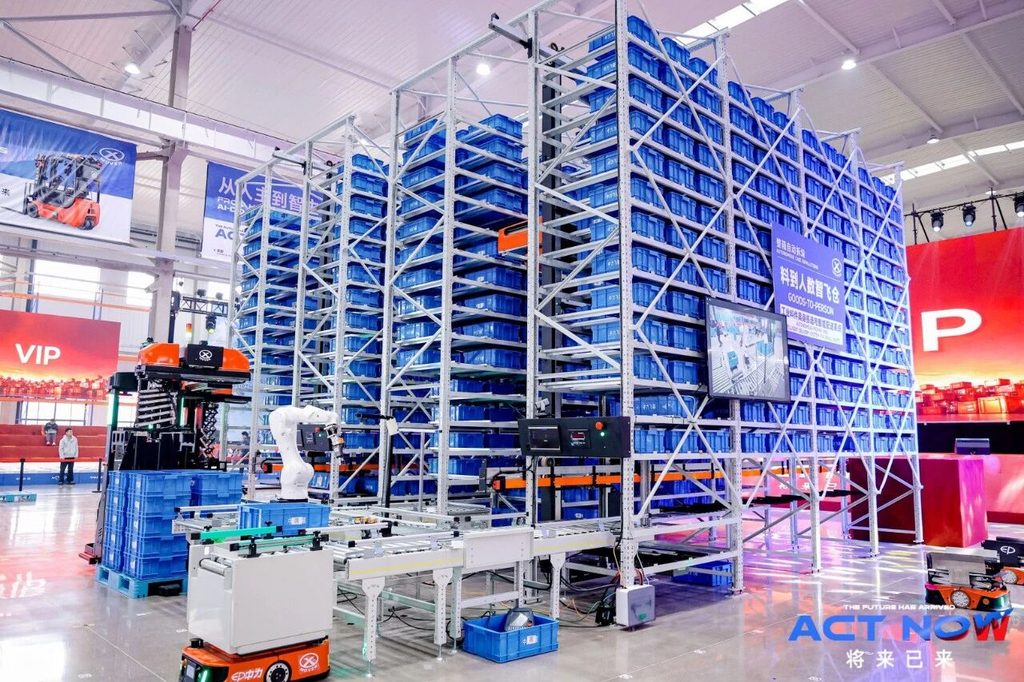
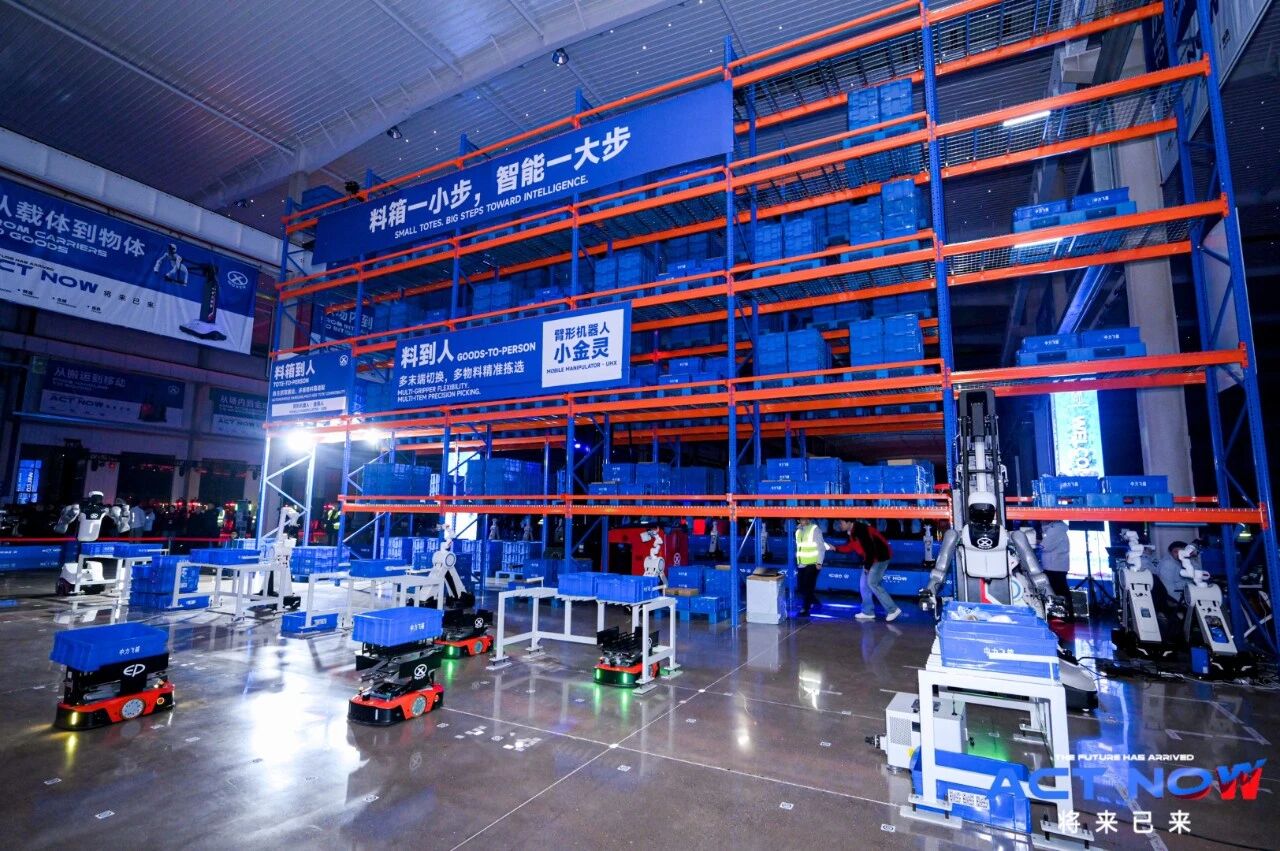
Key capability upgrades were rolled out: robots now handle two pallets in one fork‑lift cycle instead of one, substantially increasing operational throughput and further amplifying compact‑warehousing performance advantages.
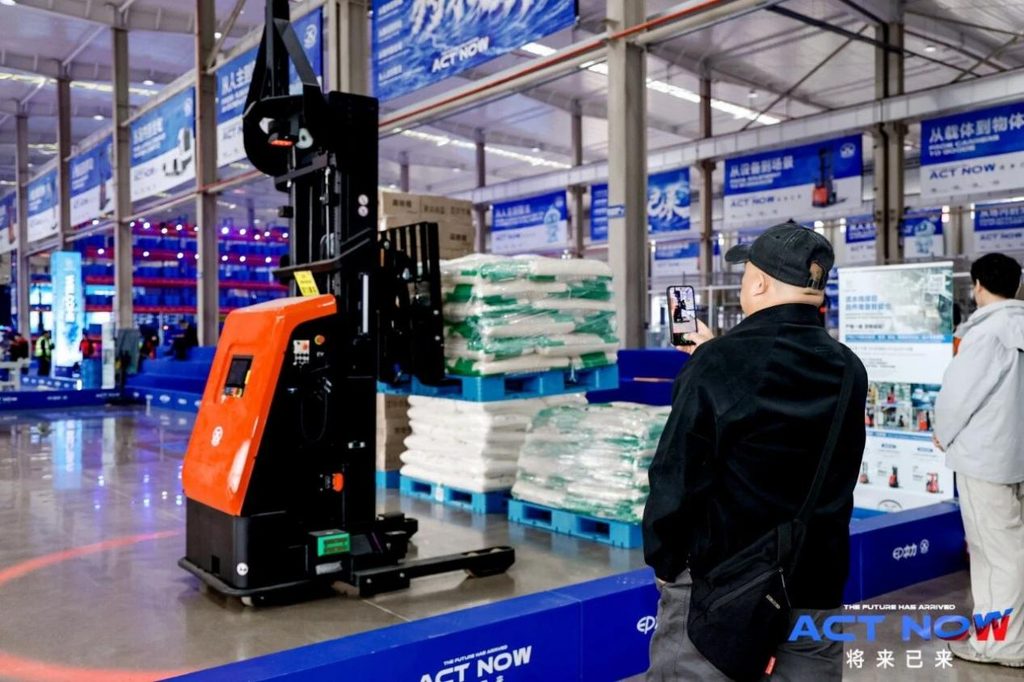
Grain‑and‑oil flexible‑bag scenarios: Overcoming industry‑wide challenges of stacked‑deformable flexible bags, EP’s Autonomous Compact‑Warehouse stackers deploy laser vision and hybrid force‑position control for millimeter‑level stacking‑profile adjustment, while re‑using customers’ standard pallets. It supports 7.5‑meter‑deep racking layouts with narrow 25‑cm gaps, lifting storage capacity by 30%. It enables 7×24‑hour lights‑out operations and runs complete workflows from production‑line inbound processing to outbound stock preparation. It has been deployed at scale at Yihai Kerry.
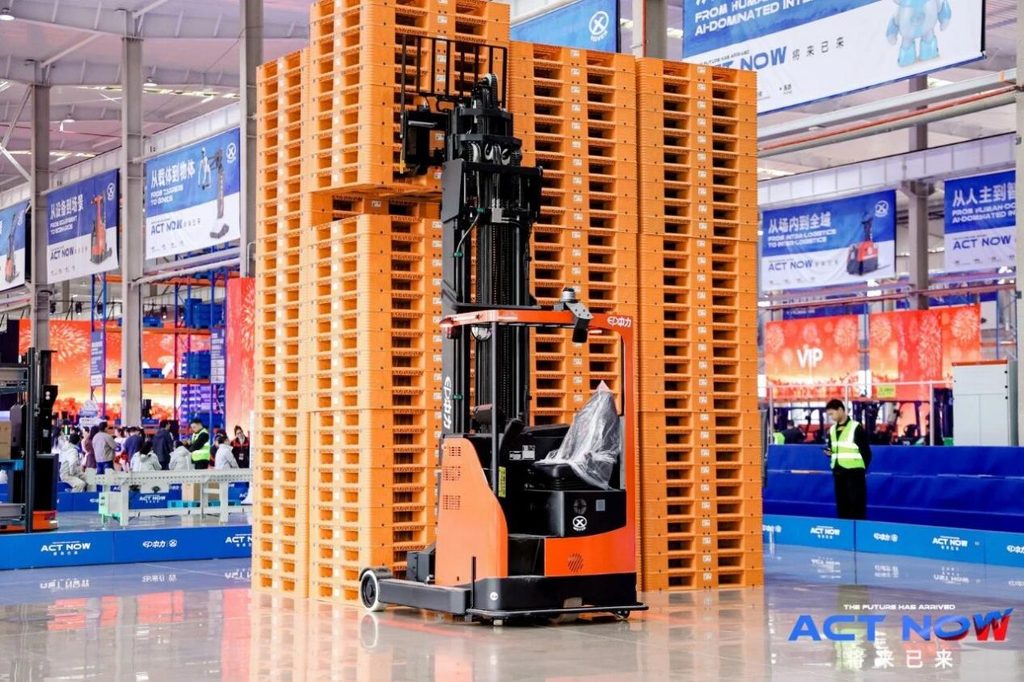
Floor‑level dense stacking for returnable pallets: On‑site demonstrations showed high‑level free‑standing stacking without racks. Addressing mixed‑storage of multi‑specification returnable‑packaging units with high turnover frequency, EP autonomous reach trucks perform precise stacking at several‑meter heights, supporting closed pallets and multi‑size material totes. They seamlessly connect with conveyor lines and elevators to link production‑and‑warehousing workflows end‑to‑end, well‑suited for high‑frequency circular‑turnover modes. Validated in large‑scale returnable‑packaging projects for leading industry players.
Autonomous Rack Warehouse: tiered‑adaptability for all aisle widths to enable lightweight upgrades for legacy warehouses
Addressing pain points of inconsistent legacy‑warehouse aisle dimensions, underutilized high‑level space and high‑retrofit costs, EP delivers a full‑coverage solution matrix for narrow‑ and regular‑width aisles. Existing rack structures require no dismantling‑and‑rebuilding for fast warehousing‑automation upgrades.
Narrow‑aisle rack solutions (aisle width ≤ 1.94 m)
Powered by proprietary‑patented dual‑sided fork technology. Robots access goods on both sides of aisles without turning; robot‑body width equals required aisle width, fitting legacy warehouses with inherently cramped aisles.
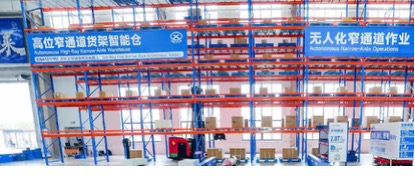
Mid‑high‑level scenarios
The XNA121/151 autonomous double-sided fork narrow-aisle stacker requires an aisle width of 1.94 m and delivers a maximum lifting height of 13 m. It can pick and place goods on racks on both sides of the aisle while travelling straight ahead. Suitable for high-bay finished-goods warehouses of 3PL, food and FMCG enterprises, it unlocks idle upper storage capacity with zero warehouse modification.
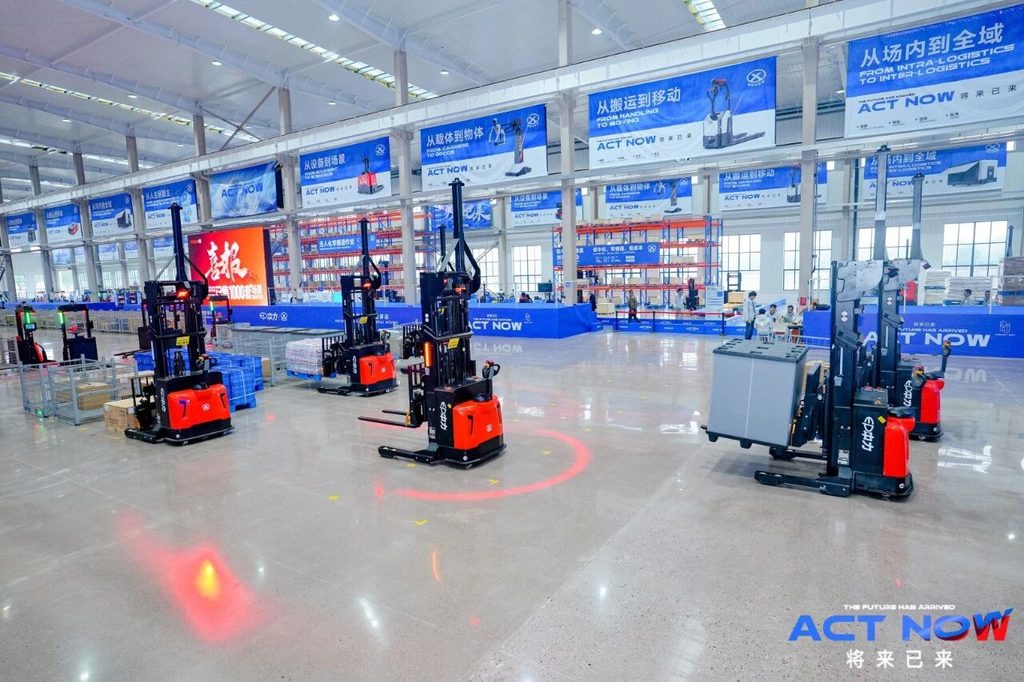
Low‑and‑mid‑level scenarios
XNA101 autonomous dual‑sided‑fork stacker and XCS101U autonomous side‑fork stacker models cover racks below 6 m height. Suited for mechanical‑manufacturing‑parts warehouses and electronics‑workshop side warehouses for stable access within confined spaces and improved space‑utilization rates.
Regular‑aisle rack solutions (aisle width ≥ 3 m)
Covering diverse height‑and‑payload requirements for mainstream legacy racks on‑market with flexible selection and easy implementation.
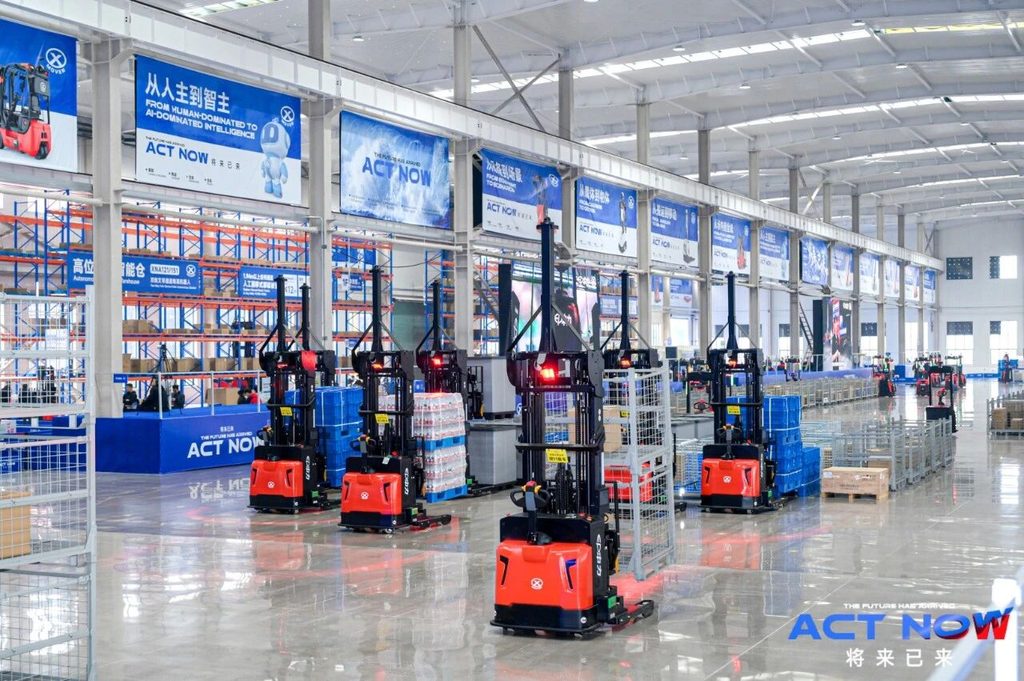
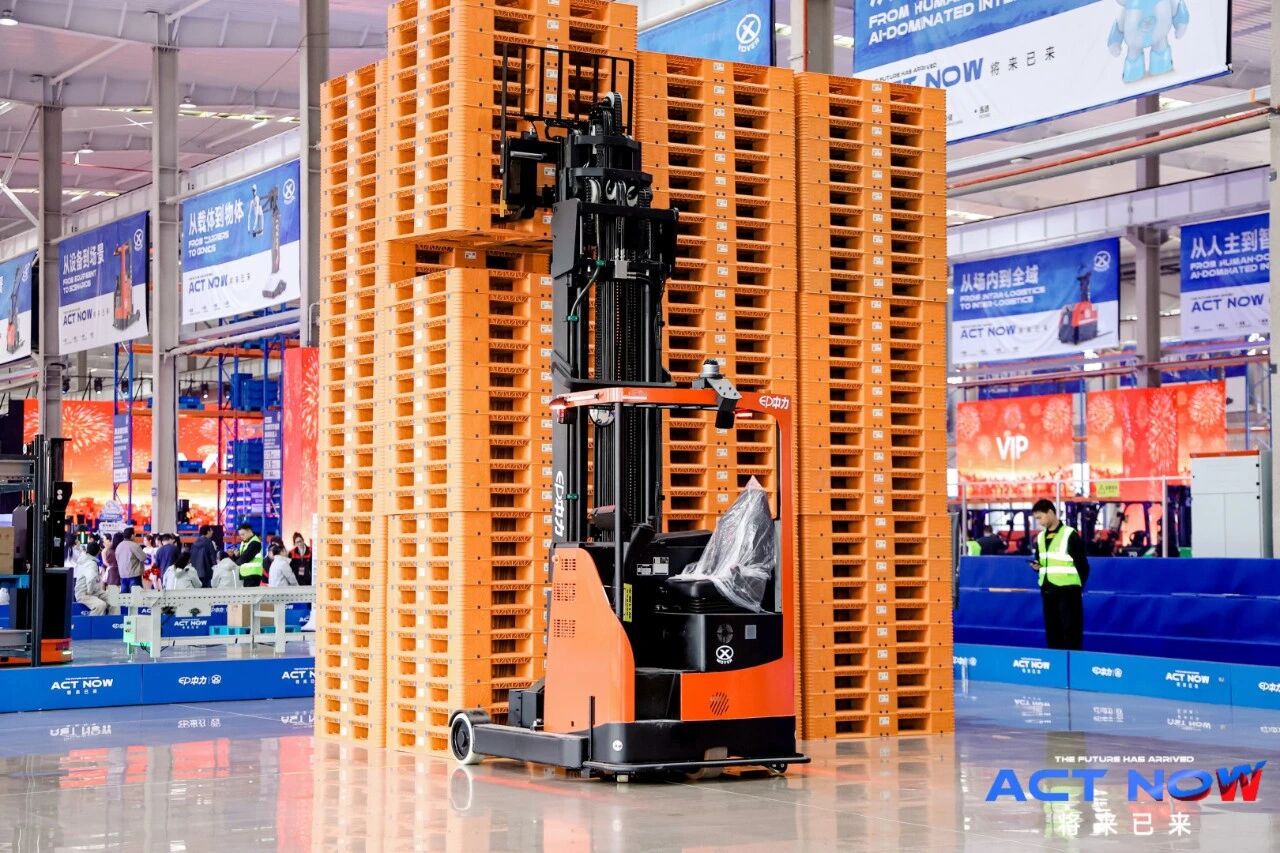
High‑level‑storage scenarios
The XQC163 autonomous reach truck is designed for aisles wider than 3 m, featuring a maximum lifting height of 8.255 m and a rated load of 1.6 tonnes. It supports high-volume pallet inbound and outbound operations in large logistics distribution centers, as well as raw material and finished-goods warehouses for manufacturers. For aisles between 2 m and 3 m, the XNA121autonomous double-sided stacker can be deployed, balancing high-bay access and dual-side handling efficiency.
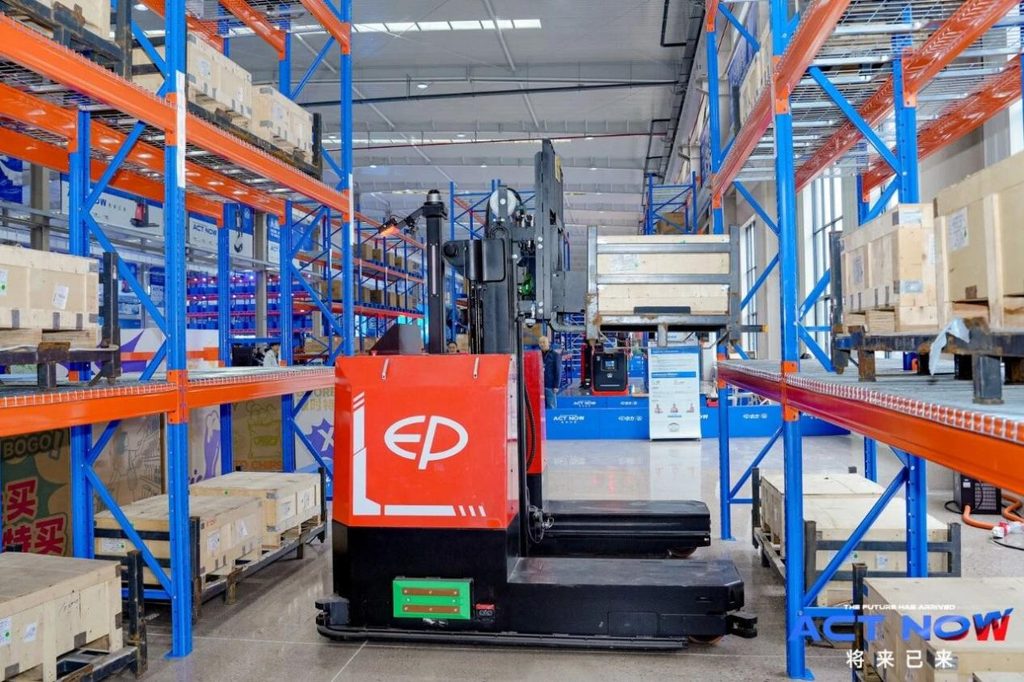
Heavy‑duty long‑material scenarios
The 3.0‑ton mast‑reach omnidirectional robot XQO301 with a 360‑degree omnidirectional chassis performs deep high‑level storage‑and‑retrieval for heavy long‑size goods for special‑storage demands in heavy‑industry sectors.
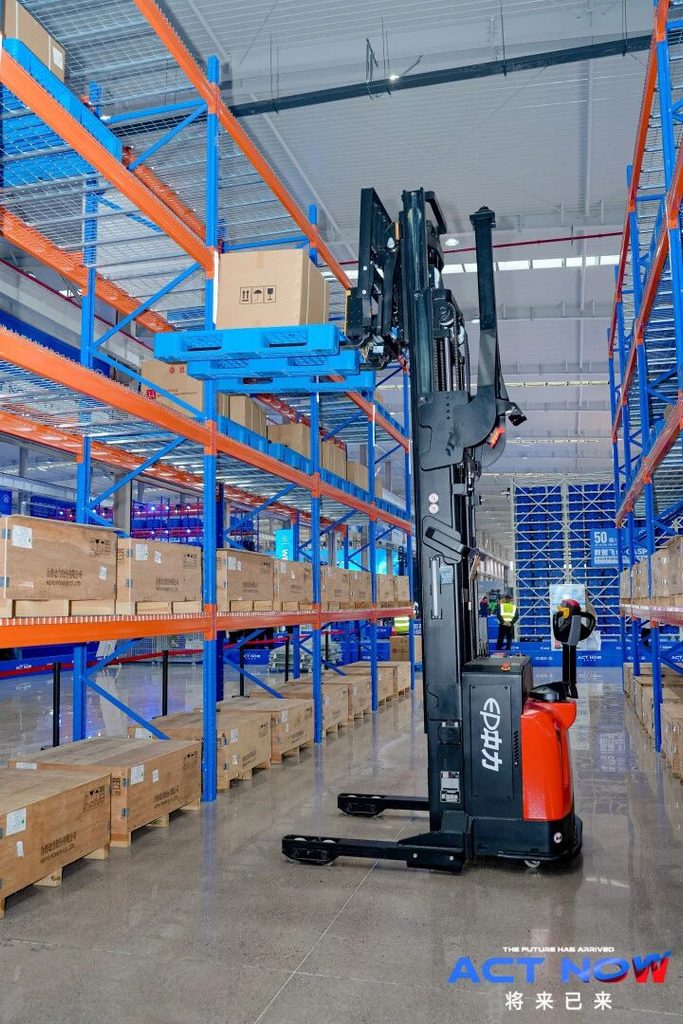
Mid‑level‑storage scenarios
The XQE122 autonomous reach truck adapts to 3‑6 m mid‑high racks, balancing dense stacking and multi‑load‑unit compatibility. The XS1‑series autonomous thin-back stacker serve racks below 3 m height, combining stacking and long‑distance transport for the largest‑share legacy‑mid‑level‑warehouse market segment.
Shuttle Warehouse, AS/RS: high‑density capacity expansion and seamless production‑line coordination
For high‑density‑storage and production‑line‑coordination needs, EP offers two advanced solutions: four‑way‑shuttle warehouses and automated high‑bay warehouses. Both seamlessly interface with conveyor lines to connect production and warehousing workflows.
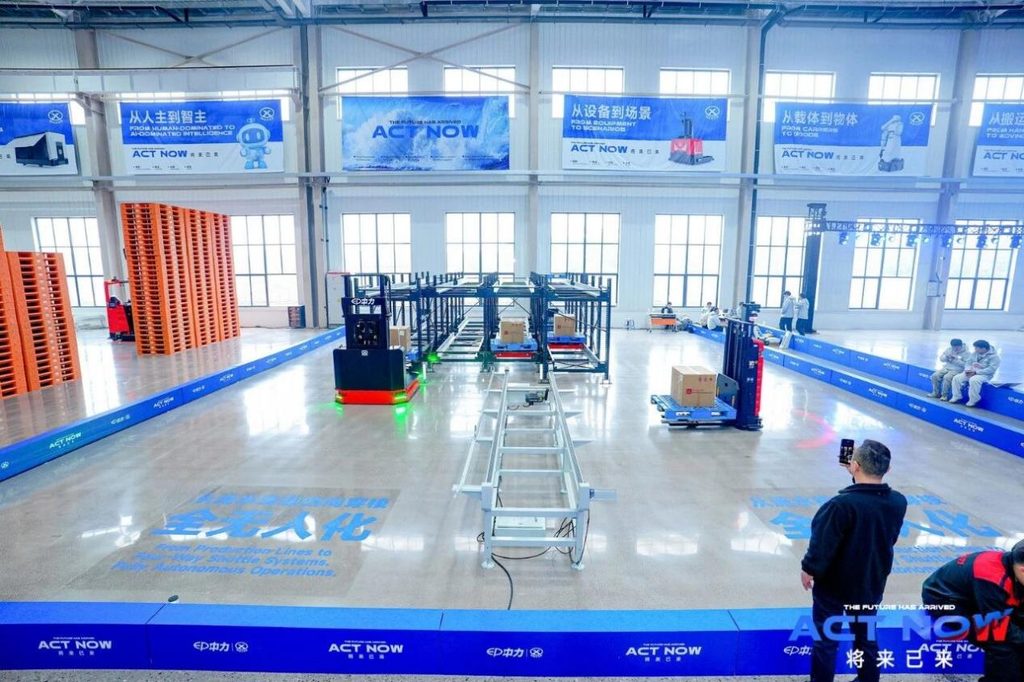
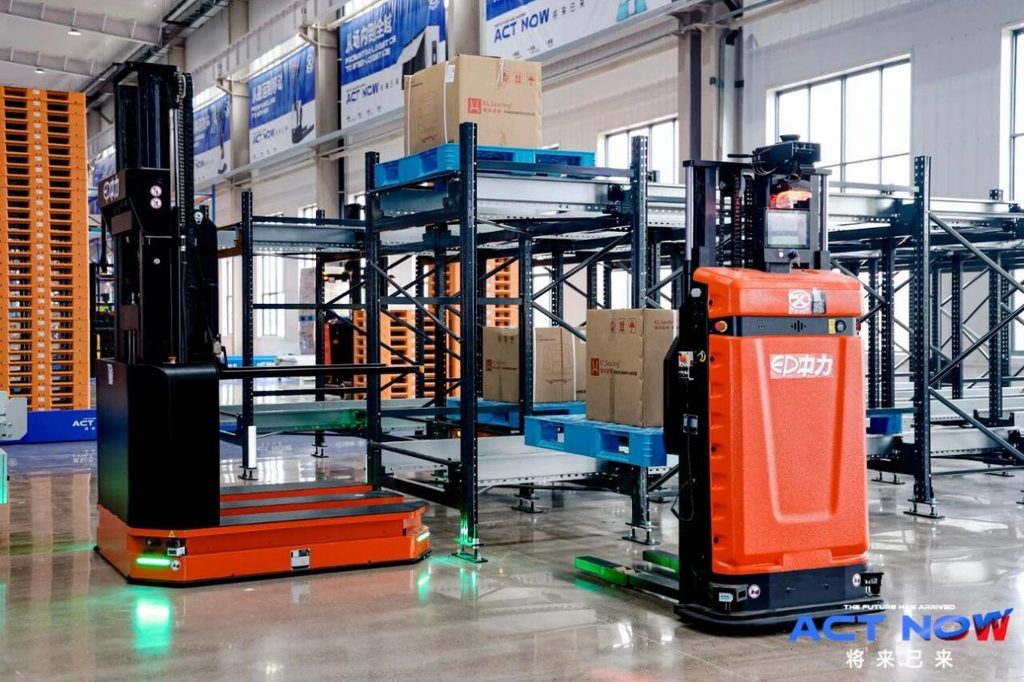
Four‑way‑shuttle warehouse
Shuttle robots travel throughout rack aisles, eliminating turning‑aisle space required for conventional forklifts and greatly boosting storage density. Autonomous side‑mounted stackers perform cargo‑connection tasks and interface with conveyor lines, fitting high‑volume full‑pallet‑storage scenarios for wine‑and‑spirits, cold‑chain and grain‑and‑oil industries.
AS/RS
Leveraging high‑rise racks to tap vertical‑warehouse‑space potential, stacking‑retrieval equipment precisely connects to multi‑height conveyor lines. Production‑line output flows directly into inbound processing; outbound goods are delivered straight to production‑process steps under fully automatic operation with real‑time‑visible inventory data, achieving efficient production‑warehouse synergy for high‑rhythm‑manufacturing scenarios.
2.4 Embodied-AI Picking: Multi‑Robot‑Model Matrix Closing Unmanned‑Operation Gaps at End‑Nodes
End‑node picking features heavy repetitive manual labor and high risks in high‑altitude operations, constituting a core bottleneck for warehouse‑automation realization. EP has built a full‑range embodied‑picking matrix: UOR1, UORH2 and UHX, covering workstation‑level collaboration, heavy‑load pick‑and‑transport and 10‑meter‑high‑altitude operations. These robots integrate deeply into warehousing‑and‑transfer workflows and precisely replace human operators for high‑risk, strenuous and repetitive work.
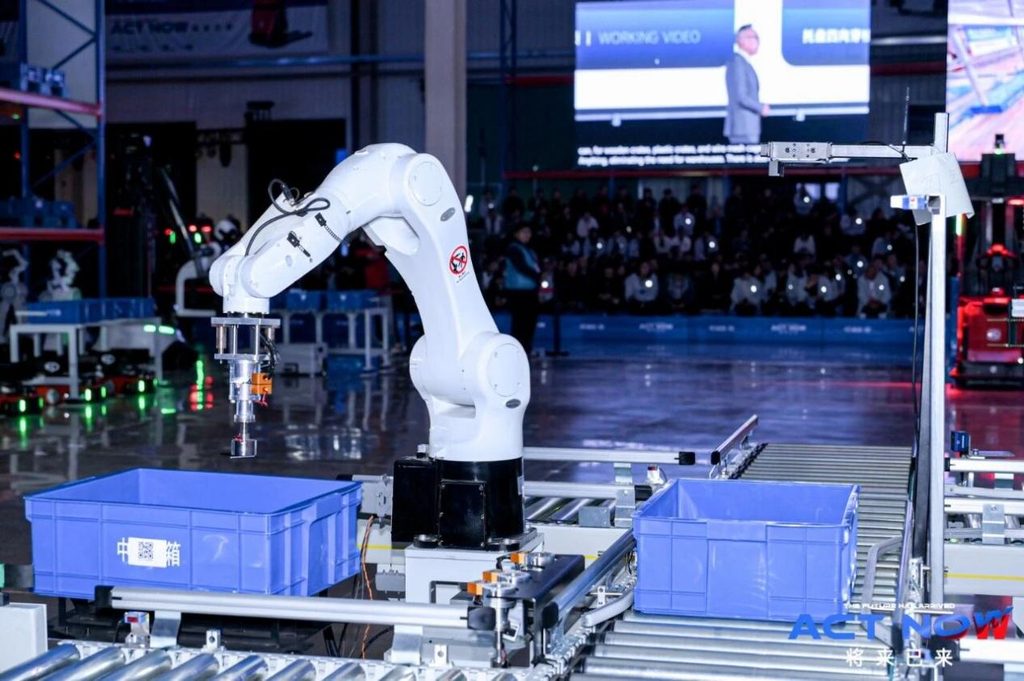
UHX: workstation‑collaborative pick‑and‑transport partner
Upgraded for this event. With integrated body‑and‑arm mechanics plus dedicated on‑board storage compartments, it autonomously completes material picking, load‑unit stowage and autonomous delivery to workstations, combining picking and transport functions. Its compact body navigates narrow gaps between workstations, supporting multi‑station flexible‑material‑supply workflows and replacing manual back‑and‑forth material fetching and bending‑over handling.
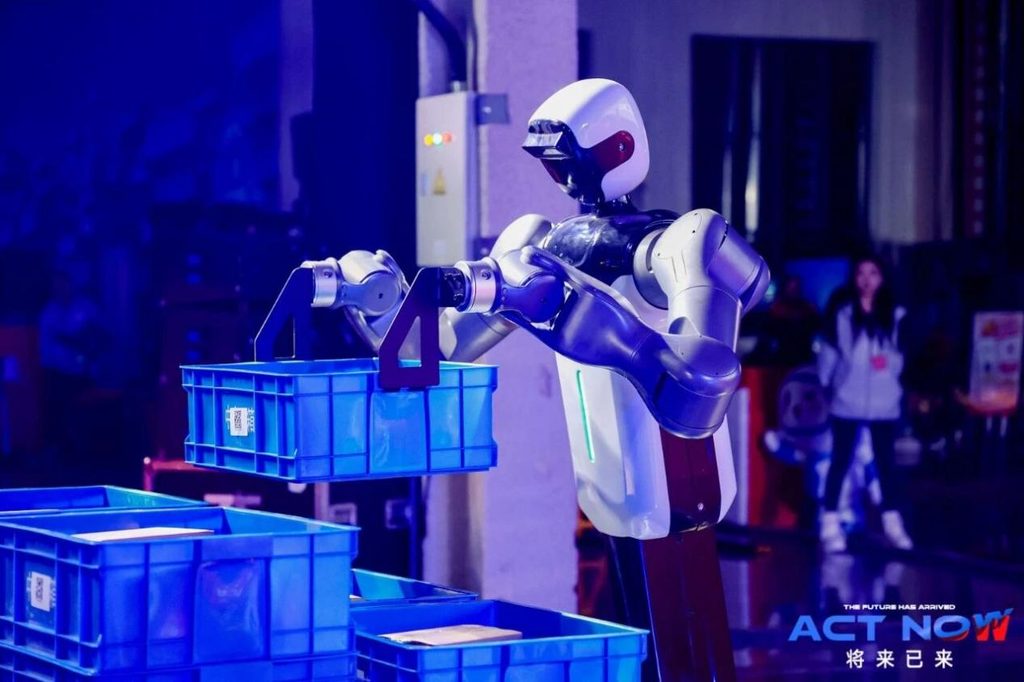
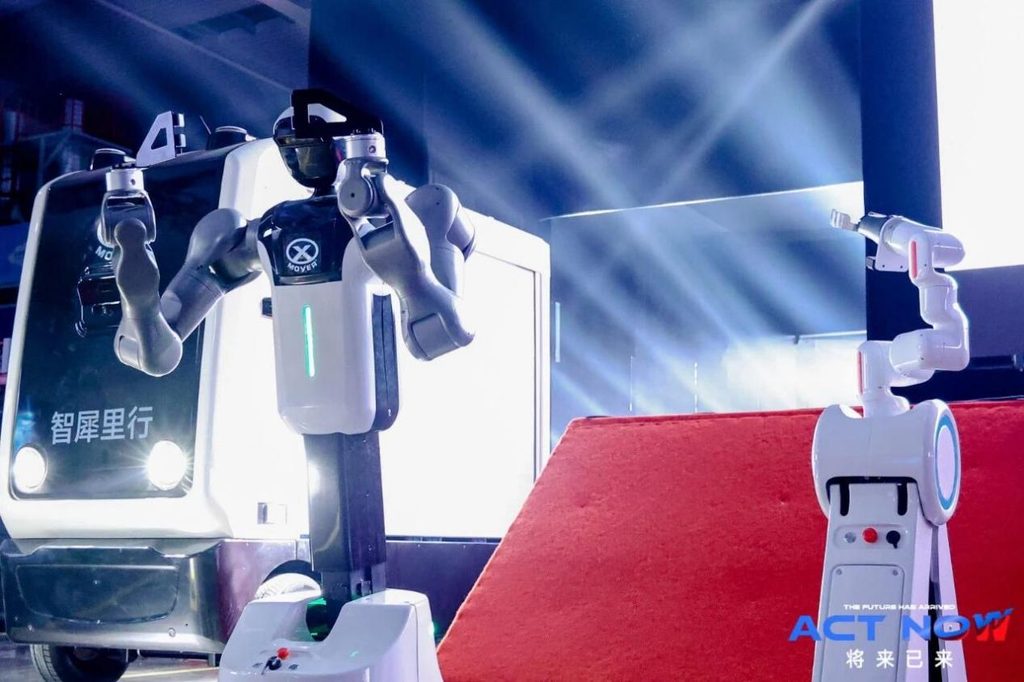
UOR1: heavy‑load long‑reach picking powerhouse
Deep integration of industrial chassis and robotic arms delivers a 25‑kg single‑arm payload and 40‑kg dual‑arm payload, with a 2.5‑meter working height. It performs intra‑tote material picking, tackling heavy‑load long‑reach‑picking workloads too demanding for human operators. Suited for high‑volume material‑tote circulation in parts warehouses and finished‑goods warehouses.
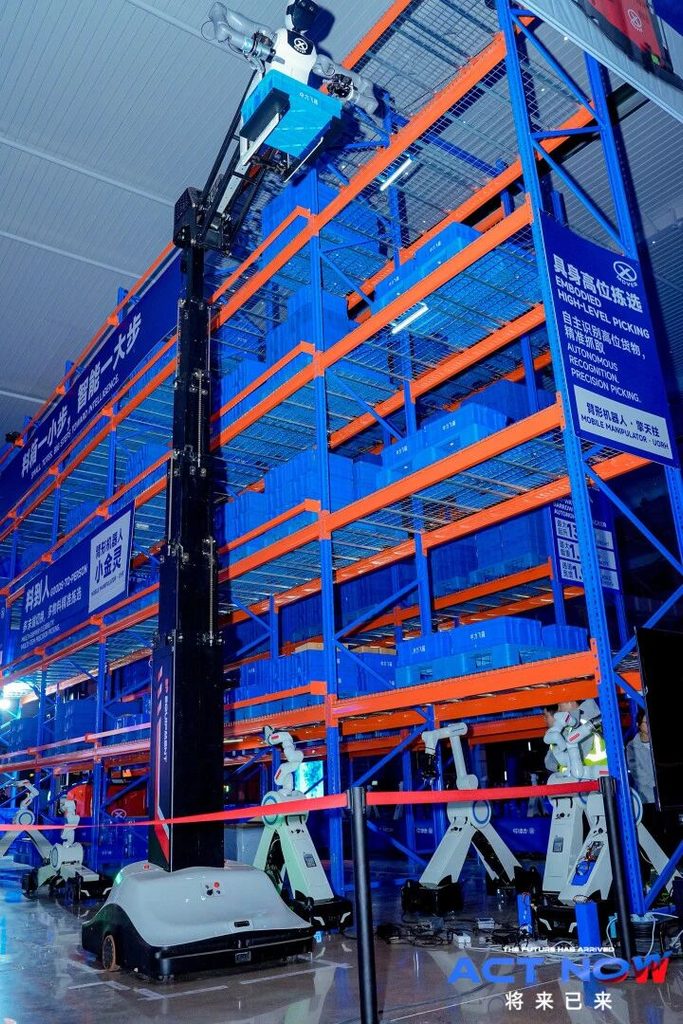
UORH2: risk‑reduction and performance improvement for high‑altitude work
Maximum working height reaches 10 meters, covering all storage locations of high‑level racks. It innovatively supports dual modes: fully‑autonomous picking + remote tele‑operation. Daily tasks run fully autonomously; complex non‑standard assignments can be handled by remote‑control, fundamentally eliminating safety hazards of human high‑altitude work.
Flexible combinations across this robot‑model matrix remove requirements for custom development. Robots go into production upon deployment and rapidly close unmanned‑operation gaps for end‑node picking across diverse scenarios.
Industry Track Records: Large‑Scale Validation Across Multiple Sectors with Benchmark‑Ready Mature Solutions
EP’s autonomous solutions have been deployed at scale across express‑delivery logistics, grain‑and‑oil food, wine‑and‑spirits brewing, home‑furnishing manufacturing, returnable‑packaging and component‑manufacturing industries. Proven under high‑throughput, high‑load real‑world operating conditions at multiple leading‑industry and Fortune‑500 enterprises, workflows are replicable and outcomes quantifiable. Customers may reference these industry benchmarks to accelerate implementation and achieve tangible operational results.
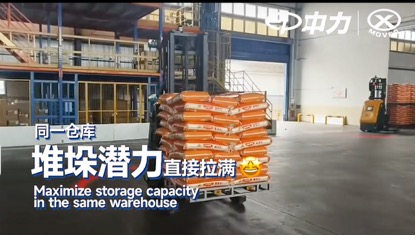
Grain‑and‑oil food: Yihai Kerry project resolves long‑standing challenges of fully‑automated stacking for flexible‑bag goods. Storage capacity rises by more than 30%. 7×24‑hour lights‑out operations are realized, running full workflows from production‑line inbound processing to outbound stock preparation.
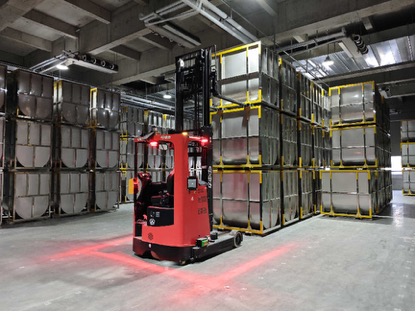
Wine‑and‑spirits brewing: Shihua Distillery Intelligent Brewing‑Center deployment lifts fermentation‑warehouse space‑utilization rate by 20%, saves millions‑level annual warehousing costs and reduces energy consumption by 10%, while fundamentally eliminating high‑risk‑operating hazards.
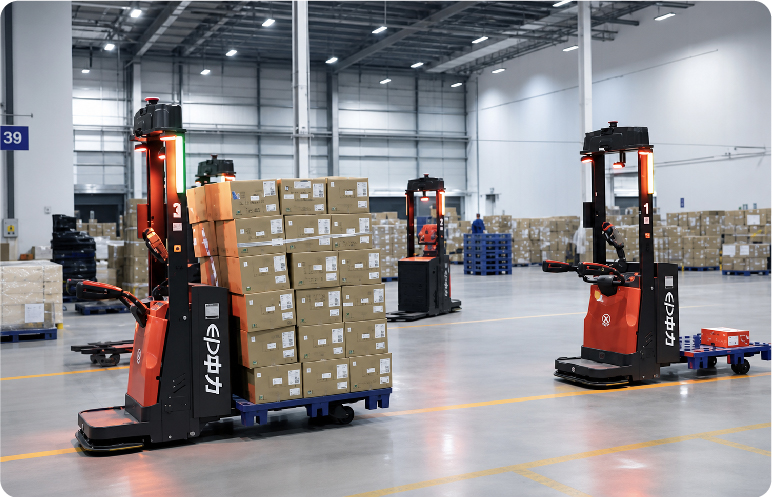
Express‑delivery logistics: More than 5,000 units of the Intelligent DC high‑speed‑transfer solution are in operation. After deployment at Cross‑Express, single‑day operating costs dropped by 11%, and the solution was rapidly replicated across multiple national service‑network sites.
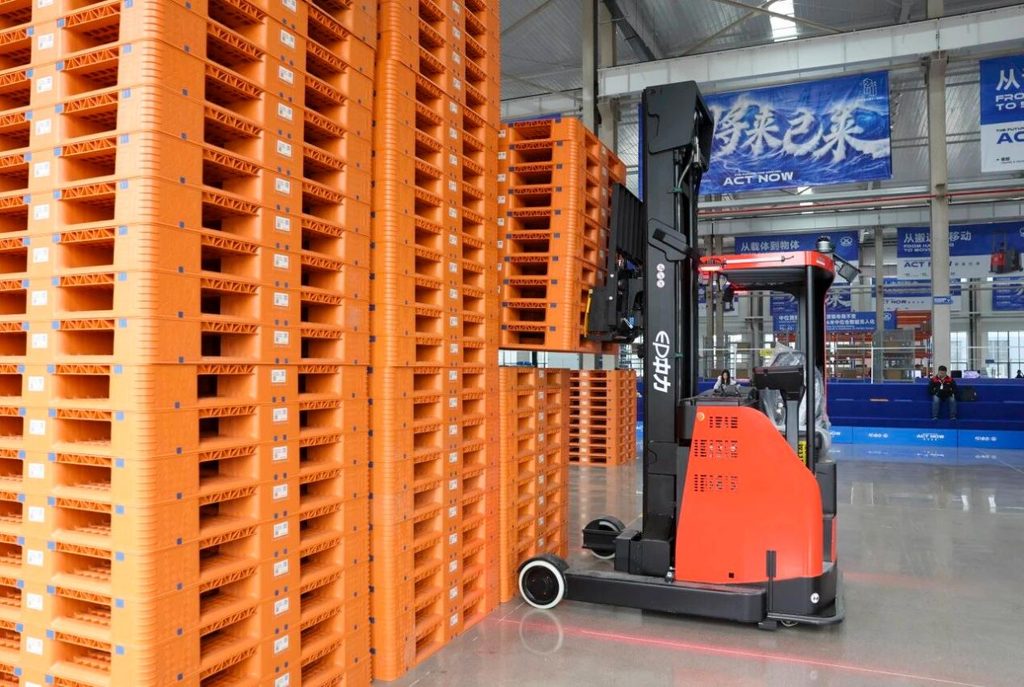
Returnable packaging: A large‑scale project for a leading‑industry player supports mixed‑storage and high‑frequency circulation of multi‑specification pallets. Automated pallet stacking enables fully‑automatic circulation, well‑matched to high‑frequency shared‑turnover modes.
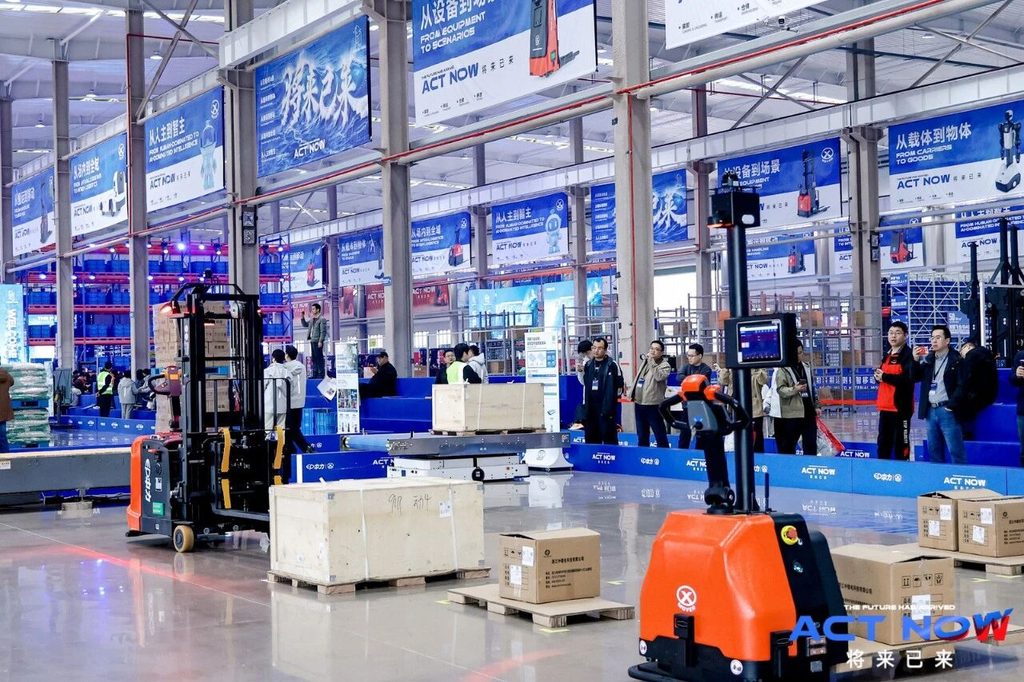
Home‑furnishing manufacturing: End‑to‑end solutions for low‑height non‑standard pallets accommodate industry‑specific low‑profile paper pallets. End‑to‑end workflows from production‑line end‑points to warehousing eliminate secondary manual‑handling steps.
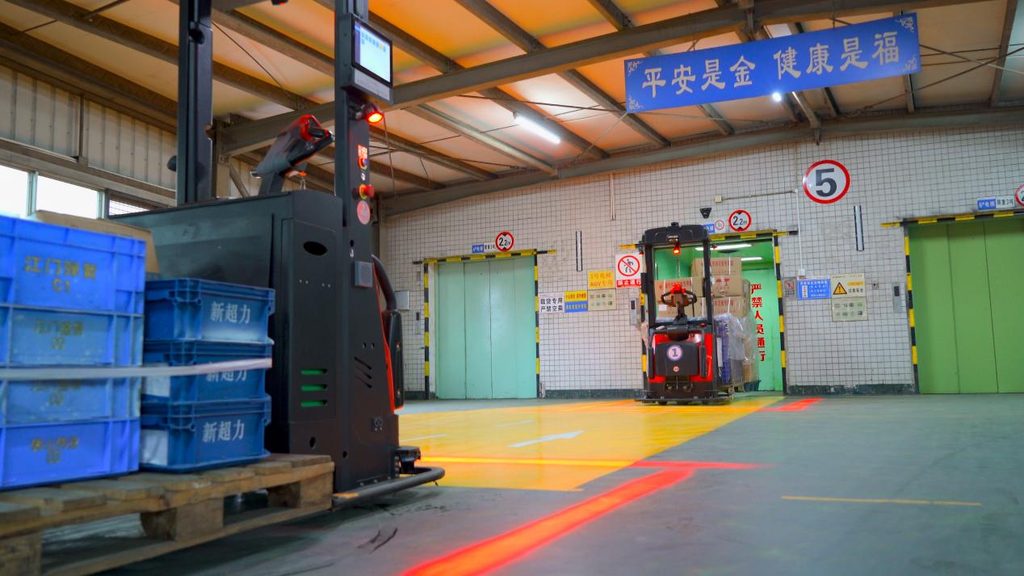
Automotive & Motorcycle Manufacturing: Efficient transport over an ultra-long distance of 600 m, supporting cross-floor and cross-workshop transport. It boosts operational efficiency by 30% and helps reduce overall manufacturing costs.
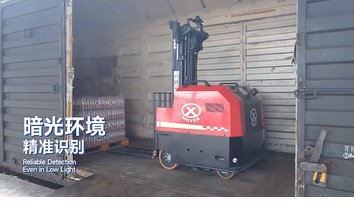
Railway trunk‑line logistics: R&D outcome under China Railway. The 45‑ton heavy‑duty unmanned reach stacker leads railway‑unmanned‑system loading‑unloading demonstrations reviewed by industry experts in Changsha, realizing fully‑autonomous railway‑container operations with official authoritative recognition.
From factory‑floor production to railway trunk‑line operations, from consumer‑goods sectors to heavy‑industry manufacturing, every solution originates from real‑business pain points and is refined through practical‑field validation for fast replicable deployment. These represent tangible proof of EP’s engineering‑driven‑delivery capabilities.
Ecosystem Empowerment: Full‑Industrial‑Chain Synergy Expands Industrial Delivery Boundaries
Concurrent with the grand event, EP signed strategic‑cooperation agreements with multiple leading‑industry enterprises. Partnerships deepen collaboration on embodied‑intelligence‑technology R&D, in‑depth exploration of segmented scenarios and supply‑chain cooperation. Drawing on respective strengths in technology, scenarios and resources, partners pursue co‑innovation, resource complementarity and shared market success. This further enriches scenario coverage and technical depth for engineering‑driven delivery, driving industrial evolution from standalone‑equipment supply toward full‑ecosystem co‑construction.
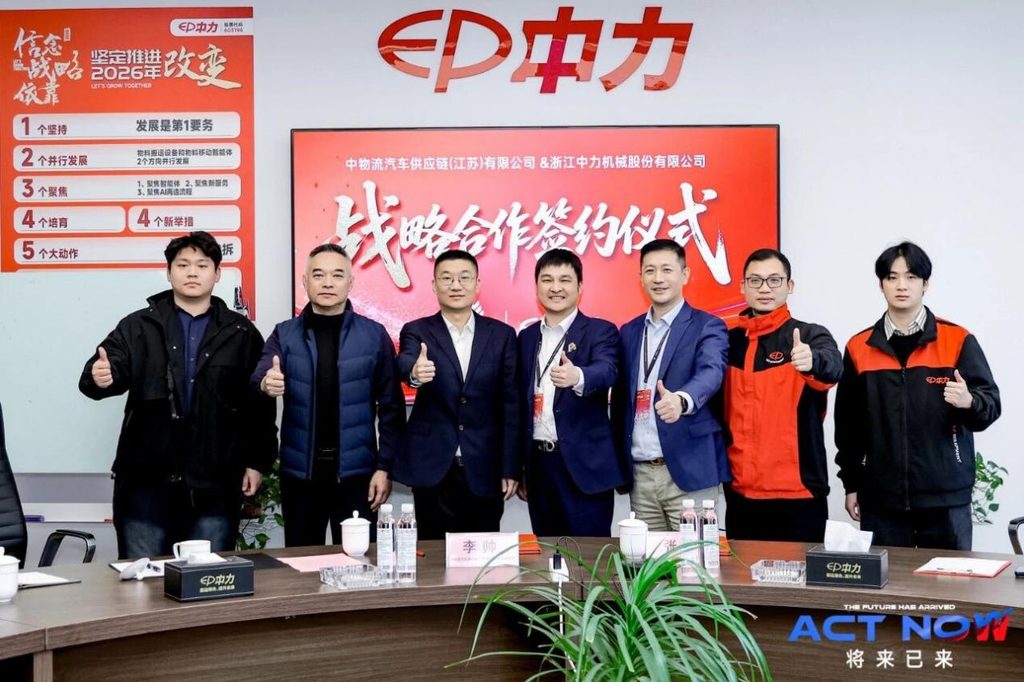
Through comprehensive arrangements for this grand event, EP aligns upstream‑and‑downstream partners to build synergy and foster a mutually‑prosperous industrial ecosystem:
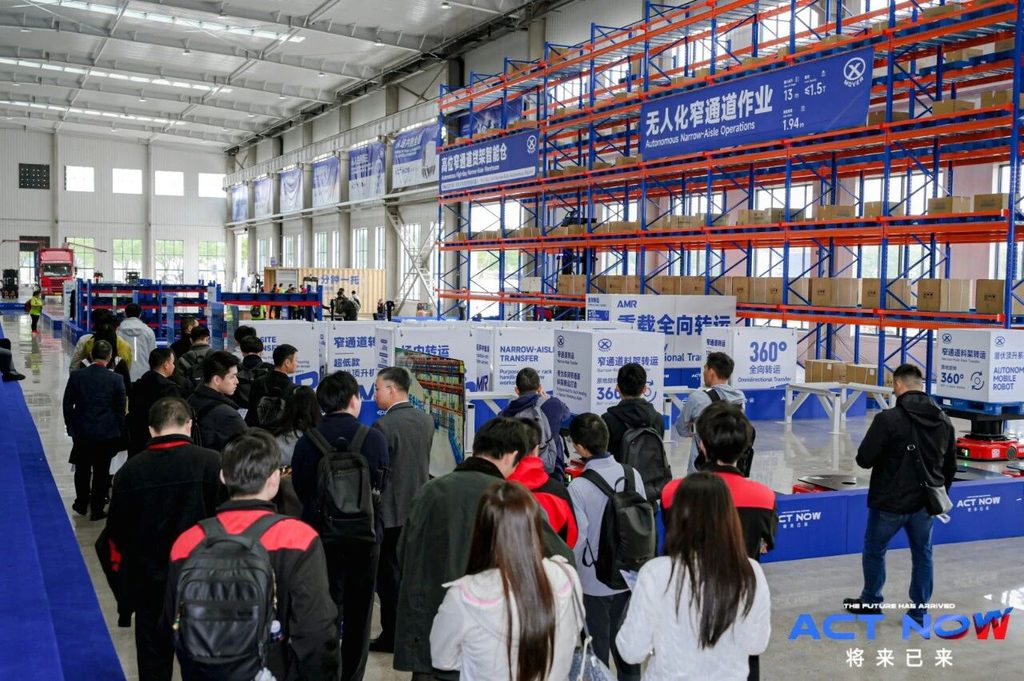
Factory Open Day
Customers are invited to tour EP’s smart‑manufacturing production lines, witnessing the product‑development philosophy of “deploy‑first‑in‑house and refine‑through‑real‑world‑scenarios”. Visitors gain first‑hand insight into smart‑manufacturing strengths and quality‑control systems to strengthen trust in delivery quality.
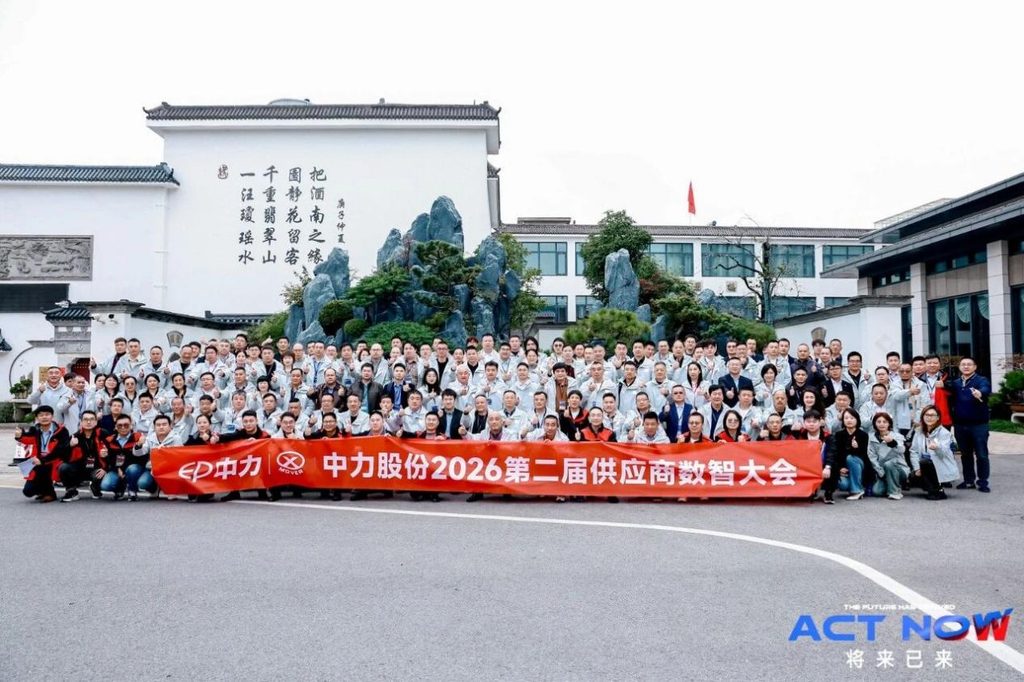
Autonomous Supplier Conference
Alongside the grand event, the 2026 EP Equipment Intelligent Supplier Conference was successfully held. Centered on the digital and intelligent upgrading of the industry, the conference united upstream and downstream partners to build a digital-intelligent supply chain system. It consolidates the foundation of quality and efficiency for engineered delivery at the source and strengthens supply support for the large-scale rollout of digital-intelligent solutions.
An award ceremony and strategic signing ceremony were held on-site. Outstanding Partner Awards and Excellent Service Awards were presented to distinguished partners, while strategic cooperation agreements were signed with multiple core partners. This deepens collaboration in technology R&D, capacity synergy and scenario exploration, and further expands industrial coordination.
Distributor Empowerment Training
Practical‑field‑oriented training elevates channel‑service capabilities, disseminating standardized engineering‑driven‑delivery systems to end‑user markets and bringing digital‑intelligent solutions to broader lower‑tier‑market segments.
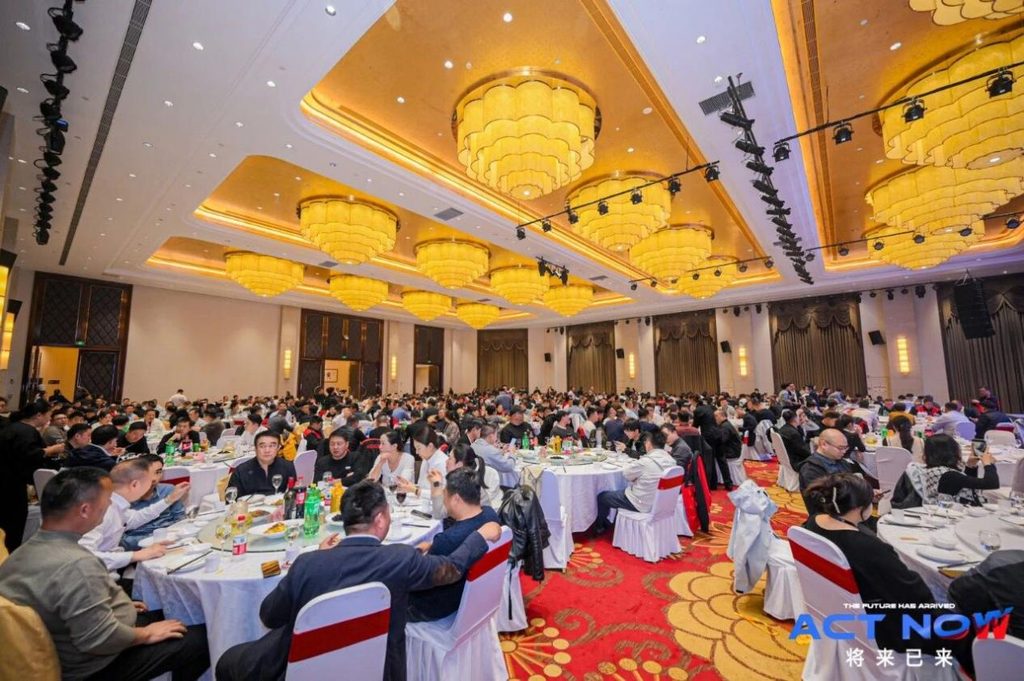
Global‑Partner Gathering
Overseas merchants attend on‑site to witness real‑world performance of Chinese smart‑digital‑handling technologies, advancing global‑market adoption of China‑developed autonomous movement solutions.
AI New Services: End‑to‑End Autonomous Accelerates the Full Lifecycle of Engineering‑Driven Delivery
The core bottleneck restricting large‑scale‑robot‑popularization has shifted from single‑unit performance to full‑lifecycle engineering‑service capabilities. EP regards AI new‑services as a core foundation for its engineering‑driven‑delivery system. AI technologies run through every workflow to build a full‑lifecycle AI‑service matrix covering end‑user services, pre‑sales planning, on‑site implementation, operation‑and‑maintenance support, asset‑operation management and data governance. It addresses industry‑wide pain points of “slow solution formulation, lengthy implementation cycles and difficult operation‑and‑maintenance”.
Eight major AI‑service capabilities were showcased at this 11·11 event, comprehensively supporting large‑scale roll‑out of autonomous solutions.
AI Unmanned Store
An industry‑first business‑model innovation. “AI matching + 24‑hour self‑service” reshapes end‑user‑service experiences, breaking time‑and‑space constraints and human‑resource dependence of traditional services. It builds standardized service‑node systems supporting fast replication and large‑scale penetration, greatly lowering access barriers to smart‑handling equipment for micro‑, small‑ and medium‑sized enterprises and delivering actionable end‑user‑solutions for inclusive upgrades of Smart‑Logistics‑Network end‑nodes.
AI Pre‑Sales Solution Expert (PIA)
Trained on full‑product libraries and massive real‑world‑project experience. It responds to scenario‑based demands 7×24 hours a day, automatically completing equipment selection and standardized‑solution generation. Continuous self‑learning optimizes outputs alongside accumulating business data. It improves client‑interaction efficiency while empowering channel‑partners in sales‑negotiation and boosting lead‑conversion rates.
AI Implementation Specialist
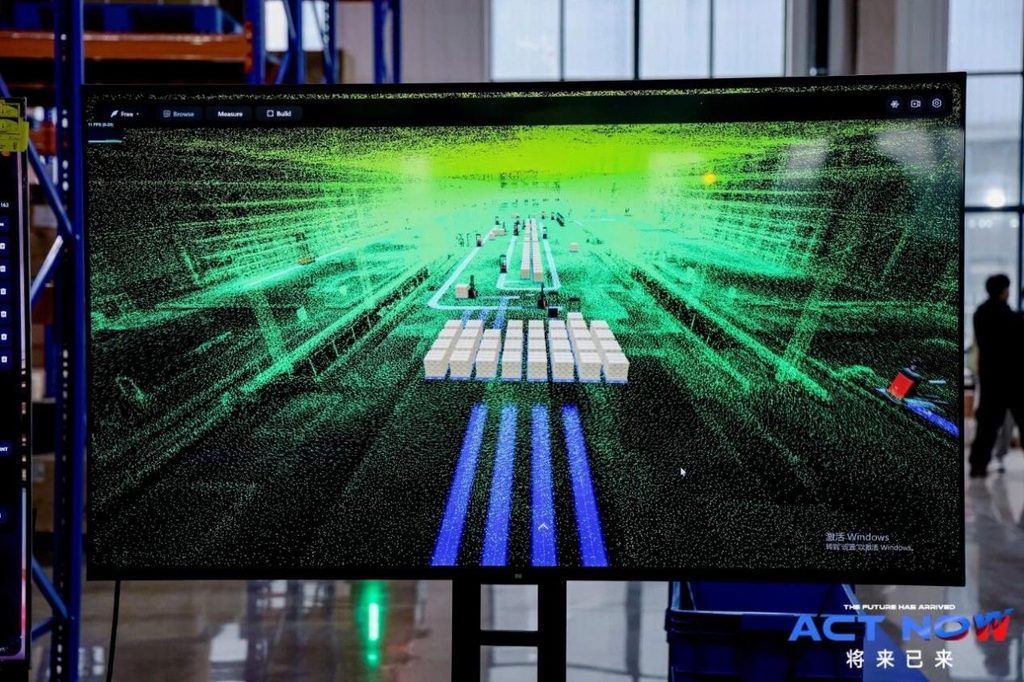
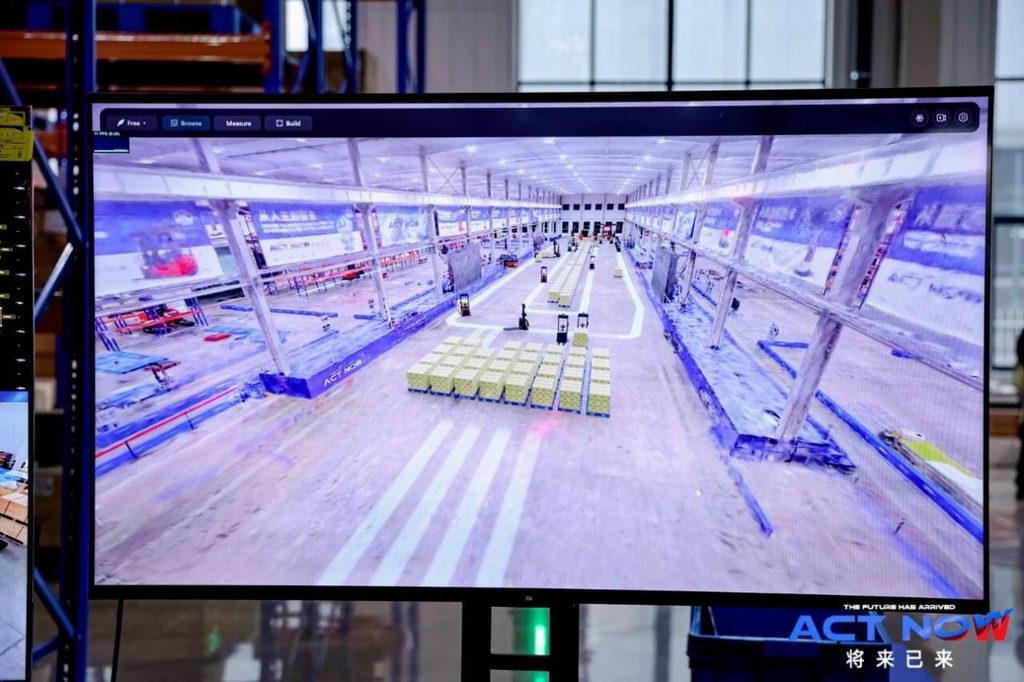
Using 3D scanning and digital‑twin technologies for 1:1 high‑fidelity reconstruction of on‑site operating‑conditions. It automatically completes road‑network planning, storage‑location allocation and simulation‑verification, shifting project‑implementation workflows from “experience‑based estimation” to “data‑driven controllability”. Survey‑efficiency improves by 60%, solution‑deviation decreases by 80%. Fast deployment is realized without large‑scale civil‑engineering‑retrofits to guarantee rapid project go‑live.
Remote Control
Cloud‑based O&M interfaces are embedded into equipment. Routine‑parameter adjustment and firmware‑upgrades can be performed remotely. Upon faults, cloud‑side diagnosis and positioning guide on‑site rapid mitigation. Time‑and‑geography barriers are overcome, compressing fault‑response times from days down to minutes, substantially cutting production‑downturn losses and travel‑cost burdens.
AI After‑Sales Service
AI digital‑engineers intelligently deduce fault root‑causes following standardized logic, output troubleshooting solutions in seconds and accurately match spare‑part resources. Equipment‑self‑maintenance functions resolve many common‑issue scenarios autonomously. 7×24‑hour operational safeguards mitigate risks in early stages and reduce reliance on on‑site‑O&M manpower.
Digital Autonomous System for Parts
Building on the DASP system, a global spare‑parts‑supply network is constructed. Pre‑positioned warehouses in key‑regions deliver full‑visibility spare‑parts‑inventory and intelligent supply‑demand scheduling. It resolves spare‑parts‑supply‑lag pain points for cross‑regional and overseas projects and provides material‑logistics backing for stable global‑project‑operation.
AI Asset‑Operation Platform
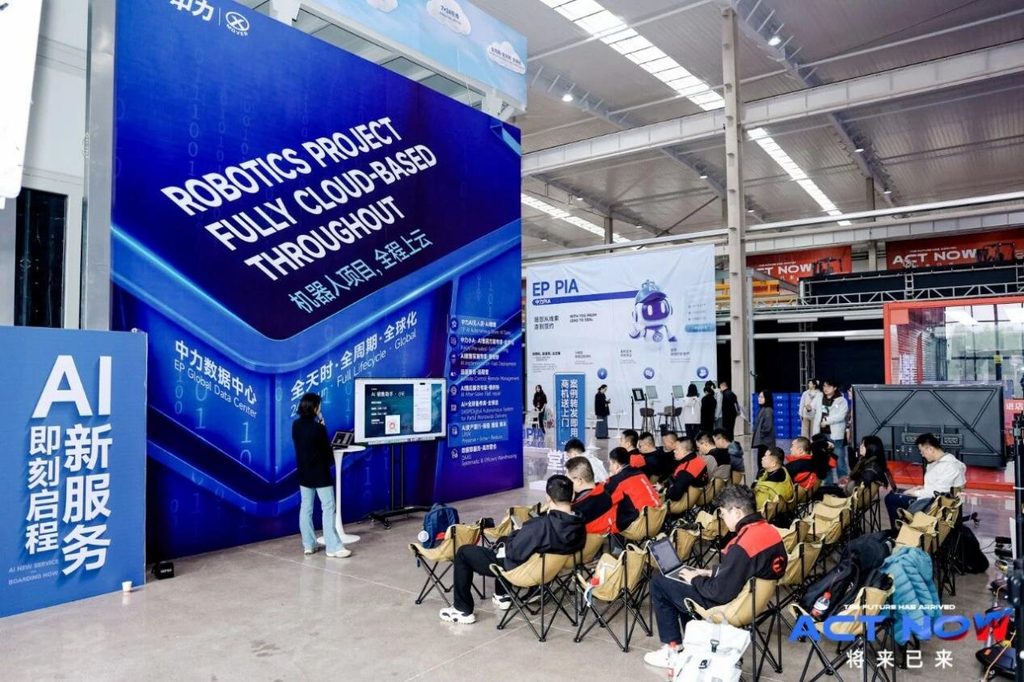
A full‑lifecycle vehicle‑asset‑management platform built for distributors. It covers the complete lifecycle: vehicle maintenance, repair, reconditioning and scheduling. AI automatically tracks maintenance‑milestones, archives full‑vehicle records and intelligently matches supply‑and‑demand for vehicle resources to activate idle‑asset utilization. It empowers partners for lightweight fleet‑operation and lowers management‑costs.
DaaS
EP’s smart‑digital‑service system for warehouse‑digitization. It unifies data links across all on‑site automated equipment and delivers value across execution, decision‑making and O&M dimensions. Full traceability for operational workflows is guaranteed; AI dynamically optimizes warehouse‑layout and inventory‑strategies and triggers early‑warning alerts for anomalies. It facilitates enterprises’ transition from experience‑driven management to data‑driven governance and persistently elevates warehouse‑operational performance.
From lead‑acquisition and solution‑generation through on‑site implementation, long‑term O&M, asset‑operation and data‑value‑creation, EP’s full‑lifecycle AI‑service matrix underpins engineering‑driven delivery, enabling faster deployment and more‑stable operation of smart‑digital solutions.
Grand‑Event Highlight: Where Technology Meets Aesthetics at the Smart‑Digital Gala Night
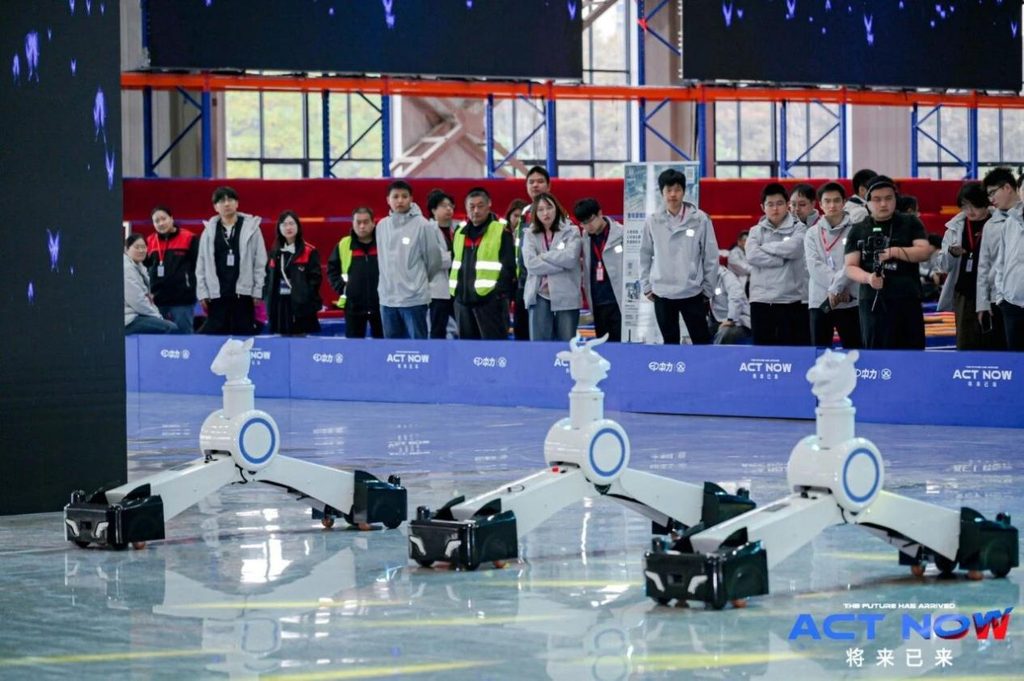
On the evening of November 12, the Gala Night merged technology and aesthetics in brilliant displays. X-Mover robots performed the classic Chinese folk‑drama Butterfly Lovers. Their millimeter‑level motion precision and smooth flexible‑control performance on‑stage served as vivid proof of robust reliability for industrial‑field deployments and demonstrated the flexible‑control boundaries achievable for industrial robots.
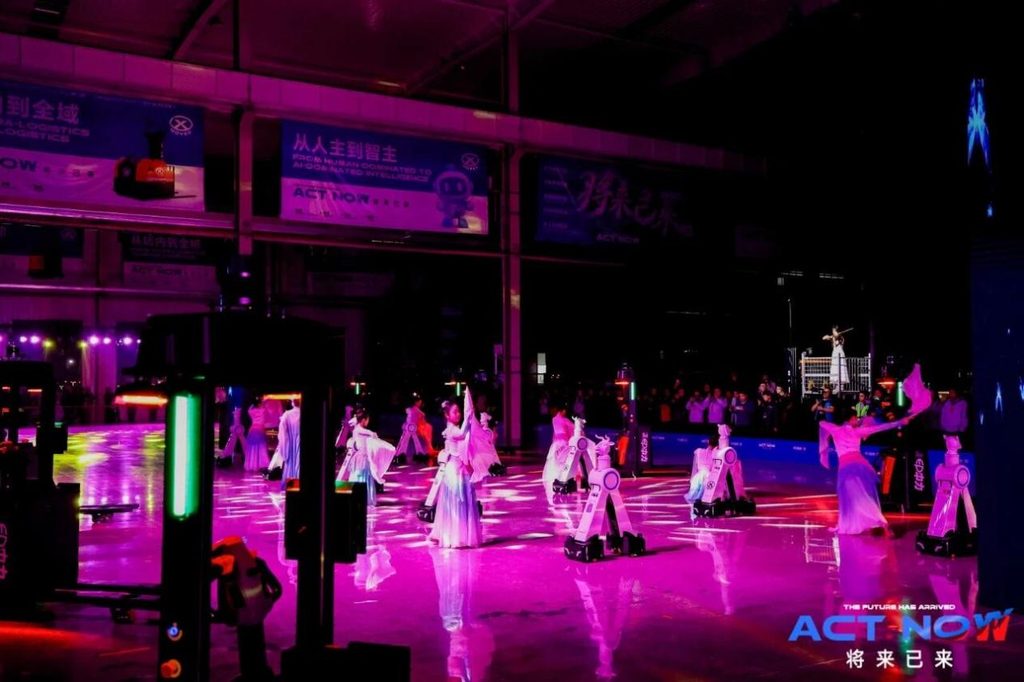
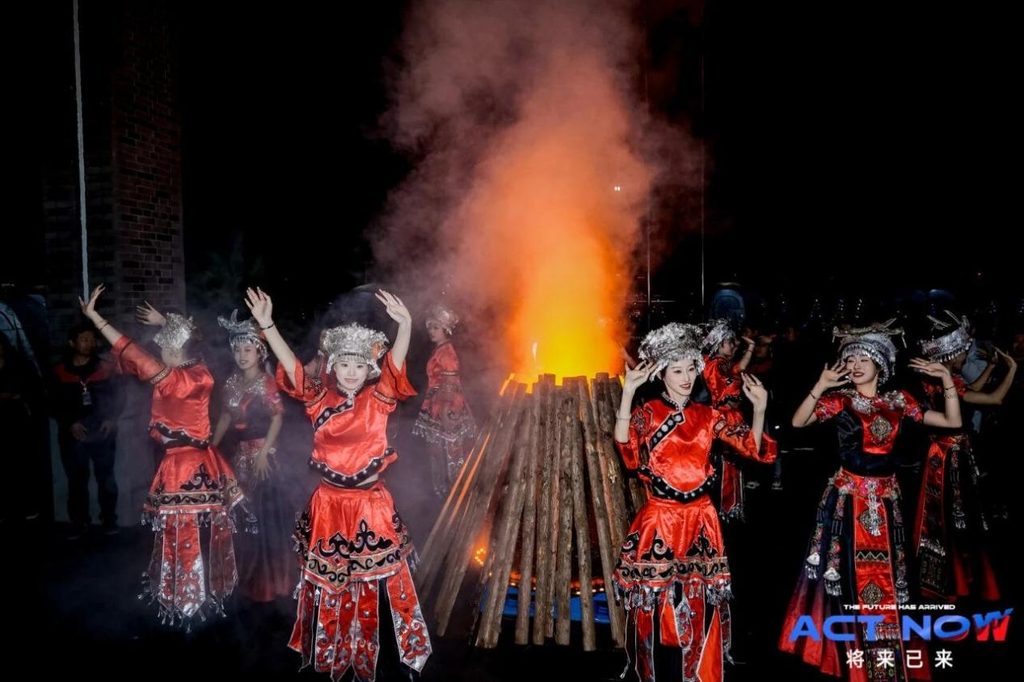
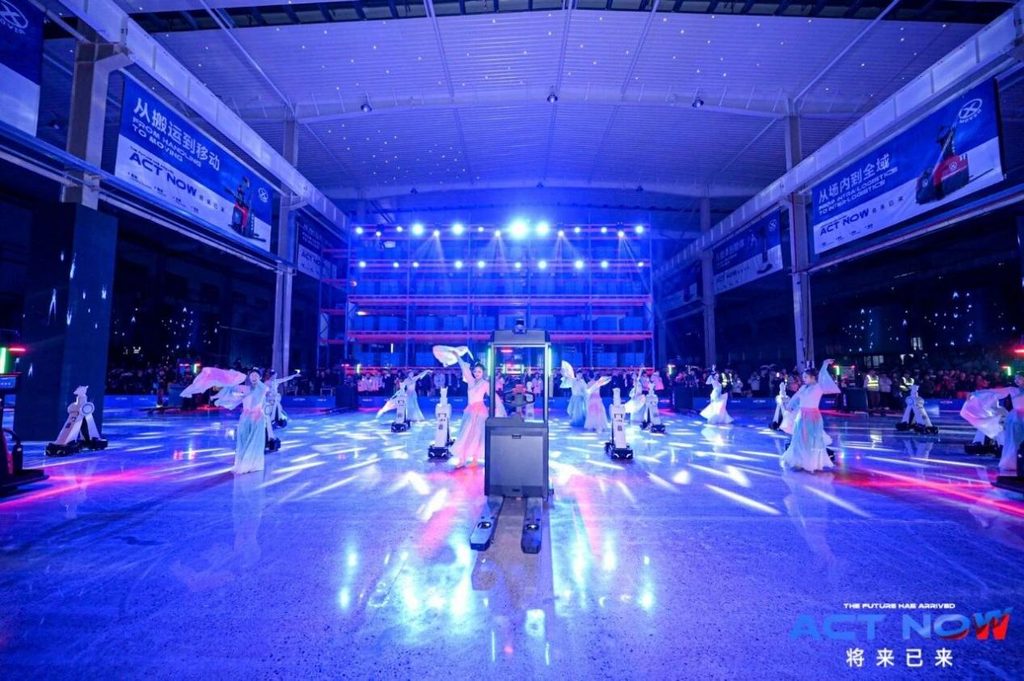
Starry‑sky‑themed lighting and bonfire‑party atmosphere created a strong sense of ceremony, paying tribute to every industry‑chain partner. Stakeholders across the full‑industry‑chain gathered for informal exchanges to discuss industry‑trends, spark collaborative ideas and envision new journeys for smart‑digital mobility.
The Future Has Arrived, Embarking Together on the New Journey of Autonomous Movement
This 11· 11 grand‑event represents not only a comprehensive review of EP’s engineering‑driven‑delivery capabilities, but also a landmark industry signal marking the shift of smart‑digital‑handling from demonstration‑pilots toward inclusive‑industry‑wide adoption. Evolving from conceptual proposals to real‑world‑scenario deployment, from isolated technical breakthroughs to end‑to‑end closed‑loop workflows,
and from corporate practice toward industry‑wide paradigms, EP turns autonomous movement from “future tense” into “present continuous tense” through pragmatic execution.
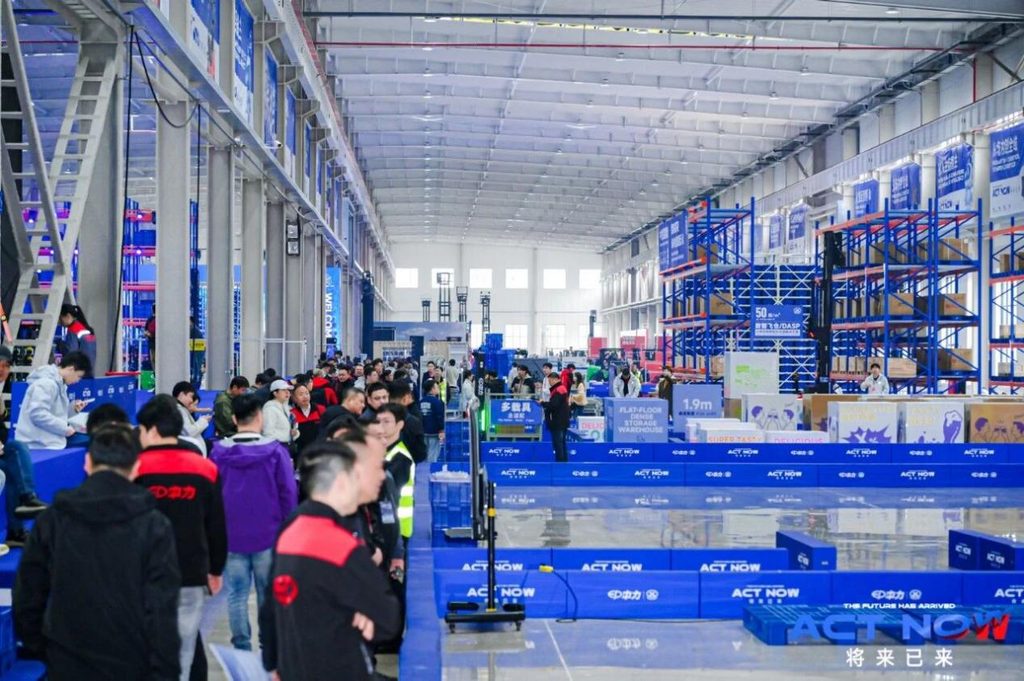
As an industry leader ranking No. 1 in electric‑warehouse‑forklift production‑and‑sales for 13 consecutive years, EP’s engineering‑driven‑delivery practice reflects its own capability leap: evolving from “equipment supplier” to “autonomous mobility service provider”. It delivers solid end‑node‑implementation support for national Smart‑Logistics‑Network construction, enables thousands‑of‑enterprises to access smart‑digital‑technologies and bolsters high‑quality real‑economy‑development.
The Future Has Arrived, Pragmatism Paves the Way. Going forward, guided by the Five Major Transformations strategy, EP will keep refining its engineering‑driven‑delivery system. Hand‑in‑hand with full‑industry‑chain partners, EP will drive the material‑handling‑sector’s transition from the equipment‑centric era to the new era of autonomous movement and contribute Chinese expertise to global logistics‑equipment‑industry upgrading.
Material Handling to Material Moving