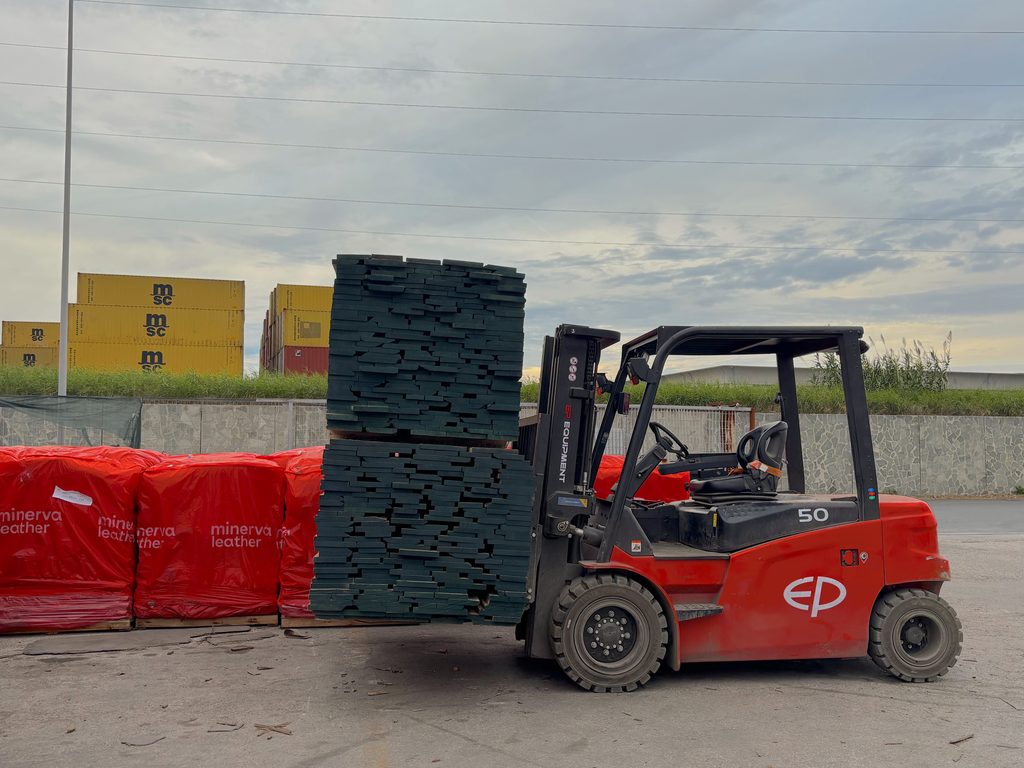
For Cosmos Logistics in Livorno, choosing a forklift started with two practical requirements: it had to fit inside the containers arriving at the warehouse and have enough endurance to cover the most intensive days
The company handles timber, hides, plastic materials and iron structures, receiving goods from around the world before sending them onwards to destinations across Italy. Its forklifts work between incoming containers, warehouse storage and outbound trucks. Along that route, they need to accommodate different loads, changing space constraints and arrivals spread throughout the day.
Working with EP dealer MVC Toscana Carrelli, Cosmos selected equipment suited to these conditions. The result is a fleet that the customer values for its container access, compact dimensions, responsive controls and battery reserve.
From international containers to deliveries across Italy
Cosmos’s operation connects international shipments with domestic road transport. Goods arrive in containers, some consignments undergo customs procedures, and the materials are then loaded onto trucks for delivery in Italy.
Timber is a significant part of this work. Handling it involves more than moving goods between two points: the team also needs to reach and position material inside containers and prepare it for unloading.
The arrival schedule is flexible. Containers for unloading and trucks for loading can reach the site between 07:00 and 20:00, so handling activity follows the flow of incoming and outgoing vehicles.
That makes equipment availability important across the day. A truck arriving later in the afternoon still needs to be handled, while the amount of warehouse space available changes with the goods being stored.
For Cosmos, the choice of forklift therefore brought together several requirements: access to the container, the right forks or attachment for the material, room to manoeuvre and sufficient battery capacity for daily work.
A forklift configuration that fits the container
Container access was a decisive factor in the equipment selection, particularly for the 20 and 40-foot containers used at the site.
Filippo Gini, forklift operator, explains that the EP trucks’ compact dimensions and reduced mast height allow them to enter these containers without touching the entrance. Having previously tried equipment from other brands, he identifies this as one of the most useful aspects of the EP configuration.
“They are compact and excellent for entering containers, especially 20-foot containers.”
— Filippo Gini, Forklift Operator
The two CPD50L1 units are equipped with triplex masts offering a lifting height of 4,300 mm. In the configuration used at Cosmos, the trucks provide the access the team needs for its container work being the forklift already standard with an overhead guard height (h6) = 2250mm
This is an important distinction when selecting equipment for a similar application. Maximum lifting height describes the truck’s reach during lifting, while entry into a container depends on its dimensions with the mast lowered, the overhead guard and the available door clearance.
At Cosmos, the customer’s experience demonstrates the value of getting that configuration right. The truck can enter the working space where the goods need to be handled, making container access part of the equipment specification from the outset.
Different forks for different loads
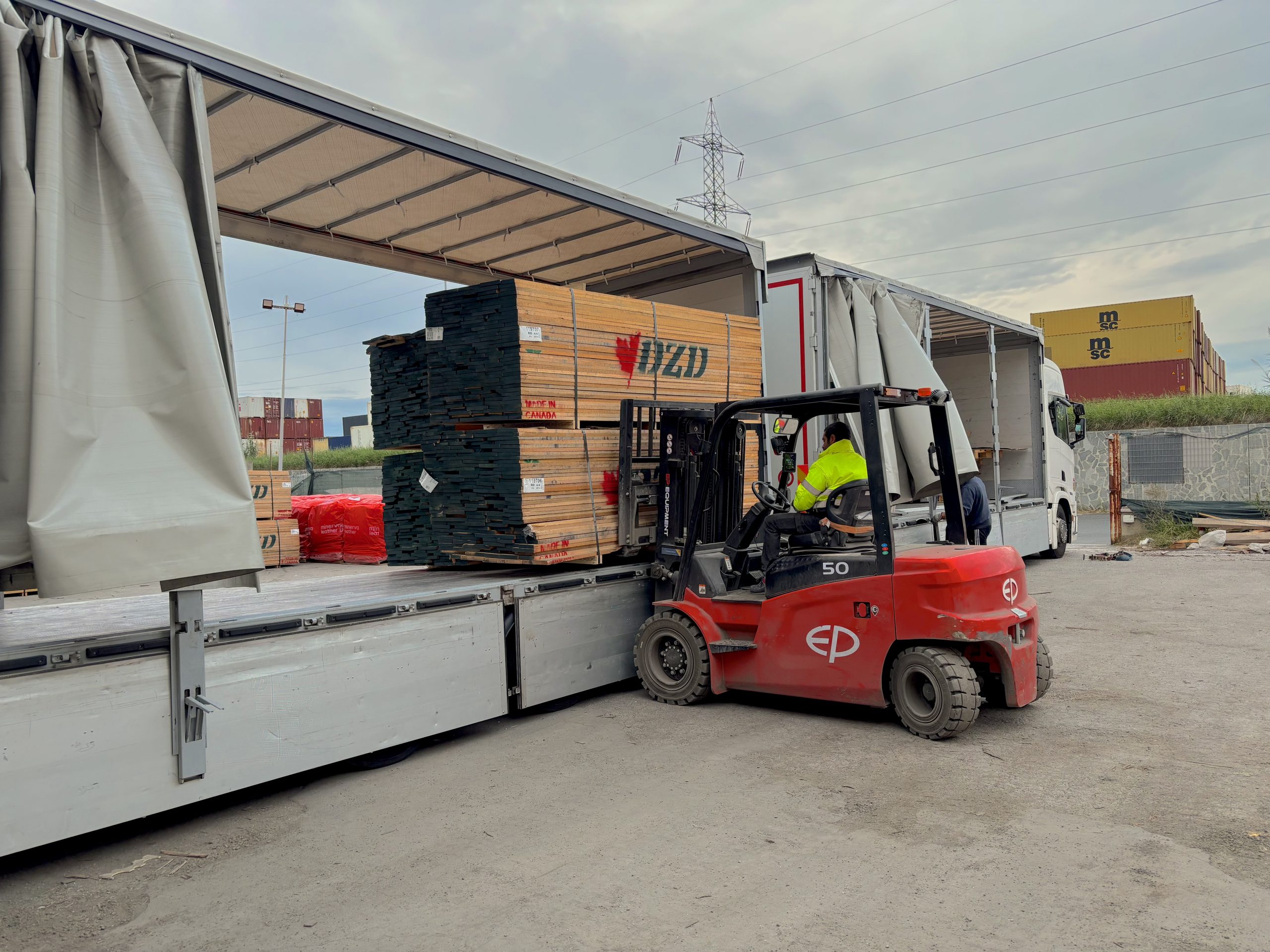
Cosmos uses different handling configurations to suit the materials and operations at its warehouse. Two CPD50L1 units share the same battery, charger and mast specifications, with different fork lengths.
| Configuration | CPD50L1 with long forks | CPD50L1 with short forks |
| Mast | Triplex, 4,300 mm lifting height | Triplex, 4,300 mm lifting height |
| Fork length | 2,000 mm | 1,000 mm |
| Controls | Fingertip | Fingertip |
| Battery | 80 V / 690 Ah | 80 V / 690 Ah |
| Charger | 200 A | 200 A |
The long-fork configuration is used to handle the materials described by Gini, who highlights its usefulness in the company’s work. The second CPD50L1 has shorter, 1,000 mm forks, giving the team another configuration for its handling tasks.
A clamp-equipped truck also plays a role in timber unloading. Gini describes using the clamp to pull timber back so that it can subsequently be unloaded from the side.
These different setups reflect the range of work within one logistics site. Container entry is a shared requirement, while the way the load is engaged depends on the material and the unloading method.
The application shows why forks and attachments deserve attention early in equipment selection. They are part of how the truck performs the task, alongside its size, lift height, and capacity for the actual load.
Compact dimensions in a busy warehouse
The benefit of compact equipment continues beyond the container entrance.
At Cosmos, warehouse occupancy changes as goods arrive and leave. Gini explains that the warehouse was relatively empty when the interview was filmed, compared with the amount of material it can hold during busier periods.
When the building is full, the space available for maneuvering becomes a more noticeable part of the job. Even a modest difference in truck length can affect how the equipment feels to use around stored goods.
“When it is really full, I can assure you that even 20 or 30 cm more or less in length makes a difference.”
— Filippo Gini, Forklift Operator
His observation captures a practical consideration for warehouse teams: a forklift needs to suit the space available during normal busy periods, as well as quieter ones.
For Cosmos, compactness matters both at the container doorway and between stored materials. The team values being able to work with equipment whose dimensions suit these different parts of the site.
Responsive controls for everyday handling
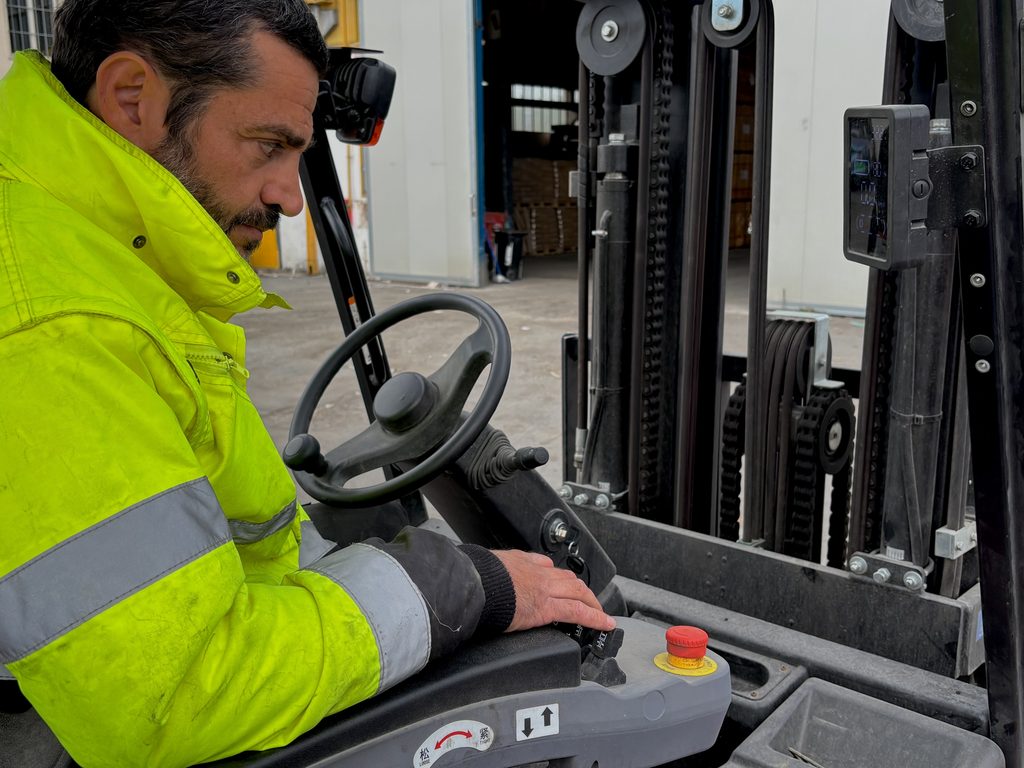
Alongside truck size, Gini highlights the response of the controls. He describes an immediate reaction to operator inputs and speaks positively about the lifting and sideshift functions.
“The response to the controls is immediate.”
— Filippo Gini, Forklift Operator
Both CPD50L1 units have fingertip controls. These are used throughout the handling cycle as the operator adjusts fork position, engages materials and positions loads.
The customer’s comments add an everyday operating perspective to the technical configuration. Mast height determines whether the truck can enter the container, and fork length helps match the equipment to the load. Control response is something the user experiences each time those functions are operated.
Together, these details explain why the trucks are considered versatile within the Cosmos application.
Daily charging with battery capacity to spare
Battery performance is another reason for the customer’s positive assessment.
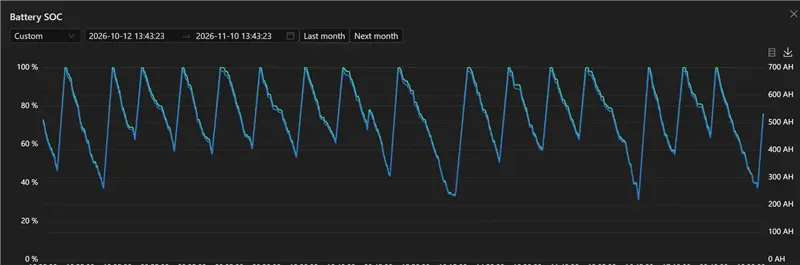
Cosmos charges the CPD50L1 daily as a precaution, often finishing the working day with more than 40% battery remaining. The team values this reserve, including during demanding days.
That charging routine suits an operation where vehicle arrivals are spread across a broad window. The customer can follow a daily charging practice while frequently retaining a substantial amount of charge at the end of use.
The CPD50L1 units are equipped with 80 V / 690 Ah lithium batteries and 200 A chargers. Gini also highlights the charging experience, describing lithium charging as faster than the traditional batteries he had used.
The EFL35PRO follows a different routine at Cosmos, with charging every two days. Each model’s charging pattern reflects its use at the site.
For the customer, the practical benefit is the combination of a manageable charging routine and battery reserve during daily operations. The experience connects battery specification with the work the equipment actually performs.
Following truck use with EP Telematics
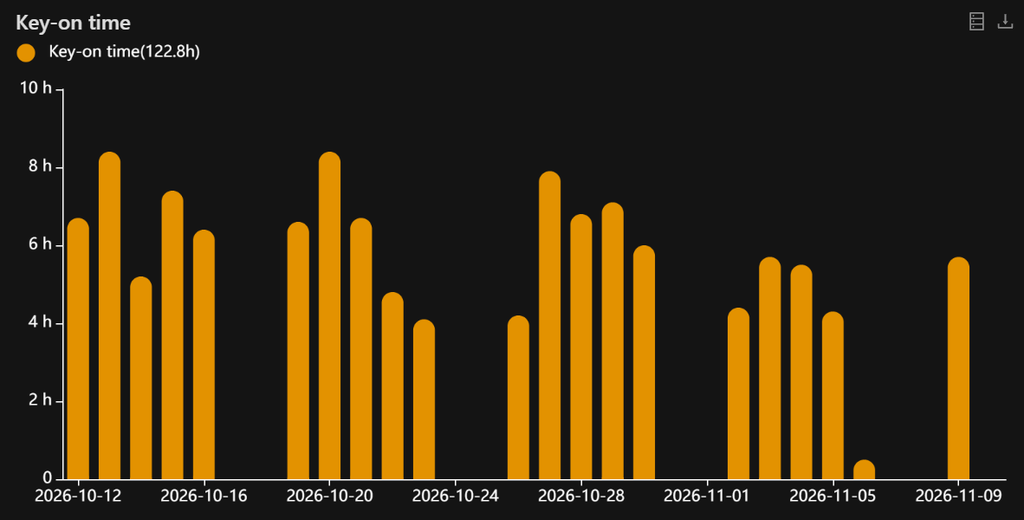
EP Telematics provides another view of the operation by recording truck use and battery state of charge.
The daily key-on pattern varies across the monitoring period, reflecting differences in how long the monitored truck is switched on from one day to another. Key-on time provides a measure of powered-on time, which can include waiting as well as active handling.
Alongside this, the battery history tracks charge levels through repeated periods of use and recharging. Reading these two records together helps put the customer’s charging routine into context: how use changes across days, how the battery discharges and when charge is replenished.
The records complement the team’s experience on site. Operators see how the truck responds during handling; telematics gives the business a longer view of utilisation and battery behaviour.
For an operation with flexible arrivals, that visibility is useful when reviewing how equipment is being used and how charging fits around daily activity.
Equipment selected around the work
MVC Toscana Carrelli, EP’s dealer for Tuscany, worked with Cosmos as a new customer with a clear container-access requirement.
The customer’s feedback shows how that requirement connects with the rest of the operation. The trucks also need to handle timber with different configurations, manoeuvre in a warehouse that can become crowded and remain available as containers and trucks arrive throughout the day.
At Cosmos, the features that stand out are practical: entering the containers used on site, working in confined spaces, responding promptly to the controls and finishing many working days with battery capacity still available.
For businesses assessing a similar application, these are useful starting points for a discussion with a dealer. Container dimensions, load characteristics, available warehouse space and daily working patterns all help determine the appropriate truck configuration.
Contact EP Equipment or your local EP dealer to discuss forklift configurations for your container and warehouse handling requirements.