More than 300 attendees from 26 countries came together at EP Equipment’s European headquarters in Cologne for a full day of automation, AI, new product technology, hands-on testing, and a shared look at the future of intralogistics.
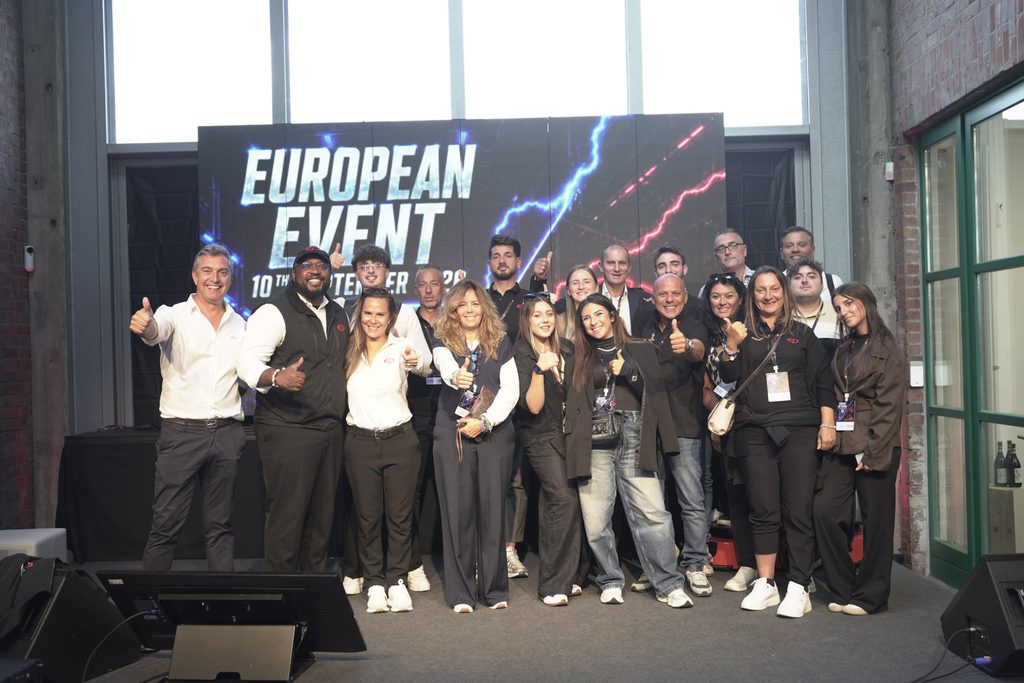
On September 10, EP Equipment welcomed over 300 dealers, partners, customers, and industry professionals from 26 countries to its European headquarters in Cologne for the EP Equipment European Event 2026.
This year’s event went beyond a conventional product showcase. Across the headquarters, presentations, live applications, technology stations, and test-driving areas were organized around a broader question: How is material handling changing, and what does that mean for the businesses operating within it?
The answer unfolded throughout the day. The morning focused on automation, from transport and cross-docking to warehousing, picking and lorry loading. AI-powered tools demonstrated how technology is also changing the way automation projects are designed and supported. Later, the focus expanded to EP’s conventional material handling portfolio, including warehouse equipment, the new rough terrain range, second-generation high-voltage forklifts and EP Energy.
Together, the different areas reflected a central idea repeated throughout the event: the industry is moving beyond individual pieces of equipment towards solutions built around the complete movement of goods.
The Future of Automation: From Equipment to Solutions
Automation opened the European Event for a reason. It is becoming an increasingly important part of both EP’s business and the wider material handling industry.
In his presentation, Arjan van Zanten, Vice President Automation at EP Equipment Europe, challenged attendees to look beyond conventional equipment categories and instead consider the fundamental processes taking place inside an intralogistics operation.
At the centre of this approach are four core logistics functions: loading and unloading, transport, warehousing and picking. Rather than beginning with the question of which truck to sell, the automation discussion started with material flow: how goods enter a facility, move through production and storage, are picked, and eventually leave again.
This represents an important shift for the EP network. As van Zanten explained, the transition is from selling equipment towards understanding and delivering solutions. For dealers, that also means automation does not necessarily have to begin with a large or highly complex project. Smaller applications and straightforward integrations can provide an entry point from which expertise and business can develop.
As he put it during the session:
“Step by step, we can grow into this business.”
That philosophy shaped the automation trade show that followed.
The practical focus also resonated with visitors from outside the EP network. Lucas Möllers, Head of Editorial Office of Staplerworld, an editor covering intralogistics, warehouse processes, and automation, described the morning programme as “insightful”, pointing in particular to the value of seeing automation in a real operational context. For him, understanding these technologies requires more than presentations: “You have to be in the warehouse; you have to show on the shop floor how it is working.” His feedback reflected one of the reasons the event combined strategic presentations with live stations and demonstrations: automation becomes considerably easier to understand when visitors can connect the technology with the process it is designed to solve.
Four Logistics Functions, Multiple Real-World Automation Applications
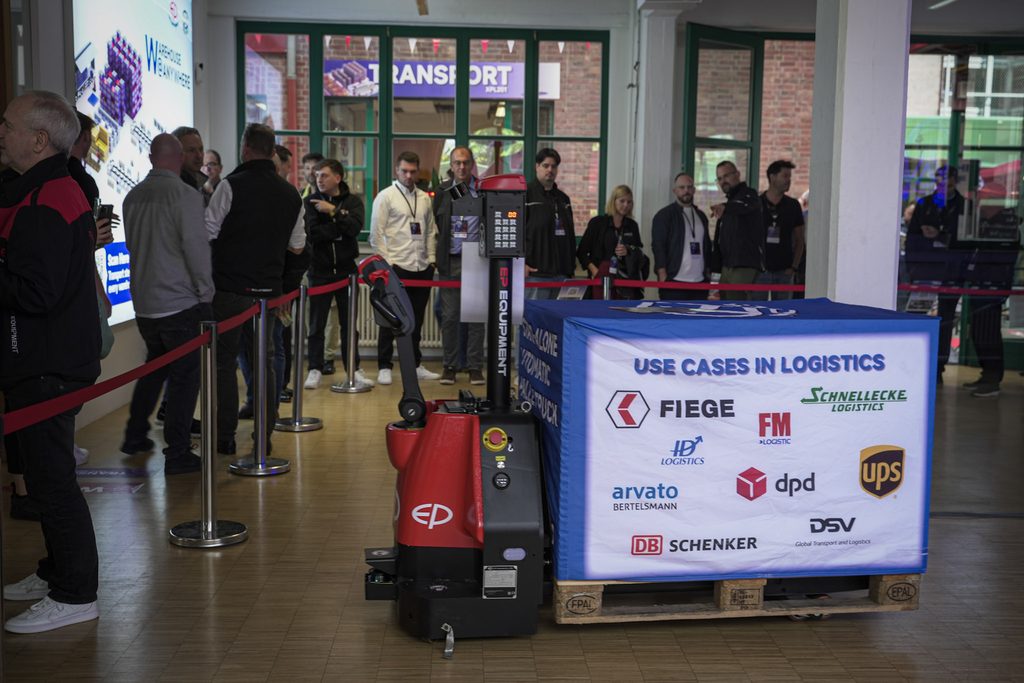
Rather than keeping automation on the presentation stage, the ground floor of EP’s Cologne headquarters became a live automation trade show, with dedicated stations showing how different technologies can address specific stages of the material flow.
Transport and Cross-Docking
The transport area featured the XPL, with the Cainiao/Alibaba use case providing a real-world reference for automated transport and cross-docking.
A second transport station demonstrated the XP with scanner together with the EXP, showing another approach to automated horizontal movement and task execution.
The emphasis throughout the area was not simply on autonomous trucks as standalone products. It was on how equipment can become part of a wider workflow — and how hardware, software and integration need to work together to create an effective solution.
This was also one of van Zanten’s messages to dealers interested in entering automation. Cooperation with software and WMS specialists can allow different areas of expertise to come together: one partner provides the software layer, another the material handling hardware, and together they address the complete application.
Warehousing: The Schnellecke Use Case
Warehousing formed another major part of the automation showcase, with a Schnellecke use case featuring the XQE, DAS and system integration.
The station demonstrated the importance of looking beyond the automated vehicle itself. In a warehouse environment, the effectiveness of automation depends on how the equipment interacts with storage processes, software and the wider flow of materials.
That made integration a recurring topic throughout the morning.
It is also an area that can initially appear complex to companies entering the automation business. One of the messages from the event was that integration can be approached progressively. Not every application needs to begin as a large-scale, fully customised automation project. Understanding the workflow, identifying the right first application and building the necessary partnerships can provide a more practical route into the market.
Picking: Introducing DASP
Picking brought the discussion closer to one of the most labour-intensive parts of many warehouse operations.
The dedicated picking station presented the new DASP System, alongside the XNA operating between the racking to demonstrate a picking workflow involving pallet handling and individual box picking.
The station provided a practical view of how EP is approaching automation beyond conventional pallet transportation. Instead of considering material handling only as moving a pallet from A to B, the wider objective is to address more of the physical movement involved throughout an operation.
This idea also formed part of the vision shared later by EP Equipment CEO and founder John He: expanding the scope from traditional material handling towards material moving.
It is a distinction with significant implications. Once the focus moves from the vehicle to the goods themselves, the potential applications extend further into the complete logistics process — including the movements traditionally performed manually between transport stages.
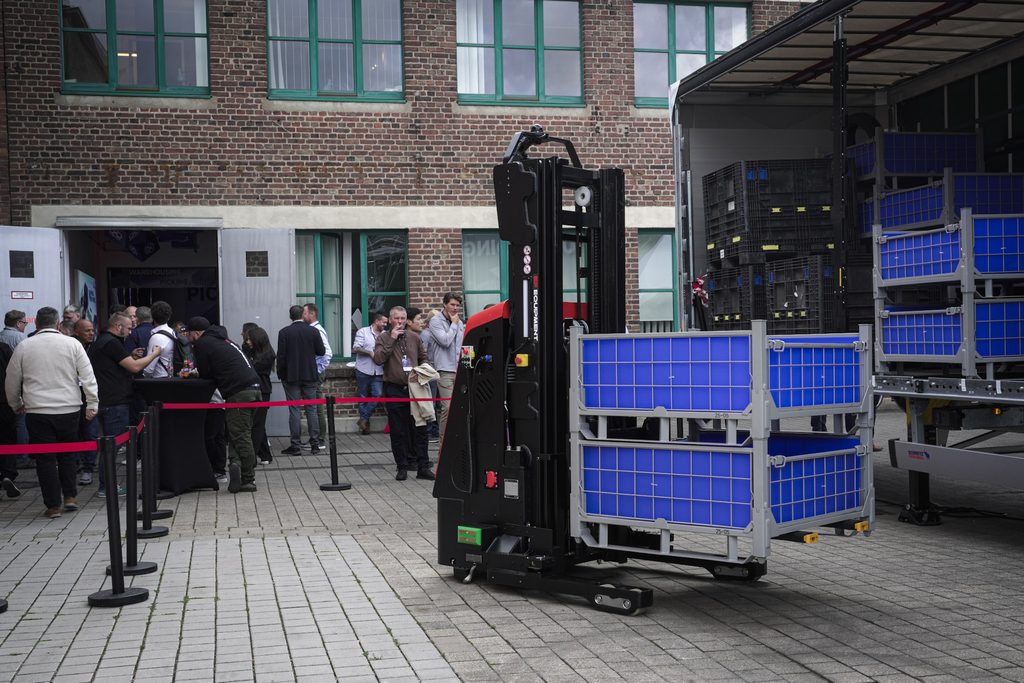
Tackling Loading and Unloading
The fourth core logistics function was represented by a dedicated lorry loading and unloading station, featuring a Schnellecke lorry together with a standard EFL forklift.
Loading and unloading remains one of the more challenging areas of automation, something van Zanten described during his presentation as a major frontier for the industry.
Vehicle environments introduce variables that differ from highly structured warehouse transport routes, making this an area where continued development in software, sensing and AI can play an important role.
By including loading and unloading alongside transport, warehousing and picking, the automation trade show demonstrated the breadth of the material flow EP is looking to address rather than presenting automation as a single product category.
AI Moves into Automation Pre-Sales
Automation technology was only one part of the morning. Another dedicated station focused on how artificial intelligence can support the process before a solution is installed.
EP’s AI-powered pre-sales concept combines a 3D scanner, embodied AI and access to technical expertise within an integrated service platform.
The workflow begins with scanning the customer site and moves through workflow definition, point-cloud processing and layout generation. From there, the system can support AGV path planning, WMS-related workflow modelling, digital-twin creation and simulation before producing a solution report.
More importantly, the AI is designed to combine site information with customer requirements, load characteristics and material flow, using these inputs to analyse an application and generate an automation solution tailored to the operation.
For dealers developing their automation business, this addresses a critical part of the process: turning an identified customer opportunity into a technically viable concept.
As van Zanten explained during the event, EP is investing in capabilities that allow use cases to be designed and simulated remotely before implementation. The objective is to provide the network with more than robotic hardware — combining products with solution design, simulation, integration expertise and support.
AI Beyond the Sale: A New Approach to After-Sales Support
AI was also present at the other end of the customer journey.
The AI After Sales station focused on bringing support functions together through EP’s after-sales ecosystem, including Quick Solution, parts purchasing, warranty claims, 24/7 support and AI Service.
Together, the pre-sales and after-sales stations illustrated an important theme of the event: digitalisation is not limited to the truck itself.
Technology can increasingly support the entire lifecycle around the equipment — from understanding an application and designing a solution to maintaining and supporting it once deployed.
A Broader Vision: From Material Handling to Material Moving
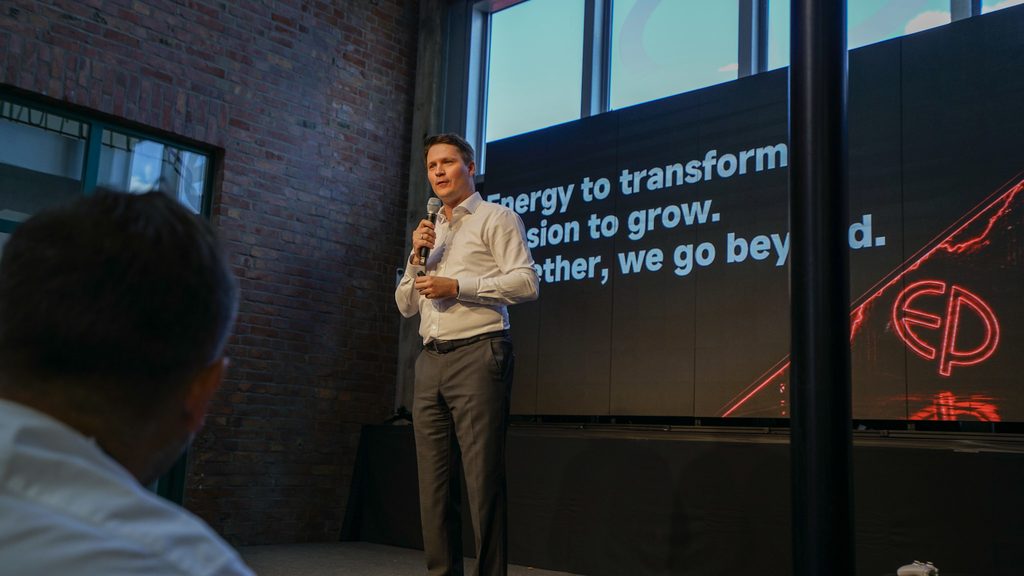
The technology on display was placed into a broader strategic context by EP Equipment CEO and founder John He.
In his presentation, He described a series of shifts he sees shaping the coming years, including the transition from equipment to solutions, from conventional material handling towards material moving, and towards a logistics environment in which AI plays a much larger role.
That evolution was also recognised from an external industry perspective. Speaking at the event, trade journalist Lukas Müller noted the challenge of translating technologies and approaches developed in one market into the different requirements of European customers. His impression was that EP is actively working to connect its capabilities with those local requirements, with the customer and the application at the centre. It is an observation that closely reflects the event’s emphasis on moving beyond products alone and understanding what actually needs to happen within the customer’s operation.
The distinction between equipment and solutions was particularly relevant to what visitors had experienced during the automation trade show.
A conventional equipment transaction starts with a machine. An automation project starts with a problem: a material flow that needs to be improved, a transport task that can be automated, a picking process that requires a different approach or an operation that needs to reduce repetitive manual movement.
The equipment remains essential, but it becomes one component within the answer.
That same thinking expands the definition of the market itself. If the objective is no longer simply handling pallets but moving goods throughout the complete logistics process, new technologies and new types of automation become part of the material handling conversation.
Starting Small, Building for the Future
For Bennit Schmieder, President of EP Equipment Europe, turning that long-term vision into practical opportunities for EP’s European network was a central message of the day.
Automation can appear complex when considered as one large transformation. Schmieder instead encouraged partners to identify a first application and build from there.
“If you make ideas small, you can start tomorrow.”
The message connected closely with the practical structure of the automation trade show. Transport, warehousing, picking and loading were presented as identifiable applications rather than an abstract vision of a fully autonomous warehouse.
For EP’s dealer network, the opportunity is therefore not only to understand where automation may eventually take the industry, but to identify where it can already create value for a customer today.
From Automation to the Forklift Festival
As the event moved into its second phase, the focus widened from automated material flows to EP’s broader material handling portfolio.
The Forklift Festival turned the outdoor areas of the Cologne headquarters into a large hands-on product environment, with dedicated stations for warehouse truck test driving, outdoor truck testing, rough terrain forklifts and EP Energy, alongside a wider display of EP equipment.
The transition from automation to conventional forklifts was deliberate. The future of intralogistics is not represented by one technology replacing another, but by a growing range of solutions for different applications — from manually operated warehouse equipment to high-performance electric counterbalance trucks and increasingly automated processes.
Strengthening the Core Portfolio
Before the focus moved to rough terrain and high-voltage technology, Andrea Furielli, Product Manager at EP Equipment Europe, brought the discussion back to the core of EP’s conventional material handling portfolio. His presentation highlighted how quickly that portfolio has developed, with EP continuing to expand its coverage across warehouse equipment and counterbalanced forklifts while refining existing product families for the requirements of the European market.
The presentation reinforced a theme that ran throughout the European Event: growth for EP is not limited to entering entirely new areas such as automation. It also means continuing to develop the equipment at the heart of everyday material handling operations. For dealers, this broader portfolio creates opportunities to address more applications and customer requirements through one product ecosystem — from day-to-day warehouse movements through to increasingly specialised and demanding operations.
Furielli’s presentation also provided a natural bridge between the two sides of the event. The morning had demonstrated how EP is moving beyond individual trucks towards integrated automation solutions; the afternoon showed that this evolution is happening alongside continued investment in the conventional equipment that remains fundamental to warehouses and logistics operations.
Rough Terrain: Taking Electric Material Handling Beyond the Warehouse
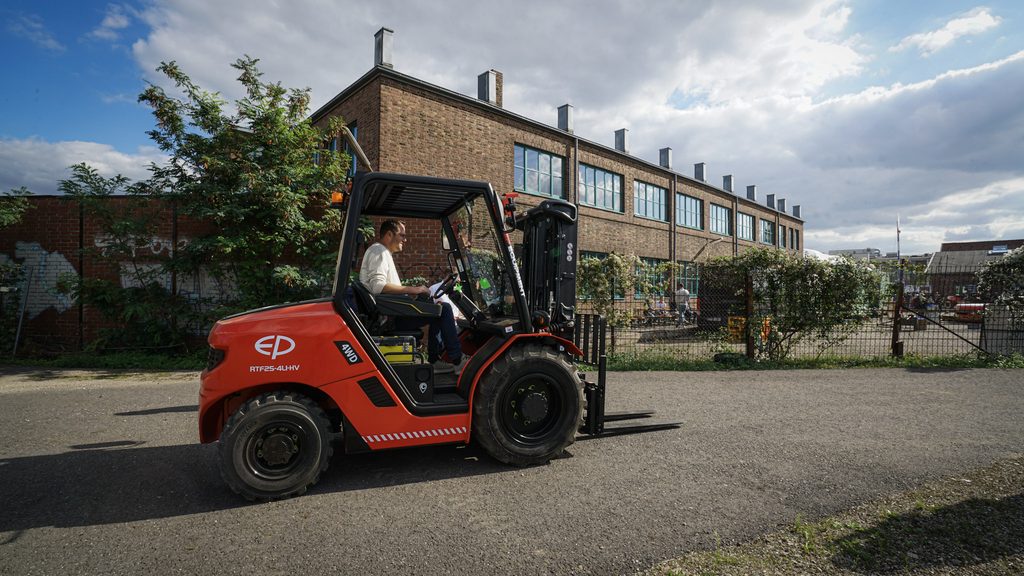
One of the most prominent hands-on areas was dedicated to EP’s new rough terrain forklift range.
During the main-stage presentation, Alexander Krich, High Voltage Product Manager, introduced the range and explained how EP is extending its electric forklift offering into more demanding outdoor applications.
The initial range comprises 2.5, 3.0 and 3.5-tonne models, with attendees able to experience the equipment directly on the dedicated rough terrain test-driving area.
This was particularly important in the context of the European Event. Rather than presenting a new machine only through specifications and presentations, the format allowed dealers and customers to get behind the wheel and understand how the equipment behaves in the environment it was designed to address.
Second-Generation High Voltage: Evolution Where It Matters
High-voltage technology was another major product focus, with EP presenting its second-generation high-voltage counterbalanced forklift range from 4 to 12 tonnes.
The Gen 2 development focuses on improvements to reliability, operator comfort, productivity and serviceability rather than change for its own sake. Upgraded cab sealing provides greater protection against dust and cold, while revisions to the electrical, hydraulic and drive systems are intended to support durability in demanding applications.
Maintenance has also been considered through a cleaner component layout and more integrated system design, while an optimised wheelbase and turning radius improve manoeuvrability. Changes to the mast and hose layout improve visibility, with greater mast rigidity supporting stability at full height.
A lower overall-height design also addresses a very practical issue: deployment and transport. According to the product information presented at the event, the design enables container loading without removing the tyres while maintaining operator comfort.
For dealers, rental companies and end users, these are the kinds of developments that matter beyond the launch itself: easier transport, easier maintenance, improved visibility and a machine designed around demanding day-to-day applications.
The value of being able to experience the equipment directly was also reflected in feedback from the test-driving area. EP Dealer Brendan Cairns of AilsaX already operates a smaller high-voltage truck and used the European Event to experience one of the larger models firsthand as his company considers expanding its fleet. For him, being able to see and test the equipment in person added an important practical dimension to the product presentation.
One Event, One EP Community
Technology may have structured the programme, but the scale of the European Event told another important story.
With more than 300 people representing 26 countries, Cologne became a meeting point for a network that operates across very different markets, industries and customer requirements.
Dealers could speak directly with product managers and automation specialists. Customers and partners could see real applications rather than isolated concepts. Experiences from different countries could be shared face-to-face. And technologies ranging from warehouse trucks and high-voltage forklifts to automation and AI could be viewed as parts of the same evolving material-moving landscape.
For Brendan Cairns of AilsaX, who travelled from the UK with his full management team, this combination of knowledge and direct experience was precisely what made the event valuable. He highlighted the opportunity to understand EP’s latest developments, learn more about the route into automation and see both current and upcoming products firsthand. “It’s all about learning about the new things that EP are doing, getting the energy, and hearing about all the progress and the plans for the future,” he said.
The Oktoberfest-inspired Forklift Festival carried that exchange into the evening, with food, interactive activities, and live entertainment bringing the community together after a day centred on products, applications and strategy.
For Schmieder, this community is also closely connected to EP’s future. Speaking during the event, he emphasised that different partners may choose different paths: some will expand their conventional forklift business, others will move further into automation, and others will develop alongside EP in additional areas.
What connects them is the opportunity to grow together.
From Handling to Moving
If one idea captured the European Event 2026, it was that the boundaries of material handling are expanding.
The forklift remains fundamental. But around it, the industry is developing into something broader: solutions instead of isolated equipment, automated workflows instead of individual transport tasks, AI-supported planning and service, and a greater focus on the complete movement of goods.
Across the automation trade show, visitors could follow that material flow from loading and unloading through transport and cross-docking to warehousing and picking. Across the Forklift Festival, they could test the machines addressing today’s applications, from warehouse equipment to rough terrain and high-voltage trucks. And on the main stage, EP’s leadership connected those technologies to a longer-term direction for the company and its network.
As Arjan van Zanten summarised during the automation programme, EP’s direction brings together products, solutions, AI, people and continued investment — with the ambition of moving from material handling towards material moving.
The European Event 2026 made that direction tangible.
More than 300 people from 26 countries did not come to Cologne simply to see what EP has built. They came together to explore what comes next — and how the EP community can build it together.