More than 300 industry professionals from 26 countries gathered at the EP Equipment European Event 2026 in Cologne to see how AGVs, AMRs and intelligent automation can transform material flows — starting with one simple process and scaling towards fully integrated intralogistics.
Warehouse automation is moving quickly from ambition to applications.
At the EP Equipment European Event 2026, held at our European headquarters in Cologne on September 10, the focus was therefore not simply on showing autonomous vehicles. It was about demonstrating how AGVs and automated material handling solutions can work within real logistics and production processes.
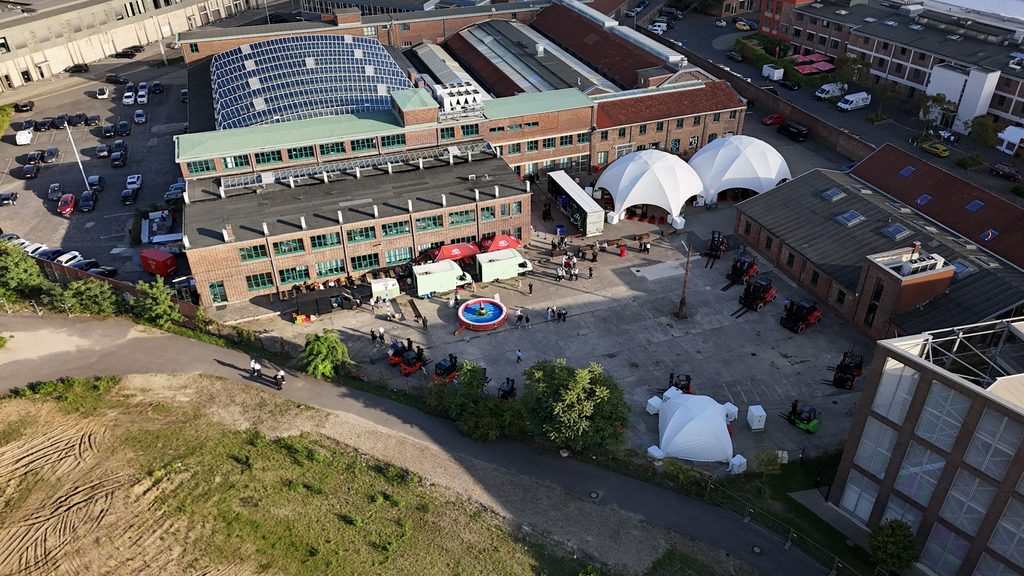
More than 300 dealers, customers, partners and industry professionals from 26 countries joined the event. Compared with the opening of our new showroom in 2025, this year’s focus shifted significantly towards machines at work, scalable automation applications and practical approaches to automating material flows.
The central message was simple: You don’t need to automate your entire warehouse to start with automation. Start with the task, prove the use case and scale from there.
From forklift to application: rethinking warehouse automation
Traditionally, material handling starts with the machine. Do you need a forklift? A pallet truck? A stacker?
“We can no longer define our equipment simply as a forklift. We need to define it by the job it does, the use case and the specific task it performs.” — Arjan van Zanten, Vice President Automation, EP Equipment Europe
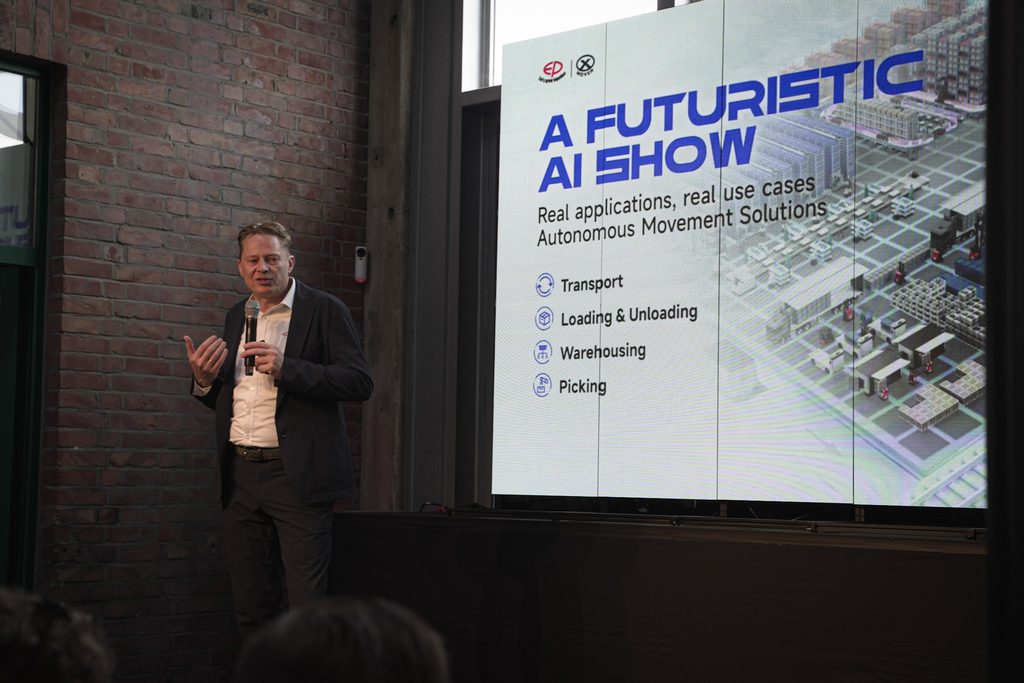
Instead of taking a conventional forklift and simply making it autonomous, EP starts with the material flow that needs to be automated.
We divide those flows into four fundamental intralogistics functions:
- Transport
- Loading & Unloading
- Warehousing
- Picking
Once the application is understood, the right combination of autonomous vehicle, hardware, software and AI can be developed around it.
This use case-first philosophy is particularly important as the distinction between traditional AGVs (Automated Guided Vehicles) and more flexible AMRs (Autonomous Mobile Robots) continues to evolve. The objective is ultimately not automation for automation’s sake. It is to find the most effective way to move goods through an operation.
Automation: start with one material flow
For companies exploring warehouse automation, the idea of transforming an entire facility can make getting started unnecessarily complicated.
EP takes a different approach. Start small.
Warehouses and production environments contain many repetitive and predictable transport movements. A pallet may need to travel from point A to point B hundreds of times per day. That is an ideal place to begin with an AGV or AMR solution. A company can automate one repetitive transport route, learn from the application and then expand automation into additional processes.
As Arjan van Zanten explained during the European Event:
“Step by step, we can grow into this business.”
This approach reduces the need to treat warehouse automation as one enormous transformation project. Instead, businesses can create a roadmap in which each successful application becomes the foundation for the next.
From autonomous pallet transport to cross docking
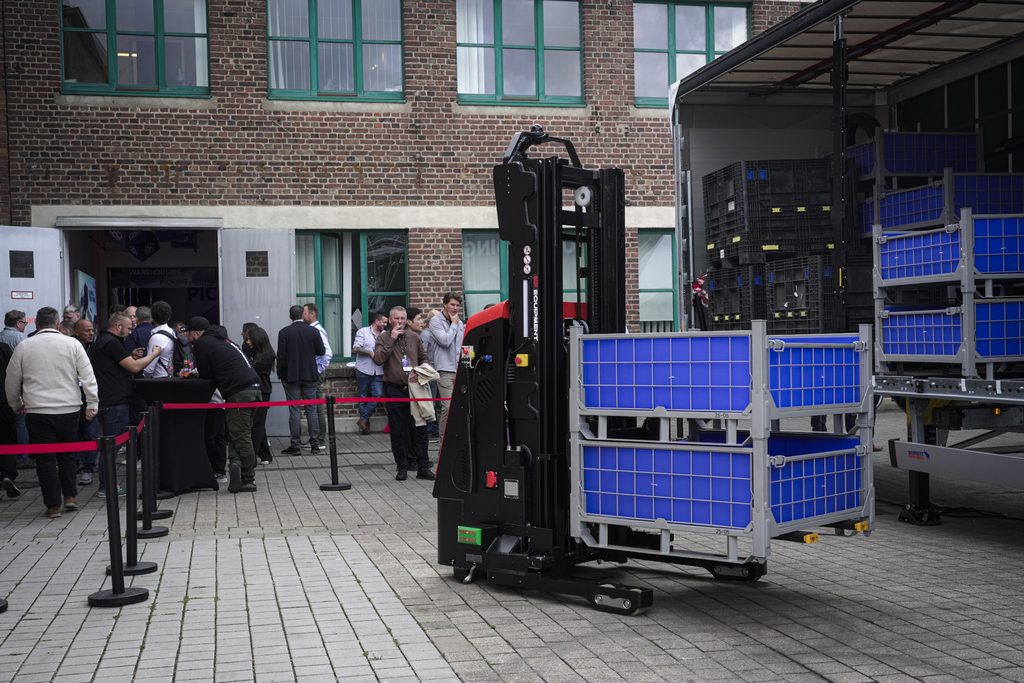
Automated transport is one of the most accessible starting points for warehouse automation because the process can often be clearly defined. The vehicle receives a task, travels to a location, picks up a pallet and transports it to the next destination. At the European Event 2026, EP demonstrated how its growing automation portfolio can address these kinds of material flows.
Solutions included EP X-Mover series, with the XP15 and XPL201 providing autonomous solutions for applications ranging from A-to-B pallet transport to large scale cross-docking.
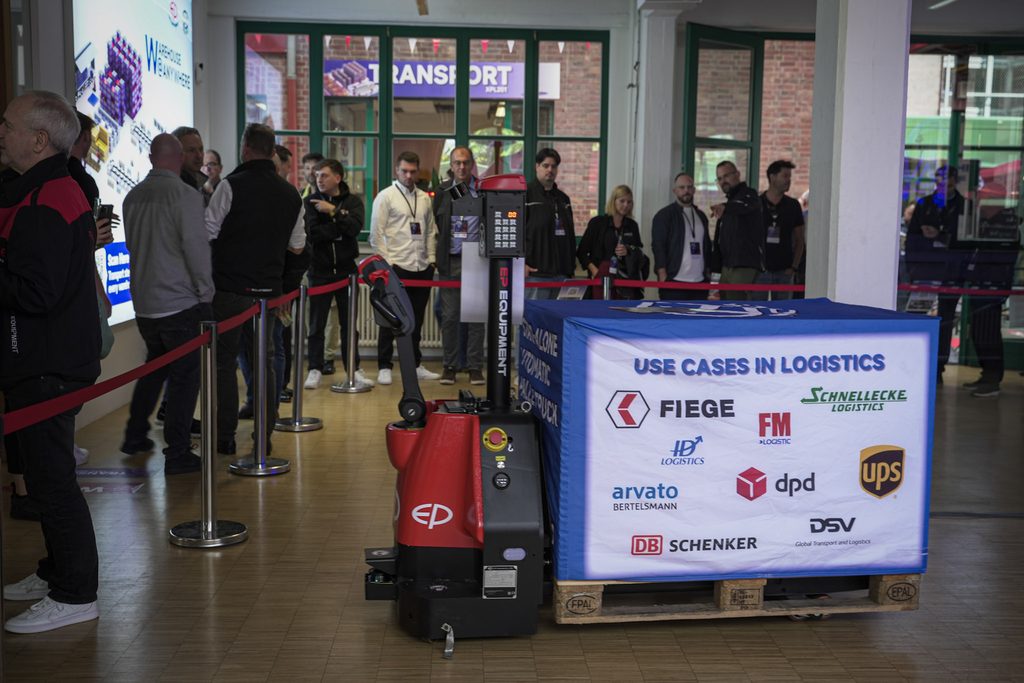
The event also demonstrated broader automation use cases, including a Cainiao/Alibaba cross docking application and an automated warehousing application with Schnellecke Logistics.
These examples highlighted an important principle behind EP’s approach to automation: the vehicle itself is only one part of the solution. The real question is how automation improves the complete material flow.
Picking is the next automation frontier
Transport is only the beginning. Picking represents a considerably more complex challenge for autonomous material handling.
Moving a pallet from one predefined location to another primarily requires navigation and load handling. Picking requires a robot to interact much more intelligently with its environment. It may need to identify an object, understand its position and dimensions, determine how to handle it and complete the movement correctly.
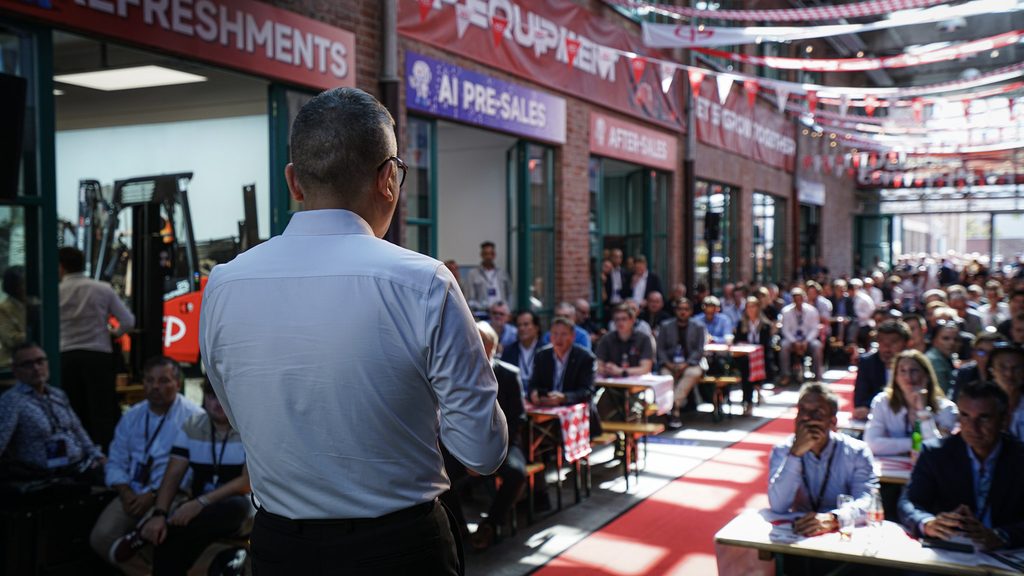
As EP Equipment CEO and founder John He put it during the event:
“Picking is the future.”
This is where developments in AI, machine vision, autonomous navigation and robotics become increasingly important. At the European Event, the new DASP system and XNA truck extended the automation discussion into picking applications.
Over time, AI can enable autonomous mobile robots to become more flexible in areas such as object recognition, route planning, fleet coordination and exception handling. The transition is therefore bigger than moving from manually driven forklifts to autonomous forklifts.
It is a transition towards machines that can increasingly understand and execute complete material-handling tasks.
Making automation projects easier to design
Successful automation starts long before an autonomous vehicle enters the warehouse.
One of the developments demonstrated in Cologne was an AI-supported pre-sales workflow combining 3D site scanning, customer requirements and material-flow information.
This approach can support:
- automation solution design
- path and route planning
- digital-twin creation
- simulation before implementation
- identification of potential bottlenecks
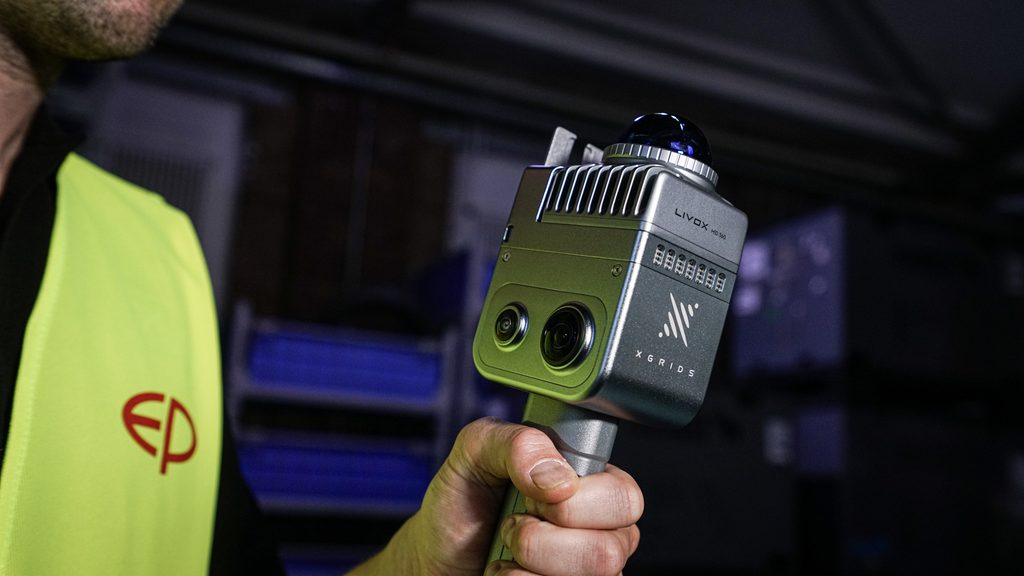
It allows an automation concept to be evaluated digitally before physical implementation begins. Combined with software integration and AI-supported after-sales capabilities, this illustrates how EP sees the future of automation: hardware, software, AI and system integration working together around the material flow.
The AGV is an important component, but it is not the complete automation solution.
Creating the right environment for scalable automation
Successful warehouse automation is not only about smarter AGVs and AMRs. The environment in which they operate also matters.
Standardised pallets, load carriers and processes reduce complexity and make material flows easier to automate. EP is therefore exploring concepts such as reusable standardised containers that can move through different stages of the supply chain, from storage to production and the final point of use.
People also remain an important part of this environment. While repetitive movements can increasingly be automated, operators can shift towards supervising multiple autonomous vehicles, managing exceptions and controlling processes.
Scalable automation is about bringing robots, people, processes and the operating environment together.
From material handling to material moving
Automation is one part of EP Equipment’s broader material handling strategy. At the European Event 2026, AGVs and AMRs were presented alongside an expanding conventional portfolio.
Together, these solutions reflect what CEO and founder John He describes as the shift from material handling to material moving: looking beyond the individual machine and focusing on how goods move through the complete logistics process.
Businesses do not need to start with a fully autonomous operation. It can begin with one pallet, one route and one repetitive task, before expanding into transport, warehousing, loading and unloading, and picking.
Start with the task. Automate where it makes sense. Then scale.