Large-scale logistics projects are increasingly moving towards automated material handling. By implementing AGVs, autonomous pallet trucks and stackers, operations can run 24/7 with far less dependence on labour availability, and with more flexible layout.
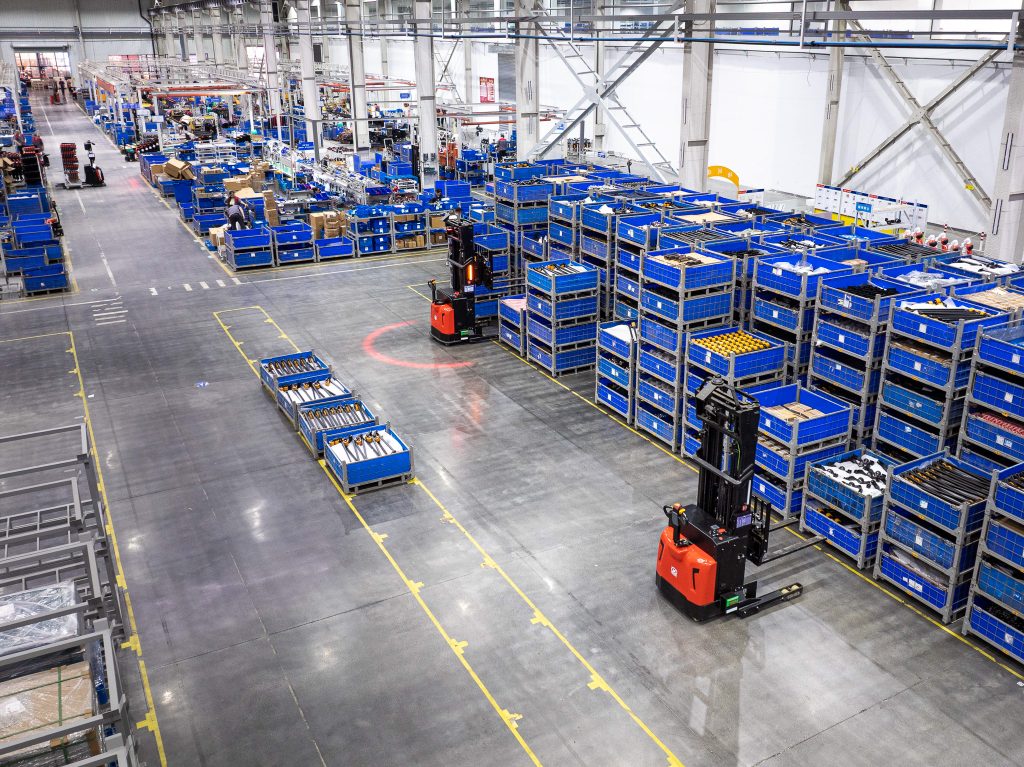
In China, new warehouses are already being designed around automation from the outset, and this is clearly the direction Europe is heading as well.
A modern distribution centre should therefore not only be designed for today’s efficiency, but for high automation speeds, long-term flexibility and future value. Interestingly, fast AGVs and mobile robots do not necessarily require more compact layouts. On the contrary, they benefit from larger, clearly defined and conflict-free traffic flows that allow vehicles to operate safely and efficiently at higher speeds.
This fundamentally changes the design philosophy of logistics real estate. The focus shifts from static storage towards dynamic logistics networks in which material flows, buffer areas and operational zones can be flexibly configured and continuously adapted.
By considering AGVs and mobile robots from the design phase onwards, several long-term advantages can be achieved:
- Flexible material flows – enabling different logistics concepts to operate within the same building.
- Wider and better-defined traffic flows – supporting higher vehicle speeds and minimising conflicts.
- Modular production and storage areas – allowing spaces to be reconfigured as operational requirements change.
- Robust digital infrastructure – enabling real-time control and coordination of autonomous systems.
- Strategically positioned buffer zones – absorbing fluctuations in throughput and demand.
- Higher storage density where appropriate – combined with dedicated flow areas.
- Smart and distributed energy management – including dynamic charging strategies, local generation and battery storage to optimise grid capacity.
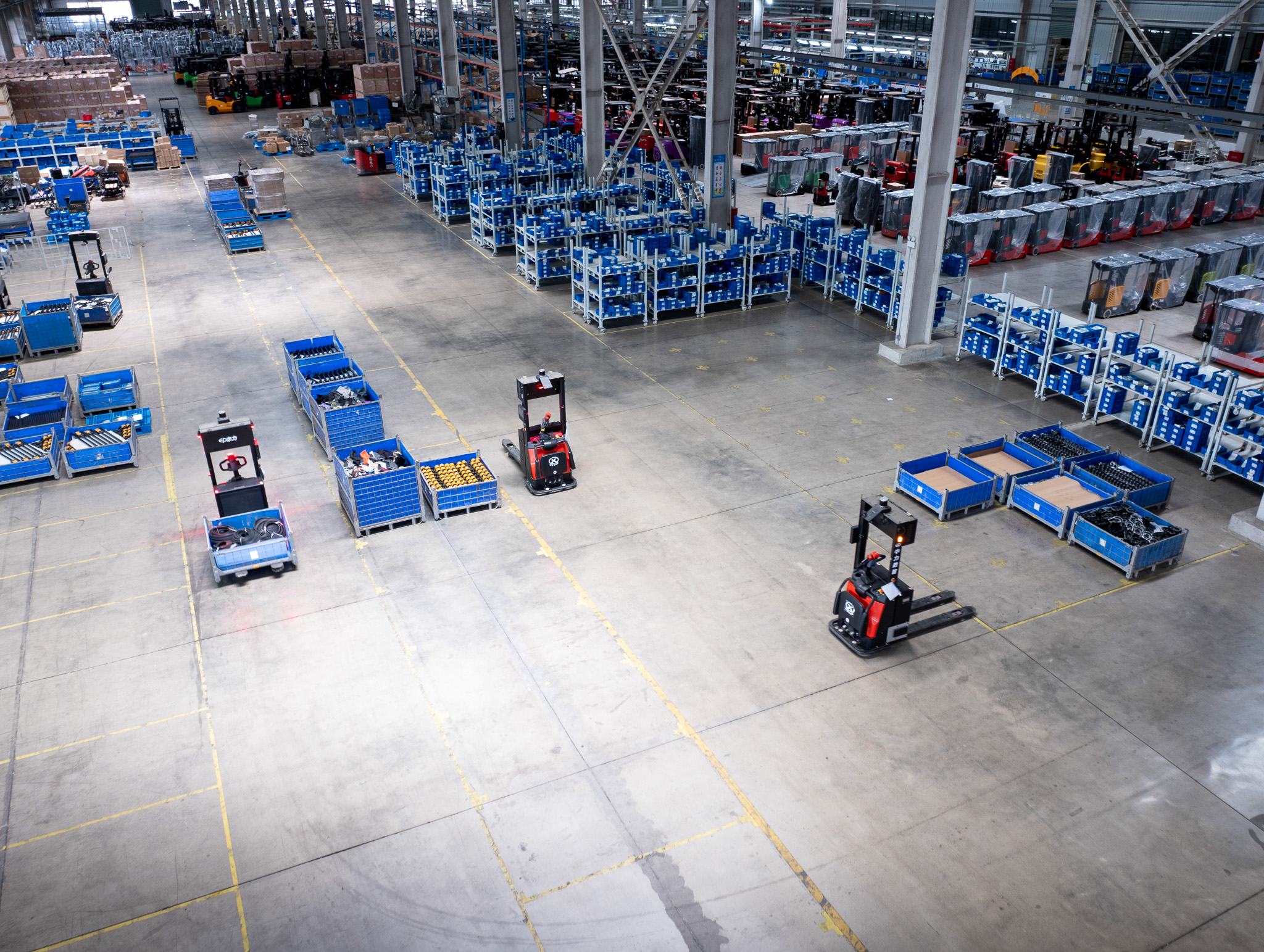
The development of a distribution centre of this scale is therefore not only about the requirements of the first use, but above all about long-term rentability, flexibility and asset value. Buildings that are not prepared for automation risk functional obsolescence and costly modifications.
The key insight is that higher automation speeds do not lead to more compact buildings, but to smarter and more spatially organised logistics networks. By integrating these principles from the start, a building becomes a scalable and reconfigurable platform that remains relevant for decades to come.